Peregrine Falcon
Falco peregrinus
Peregrine Falcon (Falco peregrinus) — Nature's Supersonic Sky Missile
The Peregrine Falcon (Falco peregrinus) is the world's fastest bird, diving over 200 mph while thriving from Arctic cliffs to city skyscrapers on every continent except Antarctica.
- Habitat
- Cliffs, cities, tundra, wetlands, canyons
- Size
- 34–58 cm long, 74–120 cm wingspan, 0.5–1.6 kg
- Diet
- Birds (pigeons, shorebirds, ducks), occasional bats
- Range
- Every continent except Antarctica
- Conservation
- Least Concern (IUCN)
- Lifespan
- Up to 19 years in the wild
Habitat & range
This feathered rocket breeds on every continent except Antarctica, popping up in Arctic tundra, coastal cliffs, desert canyons, mountain crags, wetlands, and even downtown skyscrapers. It skips the Amazon Basin and most of the Sahara but otherwise feels right at home from Greenland to Tasmania. Northern birds rack up epic migrations of 25,000 km round trips, while southern and coastal crews stay put year-round. They love open spaces with high perches for spotting prey, often near water where the buffet is freshest. Peregrine Falcons have mastered the art of living anywhere with a good view and a steady supply of flying snacks. City birds have turned bridges and ledges into prime real estate, proving they're as adaptable as they are speedy. Whether it's a remote cliff or a bustling bridge, these falcons make it work with style.
Diet & hunting
Peregrines are strict carnivores that feast on hundreds of bird species, with pigeons topping the urban menu and shorebirds, ducks, and songbirds filling the wild one. Bats and the occasional small mammal sneak in too, but scavenging is not their thing. They hunt from high perches or soaring heights, then either chase in level flight or fold into a gravity-powered stoop that ends with a mid-air falcon punch from clenched talons. That specialized tomial tooth on the beak seals the deal if the impact doesn't. Success isn't guaranteed every time, but when it connects it's pure avian theater. These birds turn hunting into a high-speed spectacle that keeps prey populations in check across their vast range.
Behavior & adaptations
The signature move is that 200-plus mph stoop, with a verified record of 242 mph that leaves cheetahs in the dust. Bony tubercles in the nostrils act like built-in air brakes so their lungs don't explode at jet speeds, a clever design that even inspired early jet-engine baffles. Their eyesight is eight times sharper than ours, spotting prey from over a mile away, while a nictitating membrane keeps eyes safe and clear during supersonic dives. They nest in simple scrapes on cliffs or building cornices, often reusing the same spot for decades. Pairs stay monogamous for the season and fiercely loyal to territories. Urban pairs have turned feral pigeons into fast food, thriving on human structures like feathered gargoyles. Peregrine Falcon appears as an Aves creature card in Wilder TCG, capturing that wild, adaptable spirit.
Conservation
Globally listed as Least Concern with a healthy worldwide population, the peregrine staged one of conservation's greatest comebacks. Mid-20th century DDT nearly wiped them out by thinning eggshells, but chemical bans and huge captive-breeding releases turned things around. Delisted from the U.S. Endangered Species list in 1999, they now enjoy CITES Appendix I protections against commercial trade. Some local pressures remain, yet overall this is a feel-good story of recovery. Apex predators with almost no natural enemies, they continue regulating bird populations and reminding us that smart protection works wonders for even the fastest flyers.
Fun facts about Peregrine Falcon
- Fastest animal on Earth in a dive: that 242 mph stoop would smoke a cheetah and most race cars.
- Jet-engine inspiration: those nostril tubercles reportedly influenced early baffle designs—nature one, engineers inspired.
- Super-vision with built-in goggles: eight-times human eyesight plus a third eyelid for high-speed debris protection.
- Urban pigeon patrol: city pairs turn skyscrapers into hunting perches and sometimes get encouraged by local governments.
- Name means wanderer: peregrinus fits birds that migrate from the Arctic nearly to Antarctica and even hitch rides on ships.
Field photos
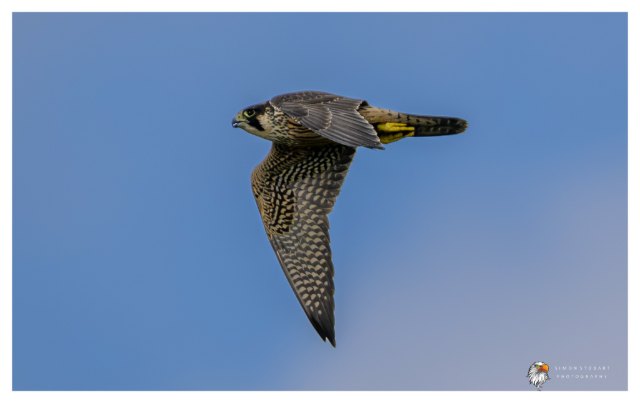
Peregrine Falcon vs Golden Eagle
The golden eagle claims victory through size and strength in a tense aerial standoff.
Both raptors patrol open skies and cliff country where their ranges overlap. The peregrine streaks in with blistering dives, aiming to harass or steal prey, but the larger eagle wheels with powerful beats and spreads its broad wings to shield itself. One heavy talon swipe or a sudden stoop from the eagle forces the smaller falcon to veer away. The eagle’s greater mass and reach let it dominate the airspace, ending the clash when the peregrine retreats to safer heights.
Read more about Golden Eagle.
Featured in the Field Journal
- Peregrine Falcon: 200 mph Stoop and a DDT Comeback
- The First Great Rebalance: Resilient Meets Its Match, and a New Wildcat Goes Mythic
More Aves animals
Aves · Air · Cost 3