Eastern Cottontail: Cotton Tail, Edge Habitat, and Garden Zigzags
Species deep dive · eastern cottontail
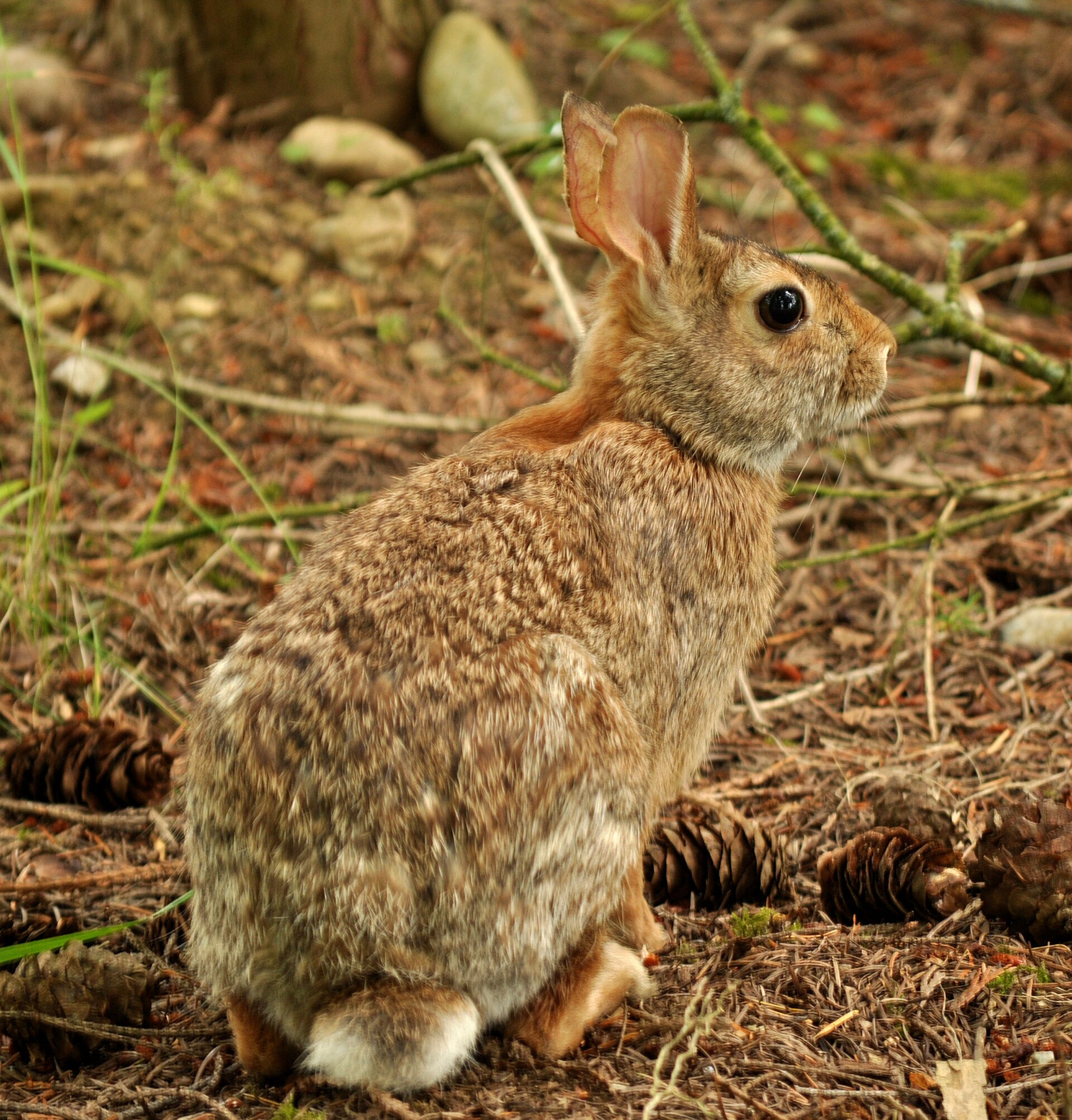
Search "eastern cottontail," "why do rabbits hop zigzag," or "cotton-tailed rabbit backyard" and you usually meet Sylvilagus floridanus — the widespread New World rabbit whose bright white undertail flashes like a flag when it bolts for cover. It is not a pet-store breed story; it is an early-successional mammal built for meadows, brushy fence lines, and the dangerous gap between open forage and dense escape thickets.
In Wilder TCG the Eastern Cottontail is a Mammalia Grassland creature (Cost 1). The card is shorthand for a real edge specialist whose toolkit is speed, cover, and a digestive system that recycles dinner.
Taxonomy and the cotton-tail signal
Eastern cottontails belong to *Mammalia → Lagomorpha → Leporidae → Sylvilagus**. Among cottontails, S. floridanus* has an especially broad range: from southern Canada through much of the eastern and central United States and south into parts of Central and northwestern South America. Adults typically measure about 395–477 mm in total length and weigh roughly 0.8–1.53 kg, with females often a bit larger than males.
The "cotton" is the white underside of a short, fluffy tail, shown as the rabbit flees. Dorsal fur is buffy brown with gray-and-black-tipped guard hairs; a rufous nape patch is usually visible. Two molts a year shift the coat toward a shorter, browner summer pelage and a longer, grayer winter coat.
Edge habitat, not deep woods
Historically, eastern cottontails used a wide mix of landscapes. Today they thrive where open forage meets woody escape cover: meadows, old fields, orchard margins, hedgerows, farm edges, and suburban thickets. Dense interior forest is poor habitat; so is a lawn with nowhere to hide. Managers repeatedly emphasize the same recipe — early-successional weeds and grasses for food, plus brush piles, shrub thickets, and fence-line cover within a short dash.
Home ranges are often on the order of about 5–8 acres, swelling in the breeding season, with males typically ranging farther than females. Animals are largely solitary and intolerant of close neighbors outside mating contexts.
Caecal fermentation and seasonal menus
Cottontails are herbivores whose diet is heavy on cellulose. Like other lagomorphs, they rely on caecal fermentation and then reingest soft fecal pellets so nutrients can be absorbed on a second pass — a normal physiology fact, not a quirk to sensationalize.
Summer diets lean on grasses (often ~half of intake in classic accounts), clovers, and soft forbs; gardens and crops can suffer when cover and forage sit side by side. Winter shifts toward woody twigs, buds, and bark of shrubs and young trees (sumac, dogwood, maple, oak, and others appear in regional diet lists). Feeding peaks in the crepuscular windows — a few hours after dawn and around dusk — with daytime hours often spent crouched in a form under a log or in dense brush.
Zigzag escapes and a short life
Asked how cottontails evade hawks, foxes, coyotes, and owls, field guides answer with a short menu: freeze, slink low with ears back, or flush in a rapid zigzag dash toward cover. Top speeds are cited around ~18 mph (≈29 km/h) in ADW summaries. Distress cries can startle a predator and warn others; nesting does may grunt if danger closes on a litter.
Life is brief. Most wild cottontails do not survive past their third year. High reproductive output balances that mortality: breeding commonly runs from late winter into early autumn (timing shifts with latitude and elevation). Gestation is about 25–28 days; litters average around five young (range 1–12 in reviews), and does often produce three to four litters per year. Neonates are altricial — blind and nearly naked — and leave the nest in roughly two weeks, with weaning around 16–22 days.
Least Concern — with one careful health note
IUCN lists S. floridanus as Least Concern: abundant, widespread, and an effective colonizer (including places where introductions have pressured other leporids). Local declines can still track loss of brushy early-successional cover and heavier predator communities near people.
One medical caveat, stated carefully: wild rabbits can carry tularemia (Francisella tularensis). That is a reason to avoid handling sick or dead wild rabbits with bare hands and to cook wild game properly — not a claim that every cottontail is a disease bomb, and not veterinary advice.
From meadow edge to Wilder card
In the Eastern Cottontail field guide entry you will find taxonomy, habitat, and in-game stats. On the board it plays as a Grassland Mammalia presence — the game echo of the cotton-tail flash between field and thicket.
If you have never tried Wilder, guest play is free in the browser:
Quick facts
- Scientific name: Sylvilagus floridanus
- Family: Leporidae (cottontail rabbits); order Lagomorpha
- Hook: white "cotton" undertail + zigzag flush to edge cover
- Size: ~395–477 mm; roughly 0.8–1.53 kg
- Diet: seasonal grasses/forbs; winter woody browse; caecal reingestion
- Activity: crepuscular/nocturnal; solitary; forms in dense cover by day
- Reproduction: ~25–28 day gestation; avg. ~5 young; multiple litters/year
- Status: IUCN Least Concern
- Wilder family: Mammalia · Grassland · Cost 1