American Beaver: Dam Builder, Iron Teeth, and Keystone Wetlands
Species deep dive · american beaver
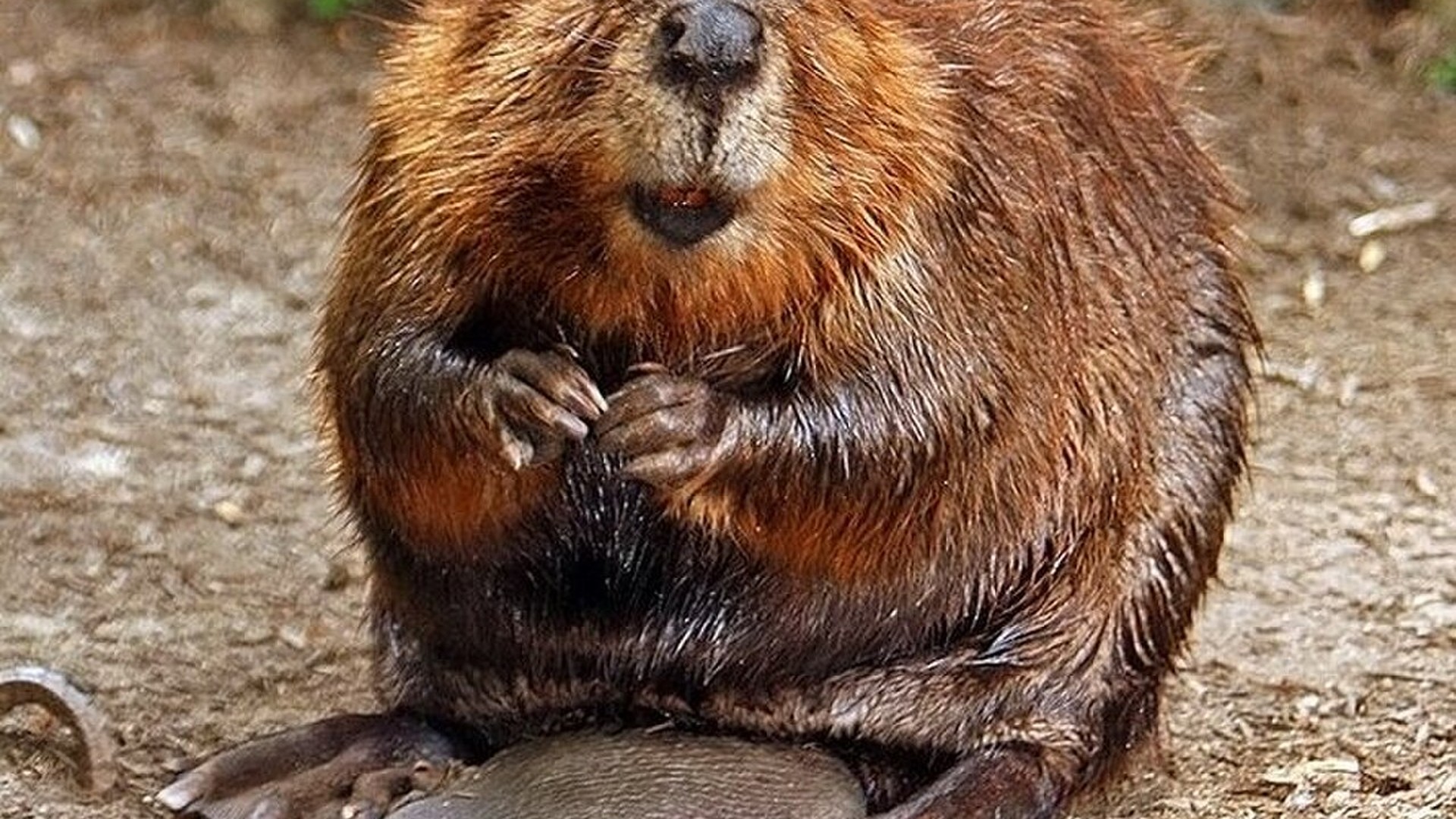
Search "why do beavers build dams" and the short answer is blunt: to turn a shallow stream into a deep, protected pond. Castor canadensis — the American beaver — is North America's largest rodent and a textbook ecosystem engineer. The dam is not decoration. It raises water over underwater lodge doors, stores winter food, and rewrites hydrology for everything from frogs to waterfowl.
In Wilder TCG the American Beaver is a Mammalia Water creature (Cost 2). The card is shorthand for a real wetland architect whose iron-orange chisels and stick-and-mud dams remake whole corridors.
Rodent of the dam and lodge
Beavers belong to Castoridae, the living beaver family. C. canadensis ranges across most of North America — Alaska and Canada through the lower 48 into northern Mexico — skipping the driest deserts of the Southwest and southern extremes such as southern Florida. Habitat is freshwater: ponds, lakes, rivers, marshes, and streams with woody banks.
Adults typically weigh roughly 16–30 kg (about 35–65 lb), with exceptional animals heavier. Body length is often on the order of 0.9–1.2 m, plus a broad, scaly, paddle-like tail used as rudder, prop, fat store, and acoustic alarm. Hind feet are webbed for swimming; front paws are dexterous diggers and stick-handlers. Closable nostrils and ears, plus a transparent nictitating membrane over each eye, support work underwater.
The famous orange incisors grow continuously. Smithsonian National Zoo notes that iron-enriched enamel hardens the outer tooth surface, helping them resist cracking while the beaver gnaws hardwood. Preferring aspen, willow, poplar, birch, maple, and alder, beavers eat cambium, leaves, buds, roots, and aquatic plants. Cellulose digestion relies on gut microbes — a wood-powered herbivore, not a meat hunter.
Why dams — and how lodges work
A beaver dam is a woven wall of branches, saplings, reeds, mud, and stones. Animal Diversity Web notes a practical design detail: in slow water dams are often built straighter; in faster flow they may be curved for stability. The pond that forms deepens the approach to the lodge, slows stream power, traps sediment, and raises local water tables.
Lodges are oven-shaped piles of sticks and mud. Living chambers sit above the water line, with one or more underwater entrances — a predator filter. Interior floors may be lined with wood chips or bark; a small roof vent ("chimney") helps with air. Island lodges, bank lodges, and lake-edge lodges share the same logic: dry sleeping platform, wet escape routes. Where bank dens work without a full dam, beavers may still dig canals to float timber home and cache branches underwater for winter — a cold natural pantry under ice.
Colonies are family units: a breeding pair, kits of the year, and often yearlings that help with construction and care before dispersing around age two. Territory is marked with mud piles and secretions from castor and anal glands. A loud tail slap on the water is the colony's danger drum.
How long can a beaver hold its breath? Popular accounts (including the Smithsonian Zoo) cite submergence up to about 15 minutes while traveling underwater. Treat that as a reported maximum, not a typical foraging dive — beavers are built for repeated underwater work, not for setting breath-hold records as a lifestyle.
On land, beavers are awkward and vulnerable; in water they are transformed. Smithsonian cites swimming speeds around 5–6 mph (~8–10 km/h). Sensory life favors smell, hearing, and whiskers in dark or muddy water — close-range vision is serviceable but not the main tool. Family life inside the lodge is hierarchical and usually low-aggression: adults dominate yearlings, yearlings dominate kits, and food is shared from a common underwater cache through winter.
Keystone wetlands, not just cute engineers
Ecologists call beavers keystone because their dams create and maintain wetland mosaics out of proportion to the animals' numbers. Ponds and beaver-meadow complexes boost habitat heterogeneity for plants, invertebrates, fish, amphibians, birds, and mammals. A USGS-linked study in Rocky Mountain national parks (Hossack et al., 2015) found beaver-influenced wetlands associated with roughly a 34% increase in amphibian occupancy relative to wetlands without beaver influence, with especially strong colonization benefits for species such as boreal toad and Columbia spotted frog.
Dams can also flood timber, roads, and cropland — human–beaver conflict is real. Restoration programs now often treat beaver as partners in reconnecting floodplains, storing water through drought, and buffering wildfire effects at the local wetland scale. The same engineering that frustrates a farmer can stabilize a watershed.
Fur trade collapse and rebound
Beaver pelts once powered continental exploration and fashion (felt hats, robes, trim). Unregulated trapping drove C. canadensis toward local extinction across large parts of its range by around 1900. Protection, reintroduction, and management rebuilt populations. IUCN now lists the species as Least Concern globally — a recovery story, not a claim that every local dam conflict is solved.
From wetland to Wilder card
In the American Beaver field guide entry you will find taxonomy, habitat, and in-game stats. On the board it plays as a Water Mammalia presence — the game echo of a keystone dam builder whose real power is landscape change, not a single bite.
If you have never tried Wilder, guest play is free in the browser — open packs, build a deck, and put a wetland engineer on the table:
Quick facts
- Scientific name: Castor canadensis (Kuhl, 1820)
- Family: Castoridae (beavers)
- Hook: dam-building ecosystem engineer / keystone wetland creator; iron-enriched orange incisors
- Size: typically ~16–30 kg; ~0.9–1.2 m body + broad flat tail
- Diet: cambium, woody stems, leaves, aquatic plants (herbivore)
- Architecture: stick-and-mud dams; lodges with underwater entrances; winter branch caches
- Dive note: reported submergence up to ~15 minutes (maxima; typical dives shorter)
- Status: IUCN Least Concern; major historical rebound after fur-trade overharvest
- Wilder family: Mammalia · Water · Cost 2
Sources
- Animal Diversity Web — Castor canadensis
- Smithsonian's National Zoo — Beaver
- USGS / Hossack et al. (2015) Biological Conservation — beaver as keystone for Rocky Mountain amphibians
- IUCN Red List — Castor canadensis
- U.S. Fish & Wildlife Service — The Beaver Restoration Guidebook (v2.02)
- Wilder TCG — American Beaver field guide