Guam Kingfisher (Sihek): Extinct in the Wild, Now Flying Free Again
Species deep dive · guam kingfisher
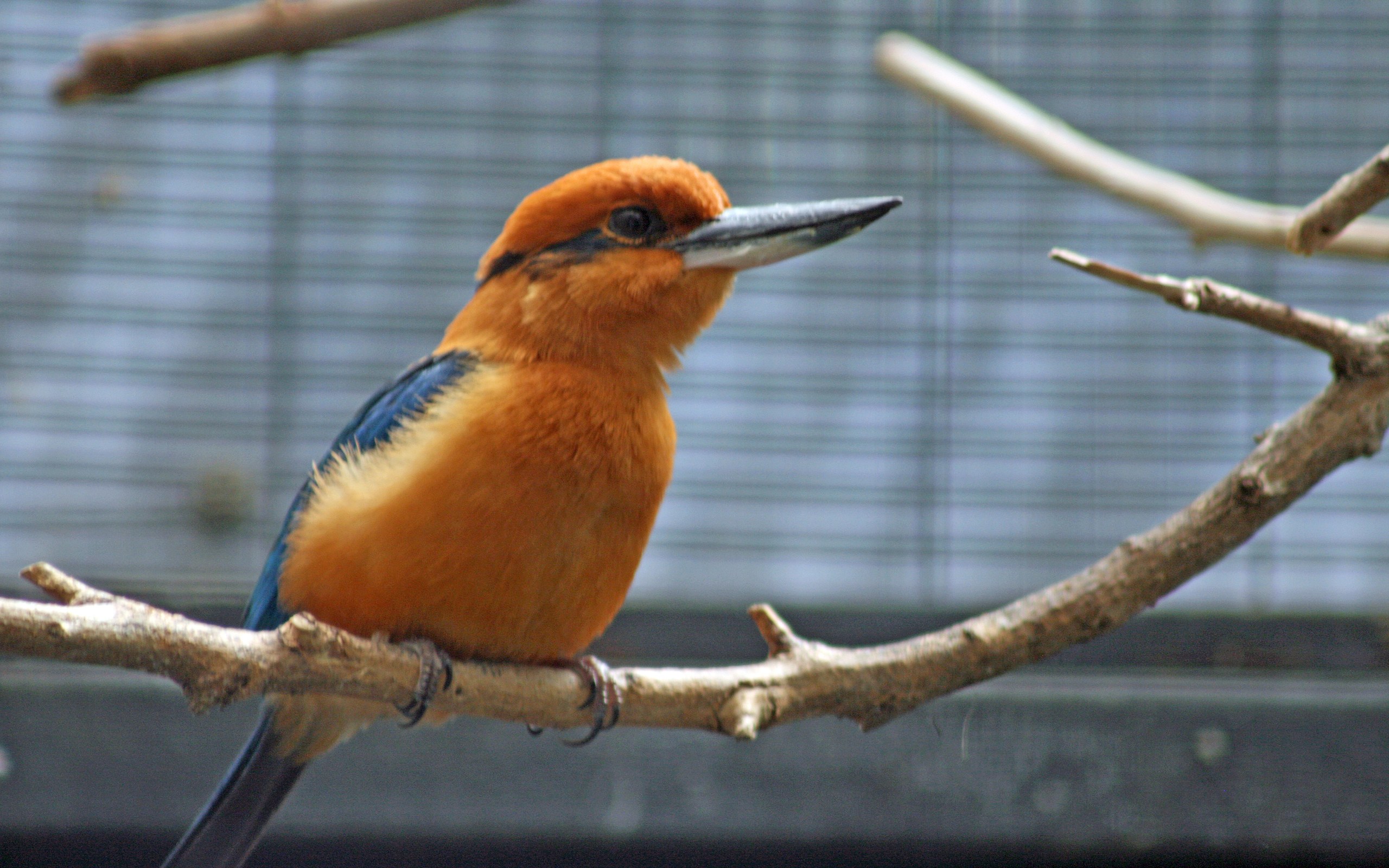
The Guam kingfisher is extinct in the wild on Guam, but the species survives, and a few are flying free again. The bird known in CHamoru as the sihek was wiped out on its home island by an invasive snake and was last seen in the wild there in 1988 (Brookfield Zoo Chicago). Fewer than 150 exist today. Most live in zoos, but nine zoo-bred birds have lived wild on Palmyra Atoll in the Pacific since 2024, and in September 2026 a second group of ten entered quarantine, with up to eight expected to be released there later this year (Saint Louis Zoo).
A kingfisher that doesn't fish
The sihek is a small, bright kingfisher. Males have a cinnamon-orange head and body, females have a pale white breast, and both have a metallic green-blue back and a blue tail (Smithsonian's National Zoo).
Despite the name, it doesn't rely on fish. It sits on a perch, watches the ground and drops onto grasshoppers, skinks, other insects and small crustaceans. On Guam it lived almost everywhere except open savanna and wetlands, and it liked limestone forest best. Pairs dig their nest hole together in a rotting tree 3 to 8 m up, and choosing the nest site together seems to be an important part of how a pair bonds (Smithsonian's National Zoo).
How a snake emptied Guam's forests
The brown treesnake reached Guam by accident in the 1940s (The Nature Conservancy). Guam's birds had evolved without tree-climbing predators like it, and many native species crashed or disappeared. The kingfisher fell from an estimated 3,000 birds in the early 1980s to about 30 by 1986 (Smithsonian's National Zoo).
Between 1984 and 1986, Guam's Division of Aquatic and Wildlife Resources and US zoos caught 29 of the last kingfishers to start a breeding programme. It was hard going. Early on, some newly hatched chicks vanished from their nests, and keepers suspected the parents were mistaking their own naked, blind chicks for the baby mice they were being fed. Switching to a more natural diet of small anole lizards and insects helped (Smithsonian's National Zoo).
By 1 July 2026, 27 chicks had hatched in AZA zoos that year, bringing the managed population to 142 birds, according to Cincinnati Zoo (Cincinnati Zoo & Botanical Garden).
Palmyra: a snake-free stand-in for Guam
Guam still has brown treesnakes, so the birds can't go home yet. Instead, the Sihek Recovery Program chose Palmyra Atoll, about 1,000 miles south of Honolulu. It is a Nature Conservancy preserve inside a US Fish and Wildlife Service refuge, with no invasive predators (The Nature Conservancy; USFWS).
Nine birds, four females and five males, flew there from Wichita, Kansas, in August 2024. They were fitted with tiny radio trackers, and releases began that September, putting sihek back in the wild for the first time since the 1980s. They started eating right away and hunted spiders, geckos and crabs (USFWS).
The results so far are very encouraging:
- All nine survived past their first year, which USFWS calls a remarkable milestone for any release.
- Four pairs set up territories and dug nests, and in April 2025 three pairs laid the first wild sihek eggs in almost 40 years (The Nature Conservancy).
- No eggs have hatched yet. The team says that's normal for young first-time pairs, who often need a few tries (Brookfield Zoo Chicago).
The next wave
In September 2026, ten young sihek from eight US zoos went into a biosecure quarantine at Disney's Animal Kingdom for about two months. If all goes well, up to eight of them will travel the 5,400 miles to Palmyra, nearly doubling the wild population (Brookfield Zoo Chicago). The plan is to repeat releases every year until 20 sihek are established as breeding pairs on Palmyra, and then, once the snakes are under control, to bring the species home to Guam (USFWS).
The sihek is one of the clearest cases of a zoo population keeping a species alive until the wild was ready for it again. The IUCN still lists it as Extinct in the Wild, and the first wild-hatched chick would be the next big milestone.
How the Guam kingfisher plays in Wilder
In Wilder, the Guam Kingfisher is a Rare Aves card in the Forest element. It costs 2 Energy, with Attack 2 and Health 2, and has Ambush. Its ability, Perch Pounce, costs 2 Energy and deals 1 damage to an enemy creature, just like the real bird dropping from a branch onto a lizard. Its flavour text: "A kingfisher that never fishes: it drops from a perch onto lizards and insects on the forest floor." For another bird brought back from the brink, see the California condor.
Wilder is a free browser collectible card game, and you can play it free in your browser with no signup.
Photo credit
Hero photograph: Kjunstorm, "Todiramphus cinnamominus -San Diego Zoo-male-8a" (a male Guam kingfisher at San Diego Zoo), Wikimedia Commons, CC BY 2.0. Cropped for the Field Journal hero.

Questions people ask
What does sihek mean, and how do you say it?
Sihek is the CHamoru name for the Guam kingfisher, used by the Indigenous people of Guam (The Nature Conservancy). Cincinnati Zoo gives the pronunciation as "SEE-heck" (Cincinnati Zoo).
How big is a Guam kingfisher?
About 22 cm (9 in) long and 50 to 70 g (1.7 to 2.4 oz). It has a large head and a strong bill, and females are slightly larger than males (Smithsonian's National Zoo).
How long do Guam kingfishers live?
15 to 20 years in human care. Their lifespan in the wild was never documented before they disappeared from Guam (Smithsonian's National Zoo).
Why are female sihek so important to the recovery?
Because there are too few of them. Across the whole population, males outnumber females about 2 to 1, so every female that can pair up matters. Six of the ten birds that entered quarantine for the 2026 Palmyra release are females (Saint Louis Zoo).
Where can you see a Guam kingfisher in a zoo?
At a handful of US zoos. In July 2026, Cincinnati Zoo listed itself, Brookfield Zoo Chicago, Oregon Zoo, Milwaukee County Zoo, the National Aviary in Pittsburgh and Sedgwick County Zoo in Wichita as places where the public can see sihek (Cincinnati Zoo).
Sources
- Smithsonian's National Zoo & Conservation Biology Institute — Guam kingfisher
- U.S. Fish & Wildlife Service — Sihek Conservation Introduction to Palmyra Atoll
- The Nature Conservancy — Bird species lost from wild for almost 40 years lays first eggs on new island home (April 2025)
- Brookfield Zoo Chicago — New group of extinct-in-the-wild Sihek heading to quarantine ahead of expected wild release (23 Sept 2026)
- Saint Louis Zoo — Saint Louis Zoo Sihek eligible for wild release (2026)
- Cincinnati Zoo & Botanical Garden — Zoo population gives extinct-in-the-wild birds a chance (27 July 2026)