Eastern Brown Snake: How Dangerous Is Australia's Deadliest Snake?
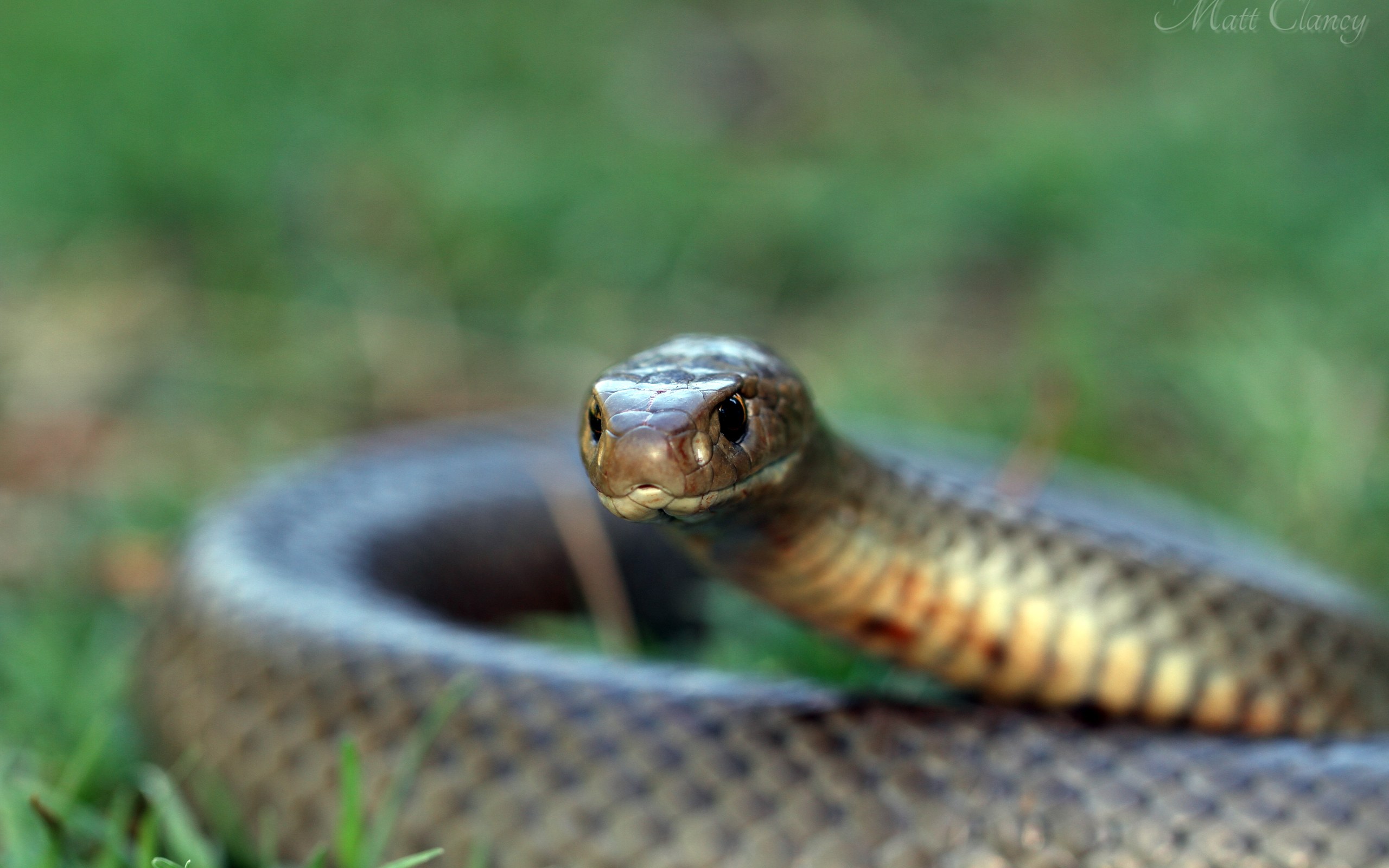
Species deep dive · eastern brown snake
Very dangerous if it bites, but it rarely wants to. The eastern brown snake (Pseudonaja textilis) has the second most toxic venom of any land snake tested on mice, after the inland taipan, and it causes more snakebite deaths than any other snake in Australia (Australian Museum). Yet when a researcher tracked wild brown snakes through 455 close encounters, the snakes advanced on him only 12 times, and only three of those advances were offensive (Whitaker & Shine 1999). The danger comes from where it lives and how its venom works, not from a bad temper.
Why you see more of them in spring
If your feed is full of brown snakes in kitchens, letterboxes and garages right now, there is a reason. In a long-running survey in central southern New South Wales, eastern browns were encountered most often in spring (Australian Museum). Males wake up earlier in the season than females, and in spring most brown snakes found dead on roads are males.
Breeding starts in mid to late spring. Rival males wrestle in ritual combat, twisting around each other for half an hour or more as each tries to pin the other down. The species can also bask at air temperatures as low as 14 °C, so a sunny, mild morning is enough to bring one out (Australian Museum).
A snake that likes farms and suburbs
The eastern brown ranges across eastern Australia, from northern Queensland to South Australia, with isolated populations in the Northern Territory and in New Guinea. It prefers open country such as woodland, scrub and grassland, and avoids rainforest and alpine areas (Australian Museum).
Land clearing has actually helped it. Farms bring introduced rats and house mice, and big brown snakes eat a lot of them; young ones eat more lizards. That makes the species common on rural land and the edges of towns, which happen to be some of the most populated parts of Australia. The Australian Museum says it is "probably encountered more than any other type of snake."
Adults average about 1.5 m long. The longest reliably measured specimen was 2,013 mm. Colour varies from pale tan to orange, chestnut or almost black, and the head is barely wider than the neck (Australian Museum).
What the venom does
The eastern brown's fangs are only about 3 mm long, and an average bite delivers around 4 mg of venom (the record yield was 67 mg). What it lacks in delivery it makes up for in strength. In the classic mouse tests, its subcutaneous LD50 was about 0.053 mg/kg, second only to the inland taipan's 0.025 mg/kg (Broad et al. 1979; see our most venomous snakes showdown).
The venom contains neurotoxins, but in real patients the big problem is blood. In the Australian Snakebite Project, every envenomed patient among 149 confirmed brown snake bites developed venom-induced consumption coagulopathy, in which the venom uses up the blood's clotting factors. Over a third had severe effects such as collapse, major bleeding or cardiac arrest (Allen et al. 2012).
The bite itself is often painless and hard to spot, so a person may not realise they have been bitten (Australian Museum).
How many people die?
Deaths are rare. A coronial study counted 35 snakebite deaths in Australia from 2000 to 2016, about 2.2 a year, and brown snakes were blamed for most of them (Welton et al. 2017). About 1 in 3 hospital visits for snakebite in Australia are for brown snake bites (healthdirect). Many bites have happened when people tried to kill the snake (Australian Museum).
Is it aggressive?
Mostly not. In the Whitaker and Shine field study near Leeton, NSW, the snakes retreated in about half of all encounters and otherwise mostly stayed still and relied on camouflage. They were more likely to advance if the person approached fast or touched them (Whitaker & Shine 1999).
Cornered, an eastern brown spreads its neck and rises into an S-shaped coil with its mouth slightly open, ready to strike. That display is the warning to back off (Australian Museum).
If someone is bitten
Treat any possible bite as an emergency. Australia's health advice is to get the person away from the snake, call 000 (or 112 if 000 doesn't connect on a mobile), keep them still and calm, apply a pressure immobilisation bandage, and start CPR if they stop breathing normally. Don't cut, suck or wash the bite, and don't try to catch or kill the snake (healthdirect).
How the eastern brown plays in Wilder
In Wilder, the Eastern Brown Snake is an Uncommon Reptilia card in the Grassland element. It costs 3 Energy and hits hard for its size, with Attack 4 and Health 2. It has Venom for its potent bite and Basking for a snake that comes out to warm up on mild spring mornings. Its flavour text says it best: "Its fangs are only about 3 mm long, yet no snake causes more snakebite deaths in Australia." Pair it with the Inland Taipan if you want the two most toxic land snakes in one deck.
Wilder is a free browser collectible card game, and you can play it free in your browser with no signup.
Photo credit
Hero photograph: Matt from Melbourne, Australia, "Eastern Brown Snake (Pseudonaja textilis)", Wikimedia Commons, CC BY 2.0. Cropped for the Field Journal hero.

Questions people ask
How fast can an eastern brown snake strike?
About 1 metre per second on average. In captive tests, eastern brown strikes ranged from 0.25 to 1.80 m/s, averaging 1.11 m/s. Surprisingly, strike speed did not change with temperature between 18 and 36 °C, so a cool snake struck as fast as a warm one (Australian Museum).
How many eggs does an eastern brown snake lay?
Up to 25 in a clutch, about 15 on average. Eggs take from 36 days at 30 °C to 95 days at 25 °C to hatch, and in good conditions a female may lay several clutches in one season. Females sometimes share communal nests, including one found in an old rabbit warren (Australian Museum).
How much antivenom is needed for a brown snake bite?
Usually one vial. In 149 confirmed brown snake bites from the Australian Snakebite Project, patients who got one vial recovered their blood clotting just as well as those given more, and free venom was almost never detected after antivenom (Allen et al. 2012). Treatment is a hospital decision, so always call 000 first.
Can eastern brown snakes eat cane toads?
They try, but it usually kills them. The Australian Museum notes that eastern browns die rapidly from the toxins after eating cane toads. Their known natural predators include birds of prey and feral cats (Australian Museum).
How long do eastern brown snakes live?
At least 7 years, and probably a decade or more. Lifespan in the wild is unknown, but eastern browns have lived 7 years in captivity, and the Australian Museum says that like other large elapids they can probably live at least ten years. Females can breed at under three years old (Australian Museum).
Sources
- Australian Museum — Eastern Brown Snake (Pseudonaja textilis)
- Whitaker & Shine 1999, Wildlife Research — Responses of free-ranging brownsnakes (Pseudonaja textilis: Elapidae) to encounters with humans
- Broad, Sutherland & Coulter 1979, Toxicon — The lethality in mice of dangerous Australian and other snake venom
- Allen et al. 2012, PLOS ONE — Clinical effects and antivenom dosing in brown snake (Pseudonaja spp.) envenoming, Australian Snakebite Project (ASP-14)
- Welton et al. 2017, Toxicon — Incidence of fatal snake bite in Australia: a coronial based retrospective study (2000–2016)
- healthdirect (Australian Government) — Snake bites: first aid, treatment and symptoms
- University of Melbourne, Australian Venom Research Unit — Common or eastern brown snake