Snowy Owl: Daylight Hunter, Lemming Cycles, and Arctic Irruptions
Species deep dive · snowy owl
Picture a white owl hunting at noon on open tundra — not a night shift hunter waiting for dark. Bubo scandiacus (formerly Nyctea scandiaca) is a circumpolar Arctic breeder that nests on the ground, rides lemming booms and busts, and sometimes irrupts south when the Far North goes hungry.
In Wilder TCG the Snowy Owl is an Aves creature of the Tundra at Cost 4. The card is shorthand for daylight hunting, prey caches, and a bird whose fortunes rise and fall with small rodents under the moss.
Ground nests and lemming economics
Snowy Owls breed across Arctic tundra — open grasses, dwarf shrubs, and lichens, usually at low elevation — from northern North America through Eurasia. Females scrape a shallow ground nest; there is no tree cavity or stick platform. Clutch size tracks prey: field summaries often cite swings from a few eggs into the low teens when lemmings and voles are abundant. In crash years pairs may skip breeding altogether. Unlike many owls that specialize in nocturnal ambush, snowies are diurnal or schedule-flexible: they hunt whenever light, prey, and weather allow — useful under midnight sun and long polar night alike. Typical tactic is perch-and-pounce from a low mound or snow surface, sometimes punching through crust to take rodents underneath.
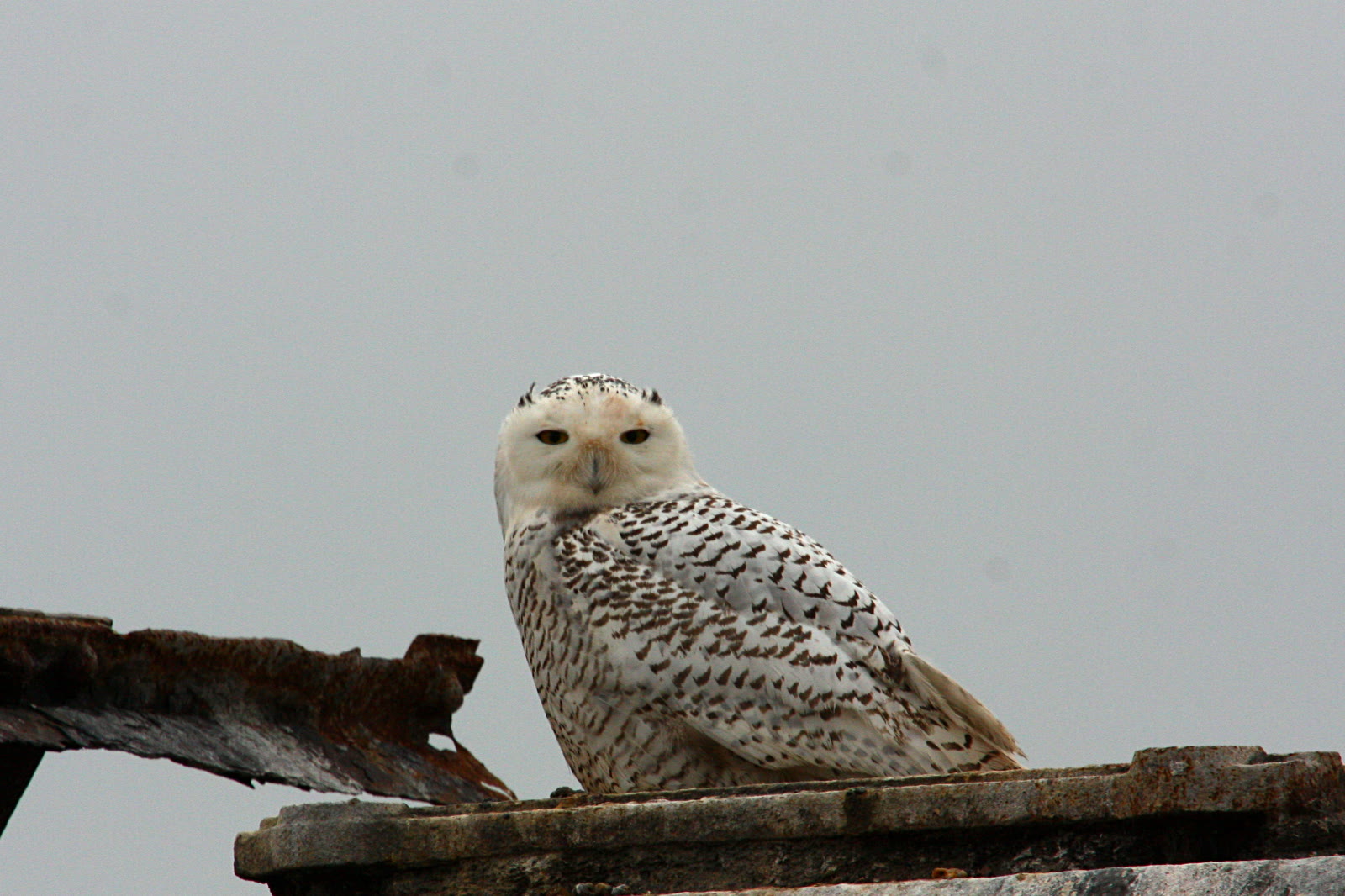
Sexual plumage is a field mark: adult males trend toward cleaner white; females and young keep more dark barring. Dense plumage makes them among the heaviest North American owls for their length. Longevity in the wild can stretch into the low twenties for banded birds — another reminder that a boom-bust lifestyle still rewards survivors who keep finding open country.
Irruptions: dunes, fields, and airport grassland
Snowies are not clockwork migrants. When rodent food fails on the breeding grounds, numbers push south in irruptive winters — coastal dunes, marshes, agricultural fields, and other flat, treeless habitat that mimics tundra. Large open airports sometimes host wintering birds for the same reason: grassland-like runway verges look like home. Boston's Logan Airport folklore sits in that category — sometimes a wintering hotspot on open turf, not a permanent colony.
Those winters bring people close to a bird that usually lives beyond the tree line. They also bring collision risk with vehicles and structures, disturbance, and the usual suite of contaminants that accumulate in apex predators.
From Arctic cache to Wilder card
In the Snowy Owl field guide entry you will find taxonomy, habitat, and in-game stats. On the board, a Tundra owl at Cost 4 echoes the real bird: open-country vision, flexible hunting hours, and a diet that turns small mammals into clutch size.
If you have never tried Wilder, guest play is free in the browser — open packs, build a deck, and put a Snowy Owl on the table:
Quick facts
- Scientific name: Bubo scandiacus (formerly Nyctea scandiaca)
- Order / family: Strigiformes · Strigidae
- Hook: diurnal/flexible Arctic hunter; breeding tracks lemming abundance
- Diet note: ~1,600 lemmings/year order-of-magnitude for an adult; caches of dozens known
- Range: circumpolar tundra breeder; irruptive south in lean winters
- IUCN: Vulnerable (~14,000–28,000 adults, approximate)
- Wilder family: Aves · Tundra · Cost 4
Vulnerable on a changing tundra
IUCN lists the snowy owl as Vulnerable. Global adult estimates commonly fall around ~14,000–28,000 — approximate, and lower than older textbook figures that assumed denser circumpolar stocks. Declines linked to climate-driven change in tundra and prey cycles, plus collisions, contaminants, disease, and human disturbance, keep the status serious. Because breeding effort is so tightly wired to lemmings, any long-term shift in Arctic food webs hits recruitment first.
Diet in the breeding season is dominated by lemmings and other small rodents, with Arctic hares, birds, and whatever else the tundra offers as secondary prey. Field-guide ecology often cites on the order of ~1,600 lemmings per year for an adult — treat that as an order-of-magnitude energy budget, not a kitchen tally. Extra kills are cached at favorite perches; caches of dozens of items are well attested. (Skip viral "record stash" numbers unless a primary study is in hand.)
Daylight hunter, white or barred
Photo credit
Hero photograph: Cephas, "Bubo scandiacus Charlottetown" (Wikimedia Commons), CC BY-SA 2.0. Cropped for the Field Journal hero.
