Southern Black Widow: Hourglass Warning, α-Latrotoxin, and Comb-Footed Ambush
Species deep dive · southern black widow
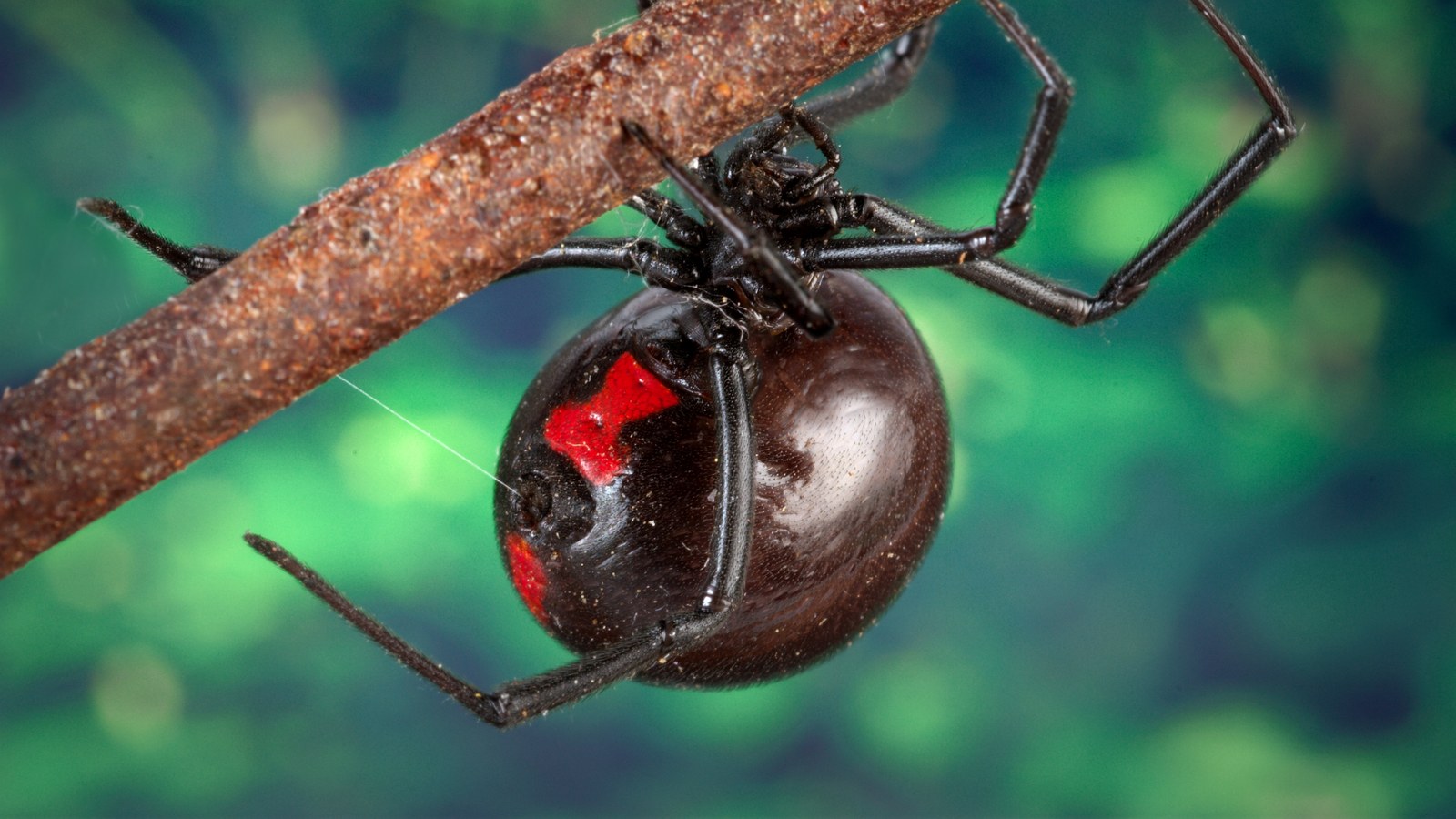
Search "southern black widow" and you will get the silhouette first: glossy black abdomen, long legs, and a red hourglass flashed from below. That animal is Latrodectus mactans, a comb-footed theridiid of the southeastern United States — shy, nocturnal, and famous for a neurotoxic bite that is medically serious yet rarely fatal when treated.
In Wilder TCG she appears as an Arachnida creature on the field-guide roster (Forest, Cost 1). The card is shorthand for a sit-and-wait predator whose real weapons are silk geometry and chemistry, not chasing speed.
Hourglass, comb-foot, tangled snare
Adult females are the familiar "shoe-button" spiders: body length commonly about 8–13 mm, shiny black, usually with a complete red hourglass on the venter. Males are much smaller (often only a few millimeters), longer-legged relative to body size, and typically lack the bold female hourglass. Juveniles start pale and gain the adult black-and-red pattern through successive molts.
Like other theridiids, L. mactans carries a comb of curved bristles on the hind tarsi — a silk-flinging tool used to wrap prey. The web is an irregular three-dimensional tangle, not an orb: supporting threads above, a messy catching zone, and sticky vertical lines that drop toward the substrate. The spider spends daylight hours in a silken retreat and hangs upside down so the hourglass faces outward — classic aposematic advertising.
α-Latrotoxin without the campfire myths
Widow venom contains the large neurotoxin α-latrotoxin, which disrupts synaptic signaling at nerve terminals. Bites are usually defensive — often when the spider is pressed against skin in a woodpile, shoe, or glove — not predatory attacks on people. Clinical reviews emphasize painful muscle cramping and autonomic symptoms that typically improve over hours to a few days with supportive care; deaths are rare in modern U.S. case series. Children, frail adults, and pregnant patients warrant prompt medical attention — this article is natural history, not first-aid advice.
The famous "15× more toxic than rattlesnake venom" line that circulates online is a crude toxin-mass comparison, not a useful field risk ranking: dose delivered, fang size, and behavior dominate real outcomes. Treat the spider with respect and gloves, not folklore.
The "widow" name, carefully
Sexual cannibalism after mating is real in the genus, but UF/IFAS and field workers stress that it is far more common under crowded lab conditions. In nature, many males escape; when cannibalism happens it is often tied to the male's inability to leave the web cleanly rather than a ritual dinner. Females can store sperm across multiple egg sacs, guard pear-shaped cocoons in the web, and live on the order of 1–3 years; males are shorter-lived after maturity.
Habitat: clutter with character
Typical sites are low, dark, and undisturbed: woodpiles, rock crevices, rodent burrows, hollow stumps, sheds, barns, crawl spaces, and cluttered outbuildings. The southeastern U.S. is the core range (Florida through the mid-Atlantic and west into Texas), with related Latrodectus species filling northern and western niches. Diet is arthropod-heavy — flies, beetles, crickets, ants, and other invertebrates that blunder into the tangle — which makes the spider a quiet pest-control neighbor when left alone outdoors.
From web retreat to Wilder card
In the Southern Black Widow field guide entry you will find taxonomy, habitat, and in-game stats. On the board she plays as a low-cost Arachnida presence — the game version of a predator that wins by waiting, wrapping, and warning.
If you have never tried Wilder, guest play is free in the browser — open packs, build a deck, and meet the hourglass on the table:
Quick facts
- Scientific name: Latrodectus mactans (Fabricius, 1775)
- Family: Theridiidae (comb-footed / cobweb spiders)
- Signature trait: red ventral hourglass (females); hind-leg comb for wrapping silk
- Venom note: α-latrotoxin neurotoxin; medically important, rarely lethal with care
- Habitat: sheltered low clutter — woodpiles, sheds, burrows, outbuildings
- Wilder family: Arachnida · Forest · Cost 1
Photo credit
Hero photograph: James Gathany, CDC Public Health Image Library, "Black widow spider 9854 lores", a female southern black widow (Latrodectus mactans) showing the red hourglass (Wikimedia Commons), public domain (U.S. government work). Cropped for the Field Journal hero.

Questions people ask
How do you tell a southern black widow from a northern black widow?
Check the red mark under the abdomen. In female southern black widows (Latrodectus mactans) the hourglass is almost always joined in the middle; in northern black widows (L. variolus) it is often split into two spots, usually with a row of red spots down the back. Their ranges overlap and they can be hard to tell apart (LSU AgCenter, Missouri Dept. of Conservation).
Are male black widows dangerous?
No. Males are only about 4–8 mm long, much smaller than females, and LSU AgCenter says they are no threat to people. Only the larger female can deliver a medically significant bite (LSU AgCenter). See our southern black widow card.
What should you do if a black widow bites you?
Get medical care right away and, if you safely can, bring the spider for identification. Bites can cause severe pain, muscle and abdominal cramps and high blood pressure; treatment usually manages the symptoms, and an antivenom exists for severe cases (Missouri Dept. of Conservation, LSU AgCenter).
How do most black widow bites happen?
By accident, when someone reaches into a hidden web in a woodpile, shed, barn or other dark spot and touches the female. LSU AgCenter warns never to probe a web by hand, even gloved, or with a stick, because the spider can walk up it or drop onto skin (LSU AgCenter).