Western Diamondback Rattlesnake: Diamonds, Warning Buzz, and Desert Ambush
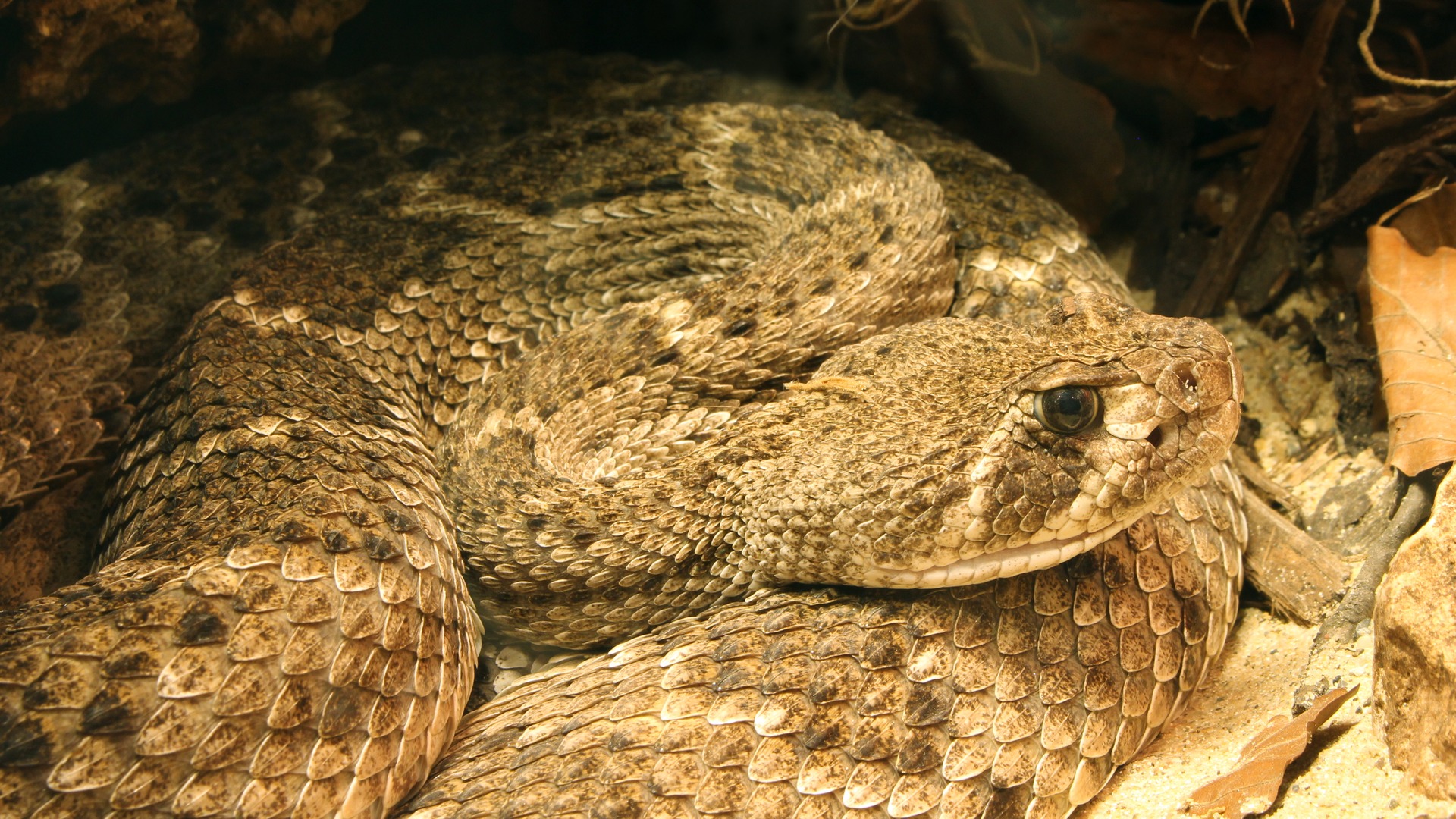
Species deep dive · western diamondback rattlesnake
Search "western diamondback rattlesnake," "are diamondbacks dangerous," or "why do rattlesnakes rattle" and you meet Crotalus atrox — the Southwest's iconic pit viper. Broad triangular head, pale-bordered diamonds down the back, black-and-white banded tail, and a keratin rattle that buzzes before most strikes. It is not looking for a fight with people. It is a heat-sensing rodent hunter that happens to carry medically significant venom.
In Wilder TCG the Western Diamondback Rattlesnake is a Reptilia Grassland creature (Cost 3). The card is shorthand for a real arid-land ambush predator whose warning buzz and diamond pattern define desert snake lore.
Pit viper of the arid Southwest
Western diamondbacks are crotaline vipers (Viperidae). Animal Diversity Web maps them from central and western Texas through southern New Mexico and Arizona into southern California, and well into central Mexico. Habitat is dry and open: rocky shrub country, desert flats, grasslands, chaparral, washes, and canyon edges where rock crevices or rodent burrows offer cover. USGS habitat modeling places the species across broad arid and semiarid stretches of the contiguous United States. Wilder's card tags the animal Grassland — a fair single label for a species that also thrives in true desert.
Adults are heavy-bodied. ADW cites body length on the order of ~1.5 m and weight up to about 6.7 kg; field-guide ranges of roughly 4–6 feet and a few pounds are typical working numbers for many individuals. Ground color runs yellowish gray, pale blue, or pinkish; dark diamonds wear pale borders; the tail is famously ringed black and white. Like other pit vipers, C. atrox has a loreal pit between eye and nostril — a paired infrared sensor that detects tiny temperature differences and helps locate warm-blooded prey in low light.
The rattle is not a calendar. Each segment is a retained remnant of a shed skin; new segments form with molts while older ones wear and break. Segment count is a rough age hint at best, not a precise year count.
Venom — careful facts, not folk medicine
C. atrox venom is a complex cocktail. Proteomic work (Calvete et al., 2009) shows it dominated by snake-venom metalloproteinases and serine proteinases, with a toxin profile consistent with cytotoxic, myotoxic, hemotoxic, and hemorrhagic effects — tissue damage, muscle injury, and disruption of normal clotting. That is laboratory and clinical language for why bites can swell, bruise, and become systemic medical emergencies. It is not a recipe for home treatment.
If a person is bitten: treat it as an emergency. Keep the person calm and still if possible, remove rings or tight jewelry from the affected limb, and get to emergency care or call local emergency services / Poison Control. Do not cut the wound, suck venom, apply a tourniquet, pack ice as "treatment," or use electric shock. Hospital evaluation decides whether antivenom is needed. This article describes biology; it does not replace medical advice.
Toward prey, hollow fangs deliver venom under muscular control; snakes can meter how much they inject. Toward people, most encounters end with retreat or a warning rattle. Defensive strikes happen when a snake is stepped on, cornered, or harassed. Regional summaries place C. atrox among the most medically important rattlesnakes in the Southwest and northern Mexico — bite frequency tracks range overlap with people, not a hunt for conflict.
Live young, nocturnal hunt, shared dens
Western diamondbacks are ovoviviparous: embryos develop inside thin membranes, and young are born live. ADW reports gestation on the order of ~167 days, litters of roughly 10–20 (averages near 14), and independence within hours to a day. Sexual maturity is often cited around three years. There is no extended parental care neonates scatter to hunt and find winter refuge on their own. First-year survival is hard: cold, hunger, and predators thin the cohort.
Diet is opportunistic: small mammals and birds first, plus lizards and other occasional vertebrates. Heat pits and chemoreception (tongue + vomeronasal organ) guide strikes; prey is swallowed whole. In dry country, moisture from prey matters as much as free water. Hunting often shifts toward dusk and night in hot seasons; roads at twilight become unfortunate encounter zones when asphalt holds heat.
In fall, snakes migrate toward winter hibernacula — rock crevices, mammal burrows, and other frost-buffered shelters. In colder grassland settings, prairie-dog tunnels and similar holes may host congregations; in milder deserts, dens can be more makeshift and less crowded. Communal denning is real ecology, not a claim of fixed "nest densities." Males may engage in ritualized combat — rising and intertwining without using fangs — during the breeding season.
Predators include hawks, eagles, roadrunners, and other opportunistic hunters. Camouflage and the rattle come first; the strike is a last, expensive option.
Conservation: abundant, still misunderstood
IUCN lists Crotalus atrox as Least Concern (assessment 2007) on the strength of a wide range and presumed large, stable population. Local killing, habitat conversion, and road mortality still remove snakes and can empty small sites, but the species as a whole is not globally threatened. Diamondbacks help check rodents across arid landscapes; fear still drives unnecessary killing of animals that would rather rattle and leave.
Give them space. Watch rocky trails at dusk. Do not move, kill, or photograph a coiled snake at arm's length.
On the Wilder card
In the Western Diamondback Rattlesnake field guide entry you will find taxonomy, habitat, and in-game stats. On the board it plays as a mid-cost Grassland Reptilia presence — the game echo of a diamond-backed pit viper whose real power is infrared hunting and a warning buzz you should heed.
If you have never tried Wilder, guest play is free in the browser — open packs, build a deck, and put a desert ambush predator on the table:
Quick facts
- Scientific name: Crotalus atrox Baird & Girard, 1853
- Family: Viperidae (pit vipers); subfamily Crotalinae
- Hook: diamond pattern + blackwhite tail rings; infrared pits; keratin warning rattle
- Size: often ~1.2–1.8 m class; ADW ~1.5 m / up to ~6.7 kg
- Venom: hemotoxic / tissue-damaging cocktail (metalloproteinases & serine proteinases prominent); bites need emergency care no DIY remedies
- Reproduction: ovoviviparous; litters commonly ~10–20 live young
- Range / habitat: southwestern U.S. into Mexico; desert, grassland, rocky shrub, chaparral
- Status: IUCN Least Concern
- Wilder family: Reptilia · Grassland · Cost 3
Sources
- Animal Diversity Web — Crotalus atrox
- IUCN Red List — Crotalus atrox
- Calvete et al. (2009) Journal of Proteome Research — C. atrox snake venomics
- NCBI Bookshelf / StatPearls — Rattlesnake Toxicity
- USGS — Western diamond-backed rattlesnake habitat map (CONUS)
- NPS — Rattlesnakes (Grand Canyon)
- Wilder TCG — Western Diamondback Rattlesnake field guide