Coastal Taipan: Why It's More Dangerous Than the Inland Taipan
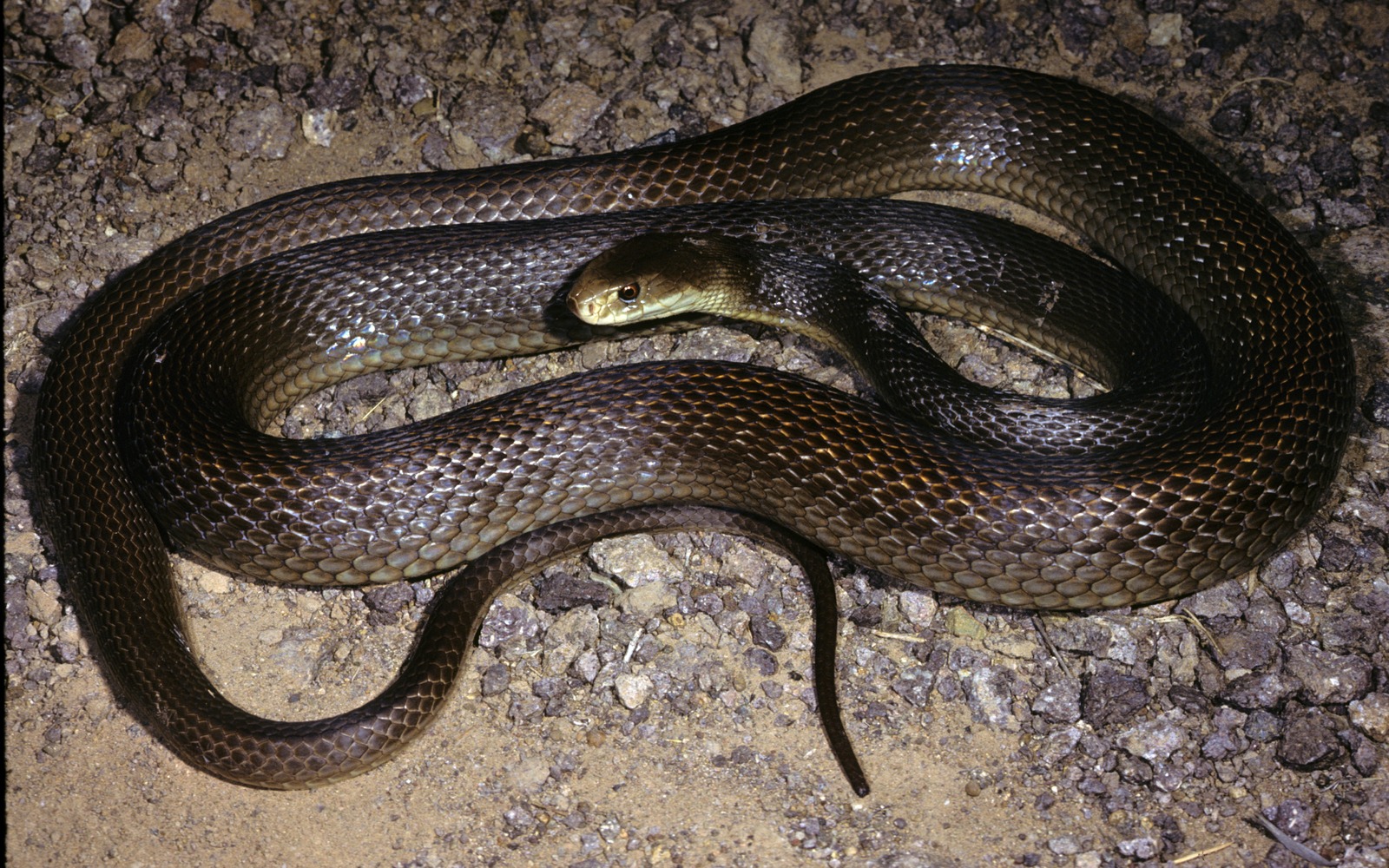
Species deep dive · coastal taipan, inland taipan
Is the coastal taipan more dangerous than the inland taipan? To people, yes. Drop for drop, the inland taipan (Oxyuranus microlepidotus) still wins the famous mouse LD50 tests — our venom showdown covers that ranking. But danger is not the same as toxicity. The coastal taipan (Oxyuranus scutellatus) lives where people farm and walk, delivers far more venom per bite, carries the longest fangs of any Australian elapid, and will often strike more than once (Australian Museum; Australian Geographic; AVRU).
Toxicity versus danger
Venom rankings usually quote murine subcutaneous LD50: how little venom it takes to kill half a group of lab mice. On that scale the inland taipan is routinely listed first. That does not mean it kills the most people. LD50 ignores dose, fang length, strike behaviour, and — most of all — how often the snake and a human share the same patch of ground (Australian Museum inland taipan; Australian Geographic).
The coastal taipan flips that picture:
- Range. It arcs along wetter northern and eastern coasts, from northern New South Wales through Queensland and across the Top End into northern Western Australia, plus southern New Guinea. Inland taipans are tied to remote cracking-clay floodplains in Channel Country of south-western Queensland and north-eastern South Australia (Australian Museum; Australian Museum inland).
- Yield. Average coastal yield is about 120 mg, with a recorded maximum of 400 mg. Inland averages about 44 mg, maximum about 110 mg (AVRU).
- Fangs and strikes. Coastal fangs reach about 12 mm, the longest of any Australian elapid, and the snake can swing them slightly forward. When threatened it often delivers several fast bites, and studies show later bites can still carry a large load (Australian Museum).
- Temperament and habitat. Coastal taipans are nervous and alert around people, and they do well in cane fields and grassy farmland where rats are common. Inland taipans are shy, briefly above ground, and rarely met by anyone who is not looking for them (Australian Museum; Australian Museum inland; Australian Geographic).
Australian Geographic puts the practical result bluntly: the coastal species is considered far more deadly to humans, and was responsible for many deaths before antivenom, including possibly five in Australia since the mid-1950s antivenom era (Australian Geographic). For the inland taipan, only a handful of bites are documented, and every patient survived with prompt first aid and hospital care — a story we unpack in Has anyone died from an inland taipan bite? (Australian Museum inland).
What the venom actually does
Both species share a toolkit of neurotoxins and coagulants. A 2025 comparative proteomics study in Toxins found nine protein families common to inland and coastal taipan venom, dominated by phospholipases A₂ (PLA₂) and three-finger toxins (3FTx). Coastal venom was richer in PLA₂ (about 66% of identified proteins versus about 47% inland), while inland venom carried a higher share of 3FTx (about 33% versus about 9%) plus lineage-specific proteins such as a Waprin (Paz et al. 2025).
Clinically, coastal envenoming can bring headache, nausea, collapse, paralysis, bleeding problems, muscle breakdown and kidney damage, often with a fast onset (Australian Museum). Before specific antivenom and modern care, more than 90% of taipan envenomations were fatal (AVRU). The Australian Museum notes that before Commonwealth Serum Laboratories released a specific antivenom in 1956, a taipan bite was nearly always fatal (Australian Museum).
How the coastal taipan hunts
In the wild it feeds on warm-blooded prey — mice, rats, bandicoots and birds. It scans with good eyesight, freezes, then hurls forward with one or several lightning bites, releases the animal, and tracks the scent trail to the dying prey. That bite-and-release style lowers the chance of a retaliatory bite from a rat (Australian Museum). Average total length is around 2 m; rare animals exceed 3 m, and the longest reliably measured wild museum specimen had a snout–vent length of 2260 mm (Australian Museum).
The name taipan comes from the Wik-Mungkan people of Cape York. Anthropologist Donald Thomson brought the word into wider use and was the first person to capture and milk a live taipan (Australian Museum; Australian Geographic).
The bite that built the antivenom
On 27 July 1950, young snake collector Kevin Budden caught a coastal taipan near Cairns. While bagging it he was bitten. He insisted the snake be kept alive and sent south; he died the next day. That animal became the first taipan ever milked for venom, and its venom underpinned the antivenom that would later save others (Museums Victoria; ABC News).
Any suspected taipan bite is still a medical emergency: pressure-immobilisation first aid and urgent hospital care, even if the wound looks trivial (Australian Museum).
For another springtime Australian elapid that shares farmland and suburbs with people, see our eastern brown snake piece.
How the coastal taipan plays in Wilder
The Coastal Taipan (Oxyuranus scutellatus) is an Uncommon Reptilia card in the Grassland element. It costs 4 Energy, with Attack 4 and Health 3, and it has Basking and Venom. Flavour text: "It bites, lets go, and follows the scent trail to finish the job." Its cousin the Inland Taipan is a Rare 4-cost 5/3 with the same keywords — higher Attack on the card, matching the "most toxic" reputation, while the coastal card leans on the practical threat.
Wilder is a free browser collectible card game about real animals, and you can play it free in your browser with no signup.
Photo credit
Hero photograph: John Wombey / CSIRO, "Taipan – Oxyuranus scutellatus", photographed at Cooktown, Queensland, February 1980, Wikimedia Commons, CC BY 3.0. Cropped for the Field Journal hero.

Questions people ask
Which taipan has more toxic venom?
The inland taipan, by murine LD50. Drop for drop it ranks as the most toxic snake venom tested that way, but it rarely meets people. The coastal taipan is the more dangerous species in practice because of yield, fangs and coastal range (Australian Museum; AVRU).
How much venom can a coastal taipan deliver?
About 120 mg on average, with a recorded maximum of 400 mg. The inland taipan averages about 44 mg (max about 110 mg) (Australian Venom Research Unit).
Has anyone died from an inland taipan bite?
No confirmed modern fatalities. Only a handful of inland taipan bites are documented, mostly keepers, and every patient survived with first aid and hospital care (Australian Museum). See our full note: Has anyone died from an inland taipan bite?.
What happened to Kevin Budden?
On 27 July 1950 he caught a coastal taipan near Cairns for research, was bitten while bagging it, and died the next day after insisting the snake be sent to Melbourne. It became the first taipan milked for venom and helped build the antivenom (Museums Victoria; ABC News).
Sources
- Australian Museum: Coastal Taipan
- Australian Museum: Inland Taipan
- Australian Venom Research Unit: Taipans (Oxyuranus sp.)
- Australian Geographic: Coastal taipan fact file
- Paz et al. (2025) Exploring the Venom Diversity of Australian Taipans, Toxins 17(10):488
- Museums Victoria: First taipan milked for venom (Budden specimen)
- ABC News: Tragic origins of the first taipan antivenom