Leafy Sea Dragon: Camouflage, Male Pregnancy, and SA Algal Bloom
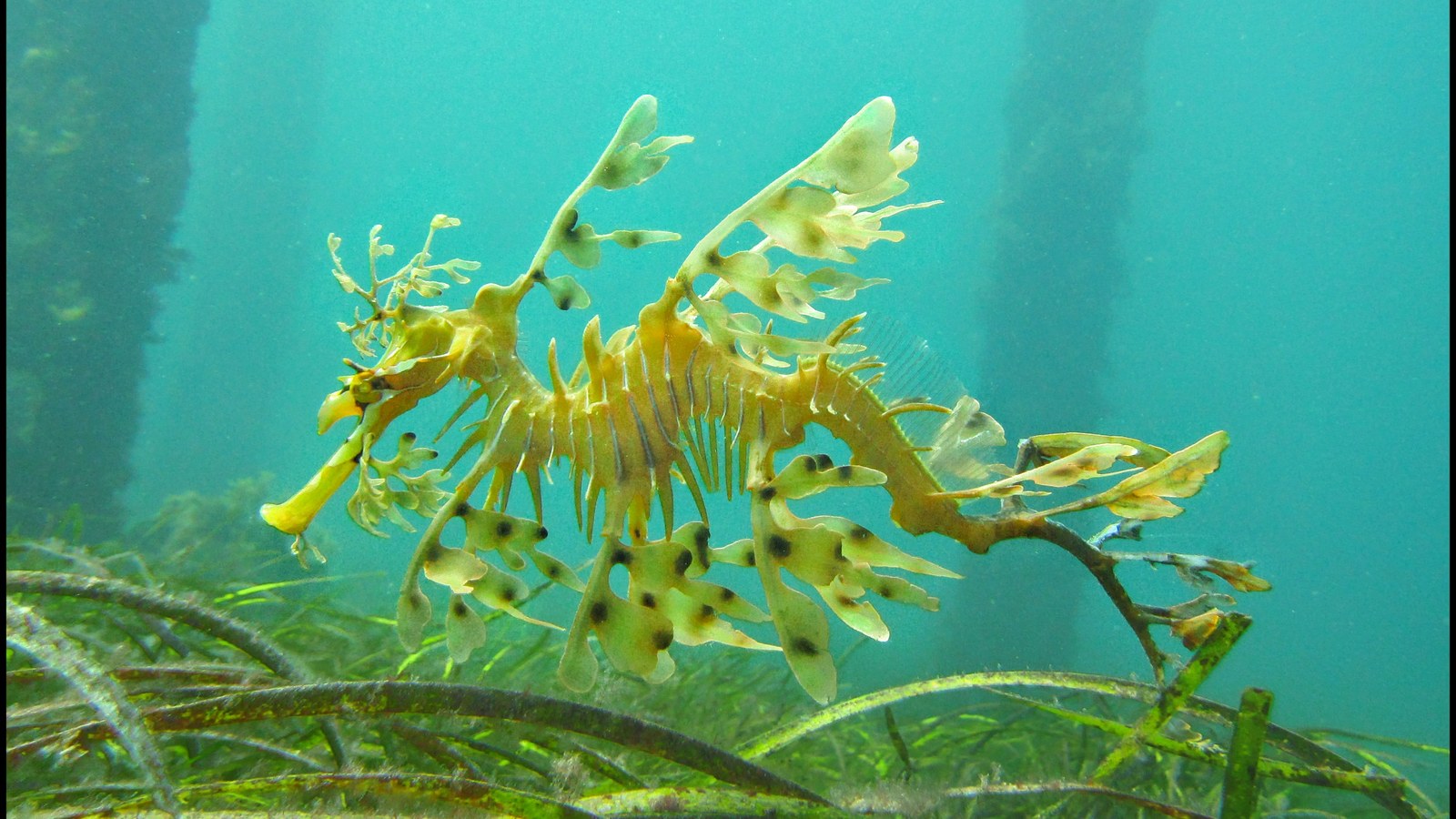
Species deep dive · leafy sea dragon
What is a leafy sea dragon? Phycodurus eques is a bony fish in the seahorse-and-pipefish family Syngnathidae, found only along southern Australia’s temperate coast — roughly from Western Australia’s Jurien Bay region across South Australia to Victorian waters. It is South Australia’s official marine emblem. Leaf-like skin flaps, bony plates instead of scales, and a long tubular snout make it look like a drifting scrap of kelp more than a fish.
Do the males get pregnant? In the syngnathid sense, yes. The female presses a clutch of eggs onto a soft brood patch under the male’s tail. His skin cups each egg; he incubates them for roughly four to eight weeks (field summaries differ slightly by source), then releases tiny independent fry. WA’s parks agency cites about 100–250 eggs per clutch; Aquarium of the Pacific cites roughly 250–300. Either way, dad does the brooding.
Why are they in the news? South Australia’s 2025–26 harmful algal bloom hammered syngnathids. Dragon Search SA analysed 1,540 citizen-science reports (January 2025–May 2026) and documented about 159 dead leafy sea dragons and 1,524 dead weedy sea dragons (Phyllopteryx taeniolatus) — plus large pipefish and seahorse wash-ups. Ecologists have called it among the worst mass mortalities recorded for the family worldwide. Leafies remain IUCN Least Concern globally and are totally protected in Australian waters, but local SA populations look badly reduced, and experts say the leafy’s Red List status is being reassessed in light of the bloom.
Camouflage that moves
Leafies live among kelp, seagrass, and weed-covered rocky reefs, often from a few metres to tens of metres deep. They swim by fluttering tiny translucent dorsal and pectoral fins while the “leaves” stay still — so they can hide by moving, swaying with the surge like real seaweed. Colour shifts help match green-gold shallows or deeper red-brown water. Sharp spines along the bony plates may deter curious fish. Divers who spot one are lucky; the camouflage works on humans too.
No teeth, no stomach, endless snacks
Like many syngnathids, leafy sea dragons lack teeth and a true stomach. They pipette mysid shrimp and other tiny crustaceans through the snout almost constantly. That lifestyle makes them fragile in captivity and sensitive when blooms clog gill pores or wipe out the algae–shrimp food web beneath them. Habitat loss — seagrass die-off, pollution, coastal development — was already a concern before Karenia toxin turned SA beaches into mortality logs.
Leafy vs weedy (and why the tally matters)
Weedy sea dragons lack the full leafy fronds and recently moved to IUCN Vulnerable. Leafies keep the elaborate appendages and the SA emblem status. Dragon Search’s numbers are documented carcasses and reports, not a complete census — offshore animals away from dive sites are poorly counted — so the true death toll is likely higher. Habitat restoration (seagrass, shellfish reefs) and careful breeding-season work are the recovery talk now; boosting fry survival only helps if the underwater forest returns.
On the Wilder card
*Leafy Sea Dragon (Phycodurus eques)* is Wilder’s living seaweed — Camouflage on a Water Pisces that turns male pregnancy and kelp mimicry into table presence. Pair this Journal piece with the card when you want the bloom numbers, the brood patch, and the emblem story together.
Photo credit
Hero photograph: Katieleeosborne — leafy sea dragon, South Australia (Wikimedia Commons), CC BY-SA 4.0. Cropped for the Field Journal hero.

Questions people ask
What is a leafy sea dragon?
A slow, bony fish (Phycodurus eques) in the seahorse family Syngnathidae, endemic to southern Australian reefs. Leaf-like appendages and colour-matching let it mimic drifting seaweed (Australian Museum; WA DBCA).
Do male leafy sea dragons get pregnant?
Yes — in the syngnathid sense. The female deposits eggs onto a brood patch under the male’s tail; he incubates them for roughly 4–8 weeks before releasing independent fry (WA DBCA; Aquarium of the Pacific).
How many leafy sea dragons died in the SA algal bloom?
Dragon Search SA’s citizen-science tally (Jan 2025–May 2026) documented about 159 dead leafy sea dragons and 1,524 dead weedy sea dragons in South Australia (ABC).
Are leafy sea dragons endangered?
IUCN currently lists Phycodurus eques as Least Concern, and they are totally protected in Australian waters — but SA’s bloom hammered local populations, and experts say the leafy’s status is being reassessed (ABC; Guardian).
What do leafy sea dragons eat?
Mostly mysid shrimp and other tiny crustaceans, sucked through a pipe-like snout. They have no teeth and no stomach, so they forage almost constantly (Aquarium of the Pacific). See Wilder’s Leafy Sea Dragon card.
Sources
- ABC News — Dragon Search SA report tallies sea dragon mortalities in algal bloom (17 Sep 2026)
- The Guardian — Sea dragon populations decimated by SA algal bloom (19–20 Sep 2026)
- Australian Museum — Leafy Seadragon Phycodurus eques
- WA DBCA — Leafy sea dragon fun facts
- Aquarium of the Pacific — Leafy Seadragon species page
- Wilder — Leafy Sea Dragon card