Reef Stonefish: Most Venomous Fish, Sting First Aid, and Antivenom
Species deep dive · reef stonefish
Search “most venomous fish,” “stonefish sting,” or “stonefish antivenom,” and the honest answer points at stonefish in the genus Synanceia. Marine-toxin reviews treat reef stonefish (Synanceia verrucosa) and its close cousin the estuarine stonefish (S. horrida) as the world’s most venomous fishes — not because they chase people, but because a camouflaged dorsal-spine jab can dump a cocktail of labile toxins into a foot or hand. The pain is famously out of proportion to the puncture. The practical half of the story is equally clear: get out of the water, use hot-water immersion for pain, and get to hospital, where stonefish antivenom exists for severe cases.
In Wilder TCG the Reef Stonefish is a Cost 3 Pisces Water Uncommon with Camouflage and Venom (ATK 2 / HP 5) — a board echo of a sit-and-wait rock that prefers stillness over chase.
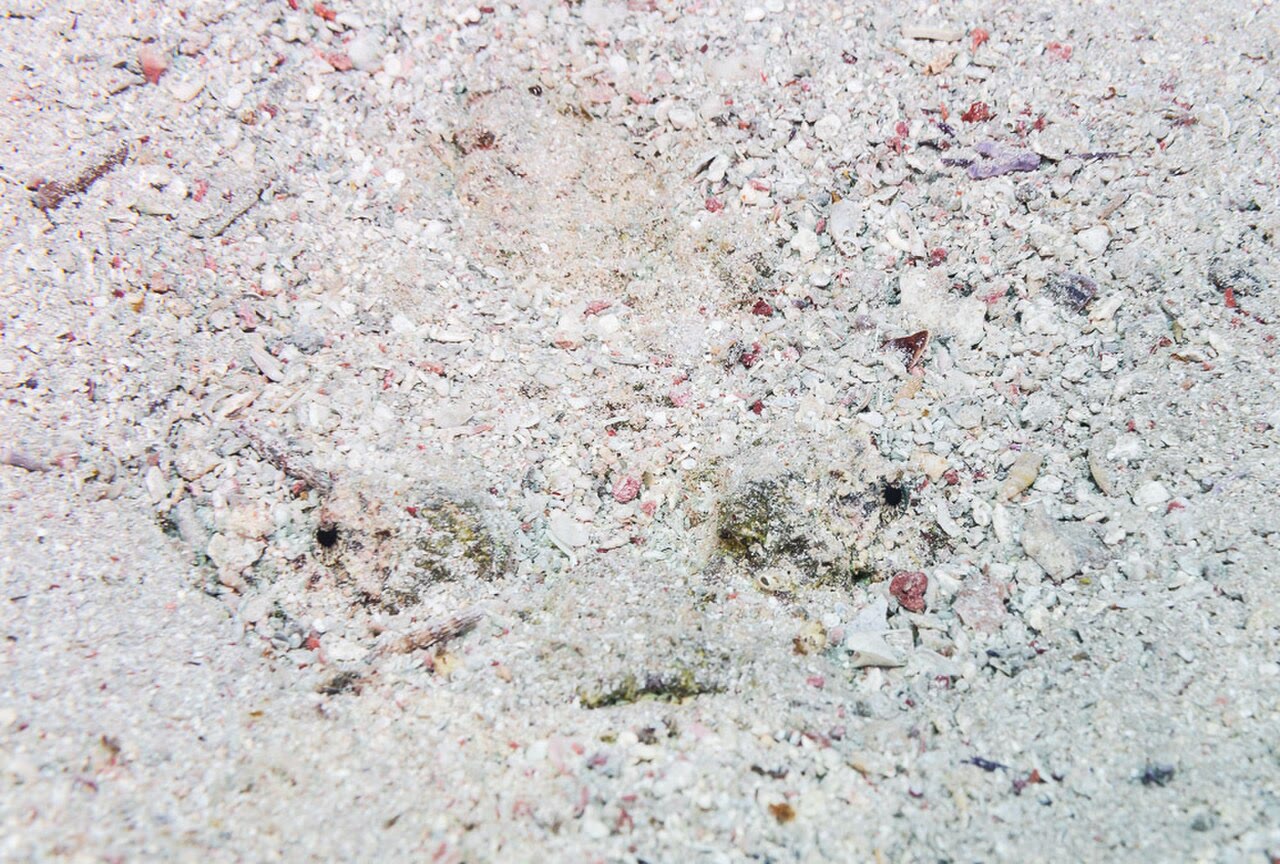
Looks like a rock — until it doesn’t
S. verrucosa is a chunky, warty scorpaeniform of tropical Indo-Pacific reefs, rubble flats, lagoons, and tide pools. Typical length is roughly 27–35 cm, with larger fish approaching about 50 cm. Mottled browns, greys, and algae-like flecks bury the outline; eyes sit in depressions so the silhouette stays flat. The fish often half-buries and waits. Prey — small fish, shrimp, crustaceans — dies to a sudden suction gulp, not a venomed bite. The venom apparatus is defensive.
Reviews summarise about 12–14 dorsal spines (commonly described as thirteen), each with a pair of venom glands under a thick sheath. Step on the fish and vertical pressure ruptures the sheath, injecting venom up the spine grooves. Pelvic and anal spines can also carry venom tissue in scorpaeniforms, but the headline injuries are almost always those dorsal needles.
What the venom does
Stonefish venom is famously heat-labile and chemically messy: cytolytic and cardiovascular toxins dominate the clinical picture. In S. verrucosa, named fractions include verrucotoxin (VTX) and neoVTX; related S. horrida work isolates stonustoxin (SNTX). Victims describe immediate, crushing pain that can race up a limb, with blueish puncture marks, swelling, and sometimes nausea, weakness, heart-rhythm or breathing trouble. Severe cases in the clinical literature include compartment syndrome, tissue loss, and — rarely but documented — deaths. Many stings are milder and resolve with good first aid and hospital support; underreporting makes true global tallies hard.
This is not a bite-and-hold predator story. Stonefish do not “hunt people.” Almost every serious case is an accidental step in shallow reef or rubble where the fish looked like substrate.
First aid: heat, then hospital
Guidance from clinical reviews, MedlinePlus, and coastal Australian councils converges:
- Leave the water and call emergency services.
- Control bleeding with clean pressure if needed; remove visible spines only if it is safe and easy — do not dig blindly.
- Immerse the wound in hot water as hot as can be comfortably tolerated (MedlinePlus cites about 40–45 °C / 104–113 °F) for tens of minutes (often 30–90 minutes with reheating), which helps pain and matches experimental work showing heat can deactivate stonefish venom proteins.
- Get to hospital for wound care, imaging if a tip may remain, tetanus status, pain control, and assessment for antivenom.
Do not cut the wound, suck venom, or apply a tourniquet as folk “cures.” Hot water is first-line pain care, not a substitute for medical evaluation when pain is extreme, spines are multiple, or systemic symptoms appear.
Antivenom when first aid is not enough
Equine-derived stonefish antivenom (developed in the Australian serum-laboratory tradition; modern production associated with Seqirus / CSL heritage) can neutralize key lethal and tissue effects. Reviews describe dosing by the number of punctures — for example, on the order of one ampoule (~2000 units) for one or two spine wounds, with more for additional punctures — given intramuscularly or, in severe cases, under hospital protocols intravenously. Antivenom is typically reserved for severe or persistent pain, systemic signs, paralysis concerns, or multiple punctures. Cross-reactivity with some other scorpaeniform fish venoms has been reported experimentally, which is interesting pharmacology — not a DIY dosing chart.
Conservation and the Wilder card
S. verrucosa remains Least Concern on the IUCN Red List (2017 assessment cited on Wilder’s field guide) across a huge tropical range. The conservation story is not scarcity; it is human–reef overlap. Thick-soled shoes on rubble, shuffling feet, and swimming between patrol flags where lifeguards keep hot water ready are boring advice that works.
On the Reef Stonefish field guide page you will find Water habitat tagging plus Camouflage + Venom on a Cost 3 Pisces Uncommon — the game version of a fish that wins by being invisible until it is too late.
If you have never tried Wilder, guest play is free in the browser:
Quick facts
- Scientific name: Synanceia verrucosa (reef stonefish)
- Family: Synanceiidae (stonefishes; scorpaeniform relatives of scorpionfish/lionfish)
- Hook: Widely regarded as among the world’s most venomous fishes; defensive dorsal-spine envenoming
- Size: ~27–35 cm typical, up to ~50 cm
- Look: warty rock/coral camouflage; spines erect under pressure
- Range: tropical Indo-Pacific reefs, rubble, lagoons, tide pools
- Diet: small fish, shrimp, crustaceans — ambush suction feeding
- First aid: leave water → hot-water immersion → hospital; antivenom if indicated
- IUCN: Least Concern (2017)
- Wilder family: Pisces · Water · Cost 3 · ATK 2 / HP 5 · Camouflage + Venom · Uncommon
Photo credit
Hero photograph: Francois Libert — Reef Stonefish - Synanceia verrucosa — Wikimedia Commons, CC BY-SA 2.0.

Questions people ask
What is the most venomous fish in the world?
Marine-toxin reviews widely treat reef and estuarine stonefish (Synanceia verrucosa and S. horrida) as the world's most venomous fishes. Venom is delivered through dorsal spines when the fish is stepped on or pressed — not by biting. See Wilder's Reef Stonefish field guide.
What should you do for a stonefish sting?
Leave the water, call emergency services, and soak the wound in hot water that is as hot as can be comfortably tolerated (MedlinePlus cites about 40–45 °C / 104–113 °F) for tens of minutes while seeking hospital care. Do not cut or suck the wound. Antivenom may be used for severe pain or systemic symptoms.
How many spines does a reef stonefish have?
Synanceia verrucosa typically carries about 12–14 dorsal venom spines (often summarised as 13), each with paired venom glands under a sheath. Severity often tracks how many spines penetrate and how deep they go.
Is there antivenom for stonefish?
Yes. Equine-derived stonefish antivenom (historically Commonwealth Serum Laboratories / Seqirus in Australia) can neutralize key venom effects. Reviews note it is dosed by the number of puncture wounds and reserved for severe pain, systemic signs, or multiple punctures — after first aid and hospital assessment.
Are reef stonefish endangered?
No. Synanceia verrucosa is assessed as Least Concern on the IUCN Red List (2017 assessment cited on Wilder's field guide). The main human risk is accidentally stepping on a camouflaged fish on tropical Indo-Pacific reefs and rubble.
Sources
- Saggiomo et al. (2021) — Stonefish venom review (Marine Drugs / PMC)
- MedlinePlus — Stonefish sting
- Sunshine Coast Council — Stonefish on the Sunshine Coast
- Barnett et al. (2017) — Heat deactivation of Synanceia horrida venom
- Maillaud et al. (2020) — Is Synanceia verrucosa envenomation potentially lethal?
- IUCN Red List — Synanceia verrucosa (Least Concern, 2017 assessment cited on Wilder field guide)
- Wilder TCG — Reef Stonefish field guide