Monarch Butterfly: Multi-Generation Migration and Milkweed Chemistry
Species deep dive · monarch butterfly
Monarch Butterfly: Multi-Generation Migration and Milkweed Chemistry
Search "monarch butterfly" and you get orange wings on a map: Mexico's oyamel fir forests in winter, milkweed gardens in summer, and a migration no single butterfly completes alone. Danaus plexippus is a nymphalid whose fame is logistics — solar compasses, magnetic cues, and generations that hand the journey forward — plus chemistry stolen from milkweed.
In Wilder TCG the Monarch Butterfly is a Common Insecta creature with Flock and a Milkweed Toxin ability. The card is shorthand for a traveler that turns plant poison into a warning flag.
Taxonomy and the look that says "don't eat"
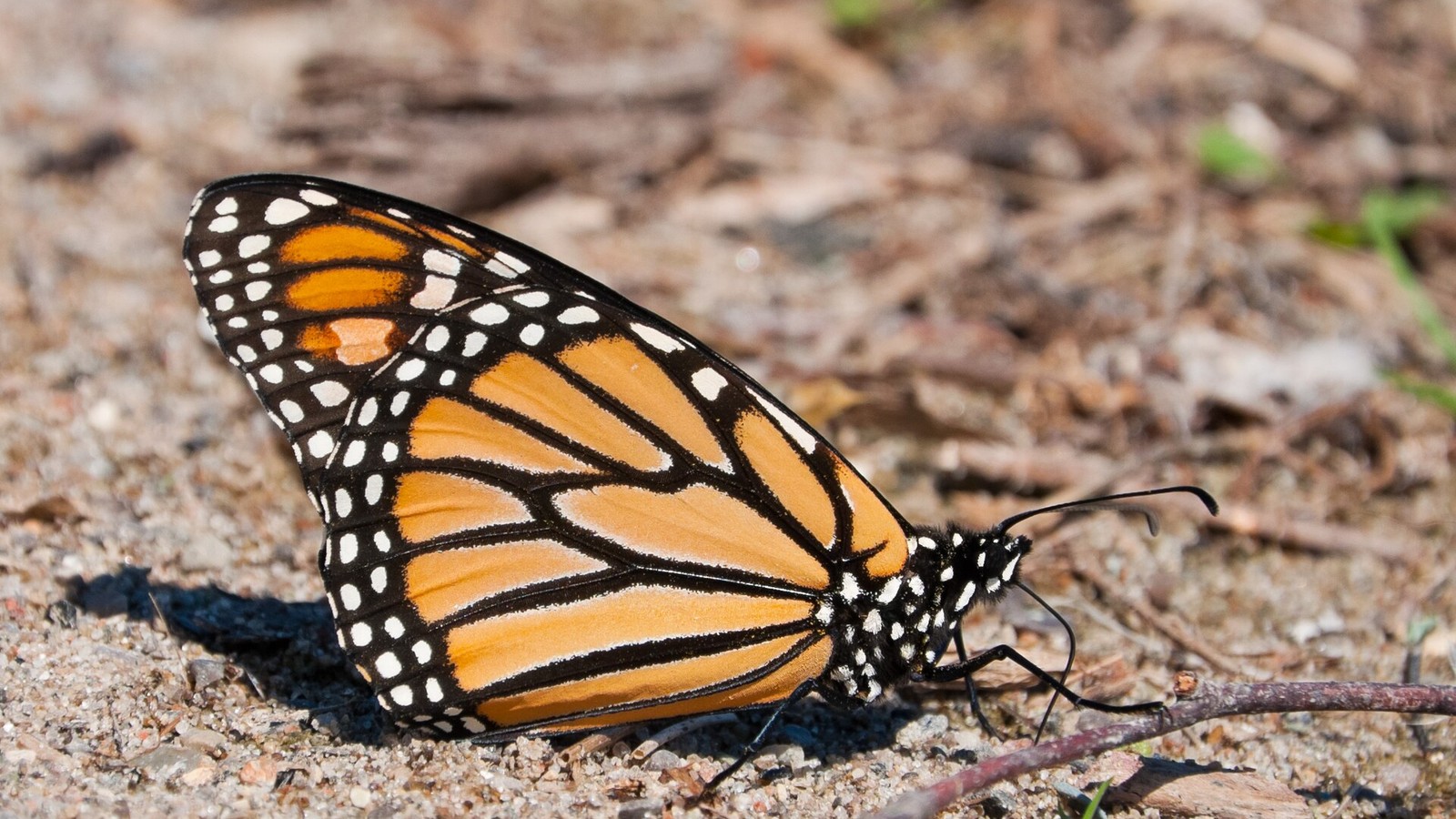
Kingdom Animalia → Arthropoda → Insecta → Lepidoptera → Nymphalidae → Danaus → D. plexippus (Linnaeus, 1758). Adults show the familiar orange wings with black veins and white-spotted black borders; wingspan commonly falls near ~9–10.5 cm (about 3.7–4.1 in). Sexual dimorphism is subtle (vein thickness and scent patches on males). The chrysalis is jade green with metallic gold spots — the Greek root behind "chrysalis" nods to gold.
Non-migratory populations exist beyond North America (including Australia and elsewhere). The SEO and conservation story that dominates search is the migratory North American phenomenon — eastern butterflies overwintering in central Mexico, western ones along the California coast.
Milkweed: nursery and chemical armor
Larvae are milkweed specialists (Asclepias and related hosts). They sequester cardenolides (cardiac glycosides) that make caterpillars and adults distasteful or toxic to many vertebrate predators. Bright coloration is classic aposematism: advertise the cost of a bad meal. Adults drink nectar from many flowers with a coiled proboscis; migration and breeding need both milkweed for eggs/larvae and nectar corridors for fuel.
Treat "pollinating powerhouse" carefully: monarchs visit flowers and move pollen, but they are not the sole or primary pollinator for most crops. Habitat value is real; hype should stay proportional.
A migration no individual finishes
Eastern migratory monarchs may travel on the order of 1,200–3,000+ miles / ~2,000–4,800+ km from breeding grounds toward Mexico's high-elevation oyamel fir forests. Orientation uses the sun's position (time-compensated), polarized light, and a magnetic sense. The southbound cohort is a long-lived "super generation"; spring and summer northward progress happens across multiple short-lived generations. Western migrants concentrate in coastal California groves. Exact routes and overwintering densities shift year to year — do not invent a single fixed headcount.
Overwintering adults can live roughly 8–9 months; most breeding-season adults live only a few weeks. Roosts can pack trees in numbers that look cinematic; cold snaps, illegal logging, and tourism pressure at winter sites still matter.
Conservation without collapsing the nuance
IUCN assessed the migratory monarch as Endangered in 2022, then — after a standards petition on the models used — changed the listing to Vulnerable in late 2023. That is a change in assessment framing, not automatic proof the wild population "recovered." Threats remain: breeding-habitat loss (especially milkweed and nectar in agricultural landscapes), insecticides, climate stress on winter sites, and degraded overwintering forests.
In the United States, USFWS proposed listing the monarch as threatened under the Endangered Species Act (proposed rule published December 2024) with a tailored 4(d) approach and California coastal critical-habitat units. As of this writing there is no final federal listing rule — proposed is not protected. Canada listed the monarch as endangered under the federal Species at Risk Act (2023) with protections focused on federal lands. Planting native milkweed and nectar plants remains the practical backyard lever; tropical milkweed management advice varies by region, so follow local guidance rather than one viral listicle.
From migration map to Wilder card
In the Monarch Butterfly field guide entry you will find taxonomy, habitat, and in-game stats. On the board, Flock echoes mass roosts and corridor travel; Milkweed Toxin nods to cardenolides that make a meal expensive.
If you have never tried Wilder, guest play is free in the browser — open packs, build a deck, and put a Monarch Butterfly on the table:
Quick facts
- Scientific name: Danaus plexippus (Linnaeus, 1758)
- Wingspan: ~3.7–4.1 in (~9–10.5 cm)
- Larval host: milkweed (Asclepias spp. and allies); cardenolide sequestration
- Migration: multi-generational; eastern Mexico / western California wintering
- IUCN (migratory): Vulnerable (revised from Endangered, 2023)
- US status: proposed threatened (ESA); no final rule yet
- Wilder family: Insecta · Common · Flock / Milkweed Toxin
Photo credit
Hero photograph: Paolo Costa Baldi, "Danaus plexippus Monarch Butterfly" (Wikimedia Commons), CC BY-SA 3.0. Cropped for the Field Journal hero.
