Mountain Lion: The Americas' Ghost Cat of Many Names
Species deep dive · mountain lion
Mountain Lion: The Americas' Ghost Cat of Many Names
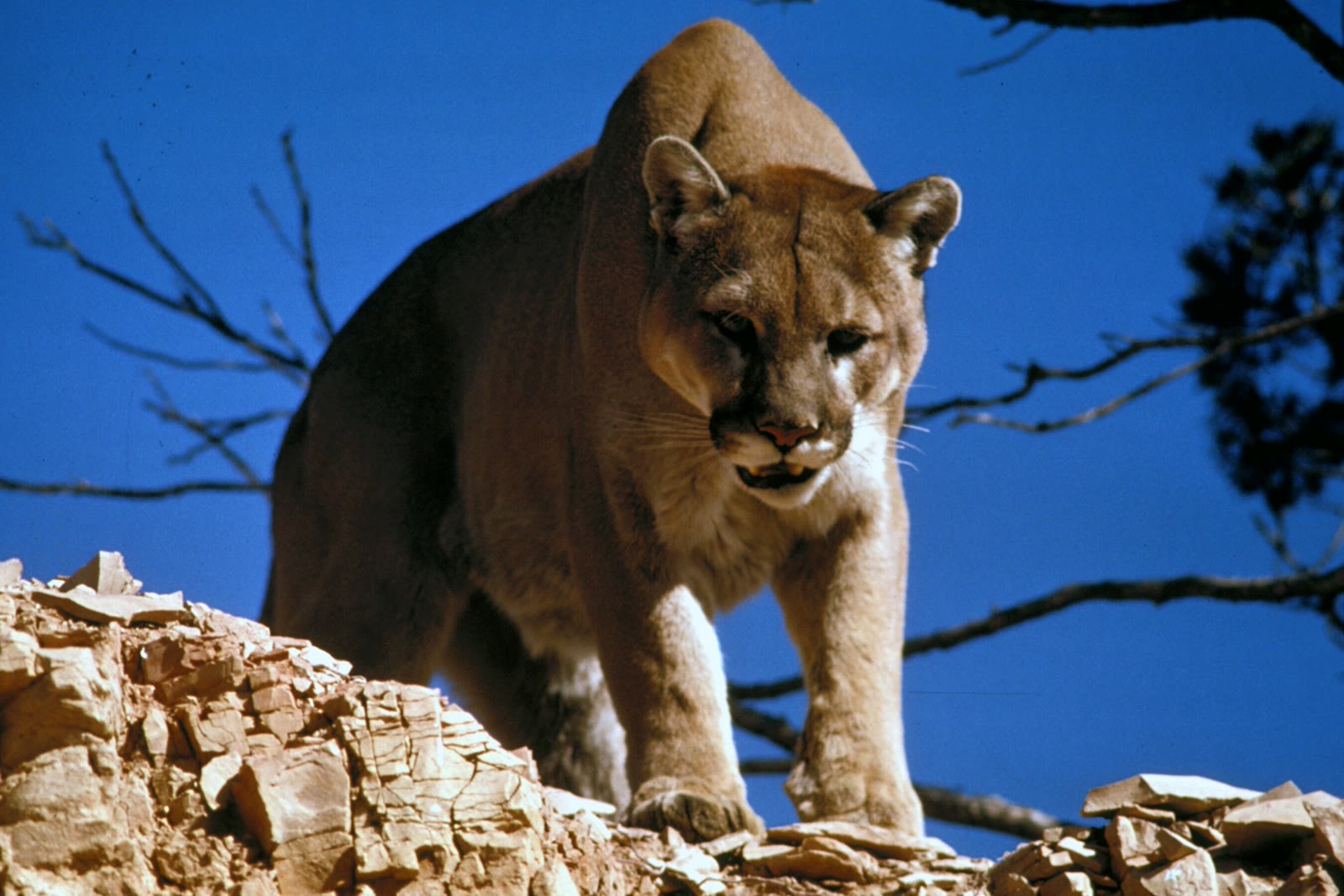
Call it mountain lion, cougar, puma, panther, catamount, or painter — Puma concolor answers to more English names than almost any other mammal. Guinness lists it for that record. The animal behind the aliases is one thing: a solitary, ambush-first felid that still holds the widest native land-mammal range in the Western Hemisphere, from the Yukon to Patagonia.
In Wilder TCG the Mountain Lion is an Uncommon Mammalia creature with Ambush and Feast. The card is shorthand for a ghost with claws — stealth and a cached meal, not a roaring African lion cousin.
Taxonomy: biggest of the "small cats"
Kingdom Animalia → Chordata → Mammalia → Carnivora → Felidae → Puma → P. concolor.
Mountain lions sit in the puma lineage with cheetahs. They are not "big cats" in the roaring Panthera sense. Like house cats, they can purr; they cannot roar. That hyoid anatomy puts them with the purring cats even though adults dwarf a bobcat.
Size tracks latitude: animals nearer the poles run larger. Typical adult males often fall around ~50–100 kg (roughly 115–220 lb in many North American summaries); females are smaller, often ~30–64 kg. Nose-to-tail length commonly spans about 6–8 ft for large males. Coat is tawny "one color" (concolor), with darker ear backs, muzzle sides, and a black-tipped tail; belly and chin are paler.
Kittens start spotted with blue eyes; spots fade through the first year or so as the adult camouflage takes over.
Ambush ecology, not a marathon chase
These are obligate carnivores. In much of North America, mule deer and white-tailed deer dominate the menu; elk, bighorn, and even moose enter when opportunity and body size allow. Smaller mammals (rabbits, rodents, raccoons, porcupines) fill gaps. South American diets shift with local ungulates and habitat.
Hunting is cover-dependent. Lions zigzag through home ranges, use rocky ledges and understory to close distance, then explode into a short rush and a killing bite to the neck or skull. After a large kill they often drag the carcass into cover, cache it under debris, and return over several days — females with kittens may need kills more often than solitary adults.
Vertical athleticism is real (tree climbs and high leaps are well documented), but treat viral "world record jump" numbers carefully; field sources emphasize power and agility more than a single lab-perfected centimeter.
Ghost range, shrinking map
Historically the species blanketed nearly the entire Americas. Today the longitudinal span remains huge — forests, deserts, grasslands, brushy edges, even the margins of suburbs — while the latitudinal story in North America is harsher: east of the Rockies, breeding populations were largely erased by the early 1900s except the isolated Florida panther. Western U.S. and Canadian populations recovered after bounty eras ended; California voters banned sport hunting in 1990. Midwestern recolonization by dispersing animals is ongoing but patchy.
Home ranges are large and variable (tens to hundreds of square miles depending on prey and cover). Males typically overlap several females; neighbors mostly avoid each other via scrapes and scent rather than constant combat. Activity is often crepuscular — dusk and dawn — matching deer schedules.
IUCN lists the species as Least Concern thanks to the continental footprint, while noting declines and pressure in parts of Latin America. Local crises are sharper: Florida panthers face roads as a top mortality source; habitat fragmentation and vehicle strikes threaten southern California mountain ranges; retaliatory killing and prey depletion hit many ranching landscapes.
CITES places most populations on Appendix II; some Central American animals are Appendix I. Legal status varies by country and U.S. state — from full protection to regulated hunting.
Names, fear, and careful cultural notes
Indigenous languages across the Americas named this cat long before European "lion" and "tyger" labels. The Guinness "most names" quirk is trivia with a point: people keep reinventing words for an animal they rarely see. Mystery feeds myth. Actual risk to people is low relative to how often lions share landscapes with us, but livestock conflict and fear still drive persecution. Treat attack anecdotes as rare events, not a species personality.
From canyon ledge to Wilder card
In the Mountain Lion field guide entry you will find taxonomy, habitat, and in-game stats. On the board, Ambush mirrors the short-range stalk; Feast nods to caching a deer and returning.
If you have never tried Wilder, guest play is free in the browser — open packs, build a deck, and put a Mountain Lion on the table:
Quick facts
- Scientific name: Puma concolor
- Also called: cougar, puma, panther, catamount (and dozens more)
- Size: typically ~6–8 ft nose-to-tail for large adults; ~30–100 kg depending on sex and latitude
- Diet: obligate carnivore — deer and other ungulates preferred; smaller vertebrates opportunistically
- Key traits: widest Western Hemisphere land-mammal range; purrs, cannot roar; solitary land-tenure system
- IUCN: Least Concern (local populations endangered / fragmented)
- Wilder family: Mammalia · Uncommon · Ambush, Feast