How Many Przewalski's Horses Are Left? Extinct in the Wild to Comeback
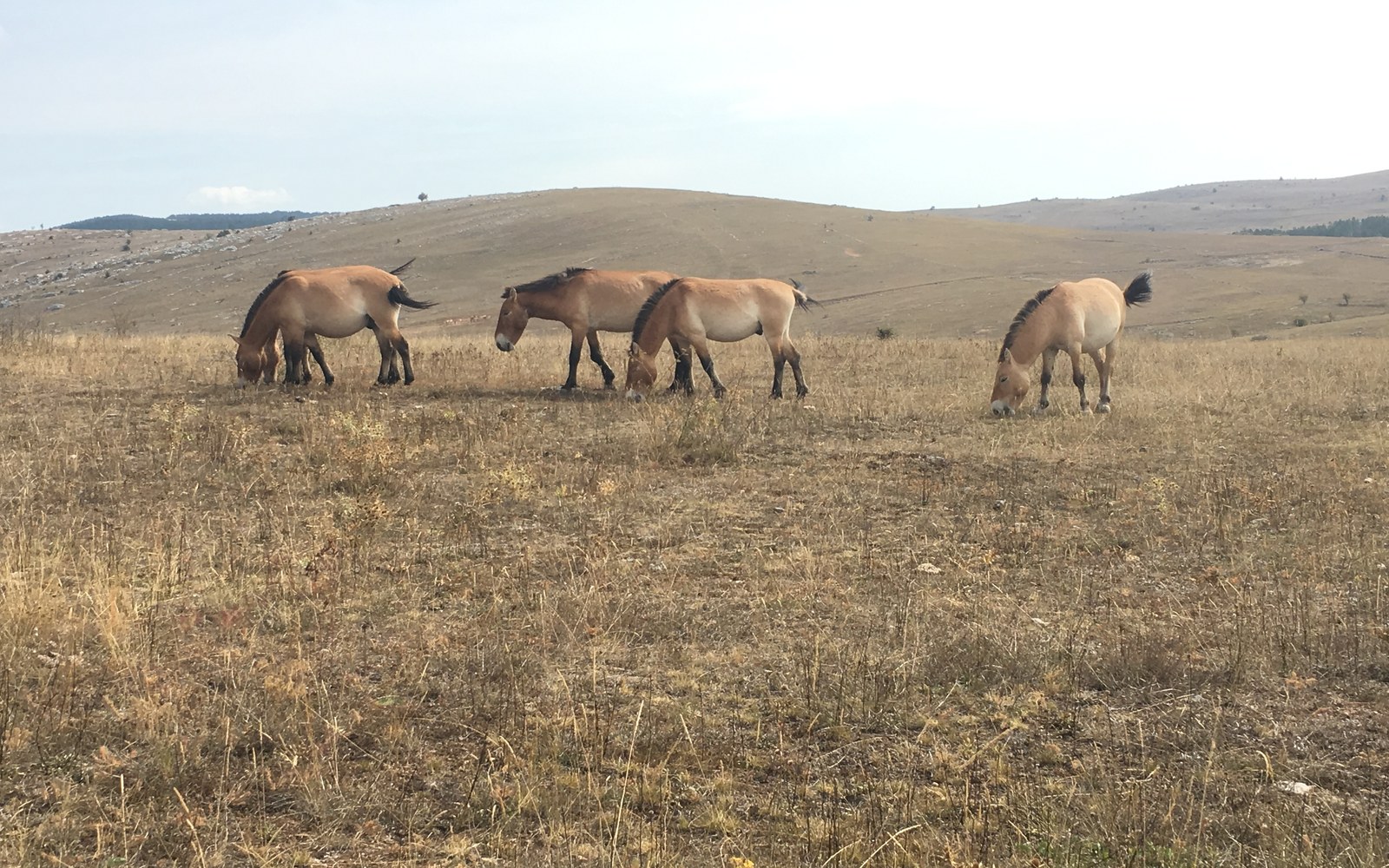
Species deep dive · przewalskis horse
*China alone now holds more than 900 Przewalski's horses (Equus ferus przewalskii) — about one-third of the global total, according to Chinese officials marking forty years of reintroduction (Xinhua, 7 August 2025). That is the short answer to "how many are left." The longer answer is a rare reverse of extinction: a species wiped from the wild, rebuilt in zoos, then walked back onto the steppe as takhi*.
Extinct in the wild — then Endangered
IUCN listed Przewalski's horse as Extinct in the Wild in 1996, after free populations disappeared (last reliably recorded wild sightings were in Mongolia's Dzungarian Gobi around 1969). Intensive captive breeding and reintroductions later supported a climb through Critically Endangered to Endangered on the 2014 Red List assessment (San Diego Zoo Wildlife Alliance IELC fact sheet; King et al. 2015 via IELC).
China's 1985 "Wild Horse Return" programme established breeding centres in Xinjiang and Gansu. As of the August 2025 update, Xinjiang held 546 animals and Gansu more than 250, with the national flock past 900 (Xinhua). In April 2026, managers released 30 more horses into Kalamaili Nature Reserve after winter adaptation; Xinjiang's wild population was then reported at 392 (Xinhua, 24 April 2026).
Mongolia, China, and the map of return
Reintroduction geography centres on Mongolia's Hustai (Hustain Nuruu), Great Gobi B, and Khomiin Tal, plus China's Kalamaili / Kalameili landscape — the same network summarised on the IELC conservation sheet. Semi-reserves and zoo herds still carry a large share of genetic safety net. Counts shift year to year with foals, dzud winters, predation, and whether a herd is fully free-ranging or winter-supplemented; treat any single headline number as a snapshot, not a permanent census.
What does not change is the story arc: collectors and habitat pressure emptied the wild range; a tiny captive founder stock rebuilt numbers; releases put dun, upright-maned horses back on Eurasian grassland.
On the Wilder card
The Przewalski's horse plays as a Rare Mammalia card: Cost 4, Attack 3, Health 5, with Herd and Resilient. Herd fits social harems on open grass; Resilient fits a species that survived a near-total wild wipeout and a captive bottleneck. In the free browser collectible card game, those keywords are flavour built on the same comeback the census headlines describe.
If you came here from a search box: China's flock is already past 900 and about a third of the world total; the species is Endangered, not Extinct in the Wild anymore; Mongolia and China remain the core reintroduction map. The rest of the page is how those numbers got there.
Photo credit
Hero photograph: JustineLevray — Chevaux de Przewalski (Equus ferus przewalskii) — Wikimedia Commons, CC BY-SA 4.0. Cropped for the Field Journal hero.

Questions people ask
Are Przewalski's horses extinct in the wild?
No longer. IUCN listed them Extinct in the Wild in 1996 after the last free herds vanished (last confirmed sightings in Mongolia's Dzungarian Gobi around 1969). Captive breeding and releases moved the status to Endangered (2014 assessment). They are still rare and recovery-dependent (San Diego Zoo Wildlife Alliance IELC fact sheet).
How many Przewalski's horses live in China?
Chinese officials reported the national population has surpassed 900, about one-third of the global total (Xinhua, August 2025). Xinjiang alone held 546 at that update, with Gansu exceeding 250 (Xinhua).
Where were Przewalski's horses reintroduced?
Major Mongolia sites include Hustai (Hustain Nuruu), Great Gobi B, and Khomiin Tal. China reintroduced animals to Kalamaili (Kalameili) Nature Reserve in Xinjiang from 2001, with further releases continuing into 2026 (IELC; Xinhua April 2026).
Is a Przewalski's horse the same as a mustang?
No. Mustangs are feral descendants of domestic horses. Przewalski's horse (Equus ferus przewalskii, or takhi) is the last surviving true wild horse lineage managed as a distinct conservation unit, with a different chromosome count from domestic horses (IELC; Smithsonian National Zoo species overview).
What does the Wilder Przewalski's horse card do?
On Wilder it is a Rare Mammalia card: Cost 4, Attack 3, Health 5, with Herd and Resilient — flavour for a tough steppe grazers that returned in groups after a captive bottleneck.