Sea Otter: Densest Fur, Tool Use, and Why Kelp Forests Need Them
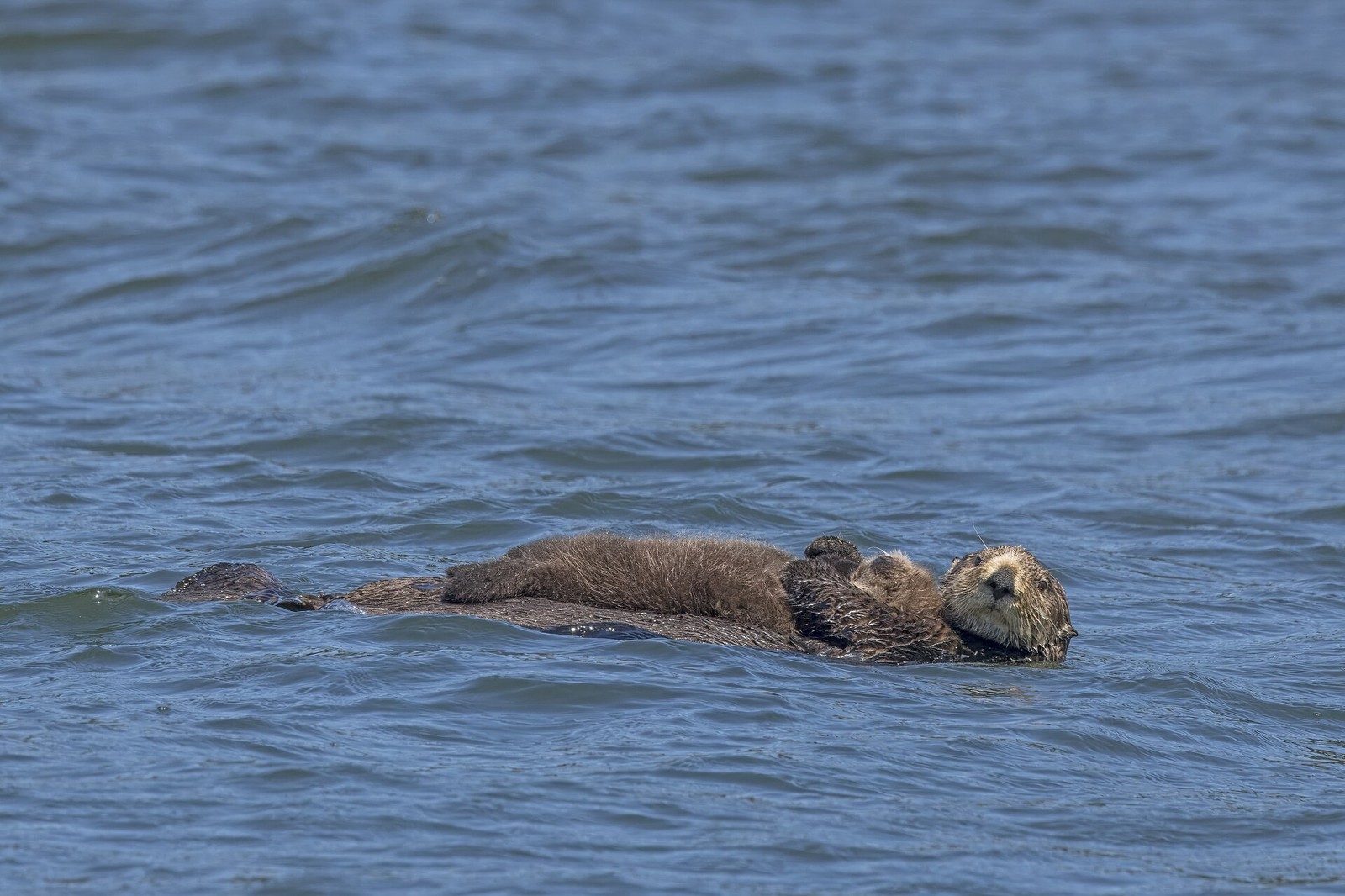
Species deep dive · sea otter
Why do sea otters float on their backs with rocks on their chests? Because a Sea Otter (Enhydra lutris) is a fully marine mustelid that lacks blubber and instead wears the densest fur of any mammal — on the order of 850,000 to about one million hairs per square inch — then uses a stone as a hammer or anvil while it eats shellfish at the surface (U.S. National Park Service; IUCN SSC Otter Specialist Group factsheet). The back-float posture keeps the tool and prey on the belly; the fur traps a warm air layer that oil spills can collapse with lethal speed.
Densest fur, highest metabolism
Unlike seals and whales, sea otters stay warm with pelage and a high metabolic rate rather than a thick fat layer. Adults may eat about 25–30% of their body weight in a day — urchins, clams, mussels, crabs, abalone and other nearshore invertebrates — foraging several times daily in temperate North Pacific waters (NPS; COSEWIC 2022). Resting animals often wrap themselves in kelp so currents do not pull the raft apart.
Tool use without hands like ours
Sea otters are among the few non-primate mammals that regularly use tools. A favorite rock may be tucked in an underarm pouch, then used to pry prey off the seafloor or to smash hard shells against the chest while the otter floats (Hall and Schaller classic observations summarized in COSEWIC 2022; NPS). That is the Feast-and-flavor story on the Wilder card — urchins cracked on the belly while the kelp raft holds.
Keystone of the kelp forest
Where sea otters are present they act as a keystone predator: by eating sea urchins they cut grazing pressure so kelp can grow into forests instead of “urchin barrens” of bare rock. Classic ecology work (Estes and Palmisano and later studies) and Canadian status assessments treat that cascade as a defining ecological role (COSEWIC 2022; IUCN Otter Specialist Group). This is a different animal from river otters (Lontra / Lutra): sea otters are stockier, fully marine North Pacific specialists with flipper-like hind feet.
From fur hunt to Endangered
Commercial fur hunting drove the species near extinction; by the early 20th century only small remnant colonies survived. Numbers have partly recovered under protection, but the IUCN still lists Enhydra lutris as Endangered, and southern populations remain vulnerable to oil spills, disease and other local threats (NPS; IUCN Red List entry).
How the sea otter plays in Wilder
In Wilder TCG the Sea Otter is a Cost 3 Mammalia Water Uncommon (ATK 2 / HP 4) with Feast and Resilient. Feast fits a specialist that turns hard-shelled prey into a surface meal; Resilient nods to a species that climbed back from the fur trade’s crash. Flavor text: "Cracks urchins on its belly with a favorite rock while the kelp raft holds steady."
Play Wilder free in your browser. No signup needed.
Photo credit
Hero photograph: Charles J. Sharp, "Northern sea otter (Enhydra lutris kenyoni) female and pup Quatsino", Quatsino Sound, Vancouver Island, BC, Canada (Wikimedia Commons), CC BY-SA 4.0. Cropped for the Field Journal hero.

Questions people ask
Do sea otters really have the densest fur of any mammal?
Yes. With roughly 850,000 to one million hairs per square inch, their coat traps insulating air because they have almost no blubber (U.S. National Park Service; IUCN Otter Specialist Group). See the Sea Otter card.
Why do sea otters float on their backs?
They rest, groom and eat at the surface on their backs, often wrapping in kelp so they do not drift, and they need that posture to keep tools and shellfish on the chest (NPS; IUCN factsheet).
Do sea otters use tools?
Yes. They are among the few non-primate mammals that regularly use stones to dislodge prey and smash hard shells while floating (COSEWIC 2022; NPS).
How do sea otters help kelp forests?
As a keystone predator they eat sea urchins that would otherwise graze kelp to barren rock, so kelp forests — and the communities that depend on them — can persist (COSEWIC 2022).
Are sea otters the same as river otters?
No. Sea otters (Enhydra lutris) are stockier, fully marine North Pacific mustelids with flipper-like hind feet; river otters (Lontra / Lutra) are sleeker freshwater (sometimes coastal) hunters (NPS; COSEWIC 2022).