Wolverine: Glutton Myth, Snowshoe Paws, and Delayed Kits
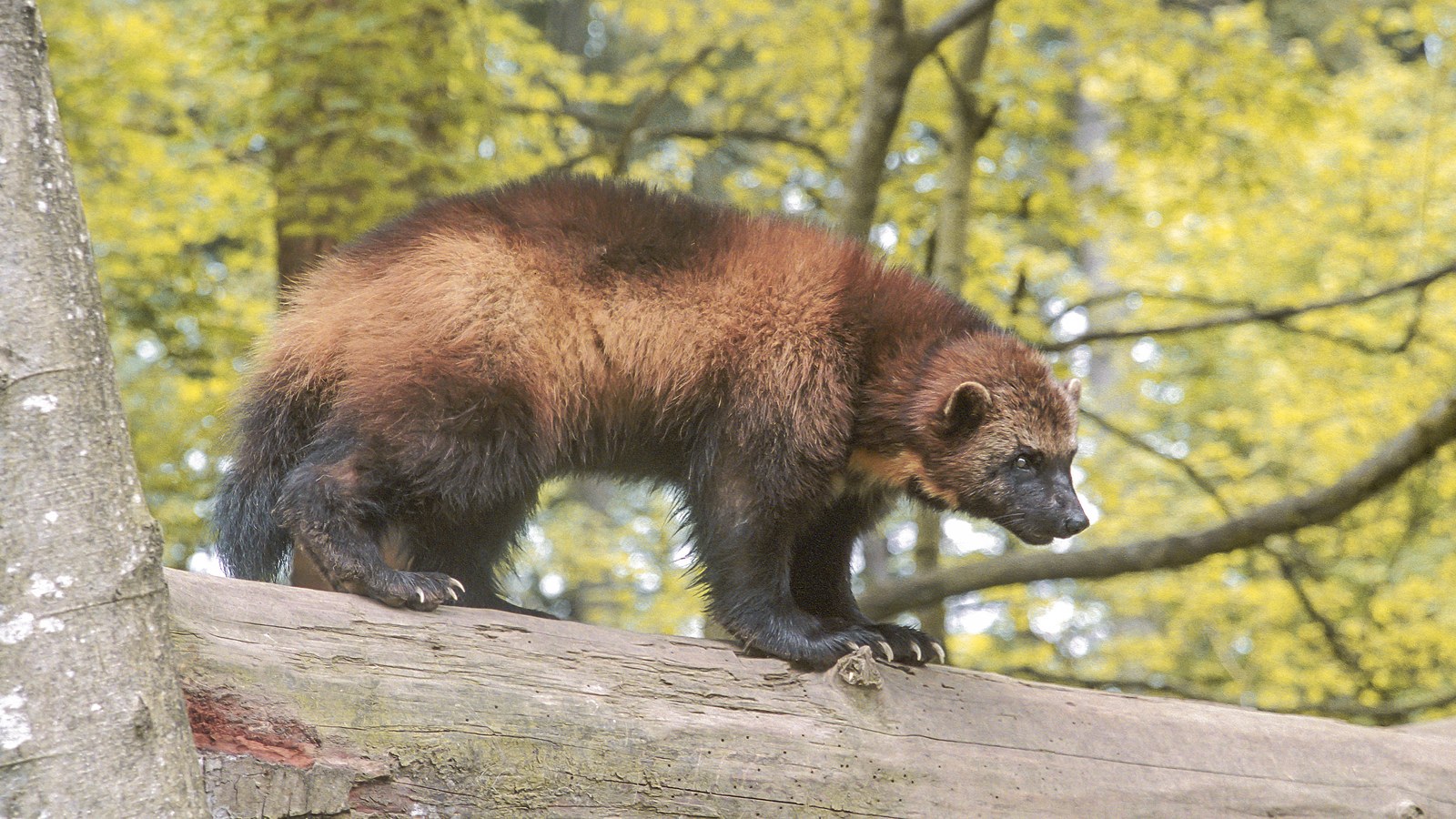
Species deep dive · wolverine
Wolverine: Glutton Myth, Snowshoe Paws, and Delayed Kits
Search "wolverine" and you get either a comic-book antihero or a cartoon of endless appetite. The real animal sits between those myths: Gulo gulo, the largest land-dwelling member of the weasel family (Mustelidae), a solitary circumpolar scavenger–predator built for deep snow and sparse winters.
In Wilder TCG the Wolverine is an Uncommon Mammalia creature with Resilient and Feast. The card is shorthand for a mustelid that survives hard fights and grows stronger after a kill — echoes of an animal that defends carcasses and keeps moving through country most predators abandon.
Built like a small bear, wired like a weasel
Adults look squat and powerful: body length roughly 65–109 cm (26–43 in), shoulder height about 36–45 cm, males typically 11–18 kg (24–40 lb) and females lighter. A pale lateral stripe often runs from the shoulders across the flanks, and some individuals show a light facial mask. Thick, oily fur sheds frost — historically prized as parka trim because frozen breath brushes off the hairs.
The paws are oversized relative to body size, with hairy soles that act like snowshoes. Long claws help on ice, rock, and climbable timber. Like other mustelids, wolverines carry potent anal scent glands (nicknames include "skunk bear"). A distinctive upper molar rotated about 90° helps shear meat and crack material that has frozen solid — useful when winter food is a carcass under cr
Glutton is a Latin name, not a diet plan
The genus Gulo means "glutton," and folklore across northern languages leans the same way. Ecology tells a colder story. Wolverines are primarily scavengers, especially in winter and early spring: ungulate carrion left by wolves, lynx, or weather, plus cached meat females need while raising kits. They also take live prey — hares, rodents, and occasionally larger ungulates weakened by deep snow — and will eat berries and other plant material when opportunity allows.
Home ranges are huge for an animal this size. Males may range on the order of hundreds of square kilometers, overlapping several female ranges; same-sex adults generally avoid sharing space. Low density is normal. That combination — big range, few neighbors — is why roads, trapping, and fragmented snow country hit them hard at the southern edge of the map.
Delayed implantation: summer mating, winter birth
Wolverines are induced ovulators. Mating occurs in the warmer months, but fertilized embryos pause as free blastocysts for roughly half a year before implanting in early winter. Active gestation after implantation is short (about 30–50 days). Kits (often two or three) arrive in late winter to early spring, when females depend on den security and nearby food caches. Deep, persistent spring snow has long been linked to successful denning across much of the range, though some boreal populations use dens under woody debris or other cover where classic alpine snowpack is thinner. Either way, females are choosy about shelter: thermal buffer, predator cover, and access to cached calories matter more than the "glutton" myth.
Range, status, and snow as habitat
Wolverines still occupy remote boreal forest, subarctic, and alpine tundra across Alaska, northern Canada, Siberia, and Fennoscandia, with thinner footholds farther south. Globally the IUCN lists the species as Least Concern thanks to a wide Holarctic footprint. Locally the picture is sterner: European populations are more vulnerable, and in November 2023 the U.S. Fish and Wildlife Service listed wolverines in the contiguous United States as threatened under the Endangered Species Act, citing habitat pressures including declining spring snowpack.
Climate change that shortens the snow season is not a comic-book villain — it is a habitat metric. Less late snow can mean fewer secure dens and a thinner winter scavenging economy.
Names, stories, and careful culture notes
English "wolverine" likely nods at "little wolf." French Canada uses carcajou; Germanic names often encode the glutton idea (Vielfraß). Among some Algonquian and Innu traditions, wolverine appears as a trickster or world-shaping figure (Kuekuatsheu in Innu stories) — cultural narrative, not a field-guide behavior claim. Michigan's "Wolverine State" nickname and the Marvel character borrow the animal's reputation for toughness more than its ecology.
From boreal tracks to Wilder card
In the Wolverine field guide entry you will find taxonomy, habitat, and in-game stats. On the board, Resilient mirrors a reputation for surviving fights that should end smaller mustelids; Feast rewards converting a kill into lasting power the way a real wolverine turns a winter carcass into the next week's fuel.
If you have never tried Wilder, guest play is free in the browser — open packs, build a deck, and put a Wolverine on the table:
Quick facts
- Scientific name: Gulo gulo (Linnaeus, 1758)
- Family: Mustelidae (largest terrestrial mustelid)
- Size: ~65–109 cm body; males often ~11–18 kg
- Diet: mainly carrion + opportunistic hunting; some plant matter
- Reproduction: delayed implantation; kits in late winter–spring
- IUCN: Least Concern globally; U.S. Lower 48 ESA threatened (2023)
- Wilder family: Mammalia · Uncommon · Resilient, Feast
Photo credit
Hero photograph: William F. Wood, "Wolverine (Gulo gulo)" (Wikimedia Commons), CC BY-SA 4.0. Cropped for the Field Journal hero.
