Are Zoos Bad? The Honest Answer, With the Evidence
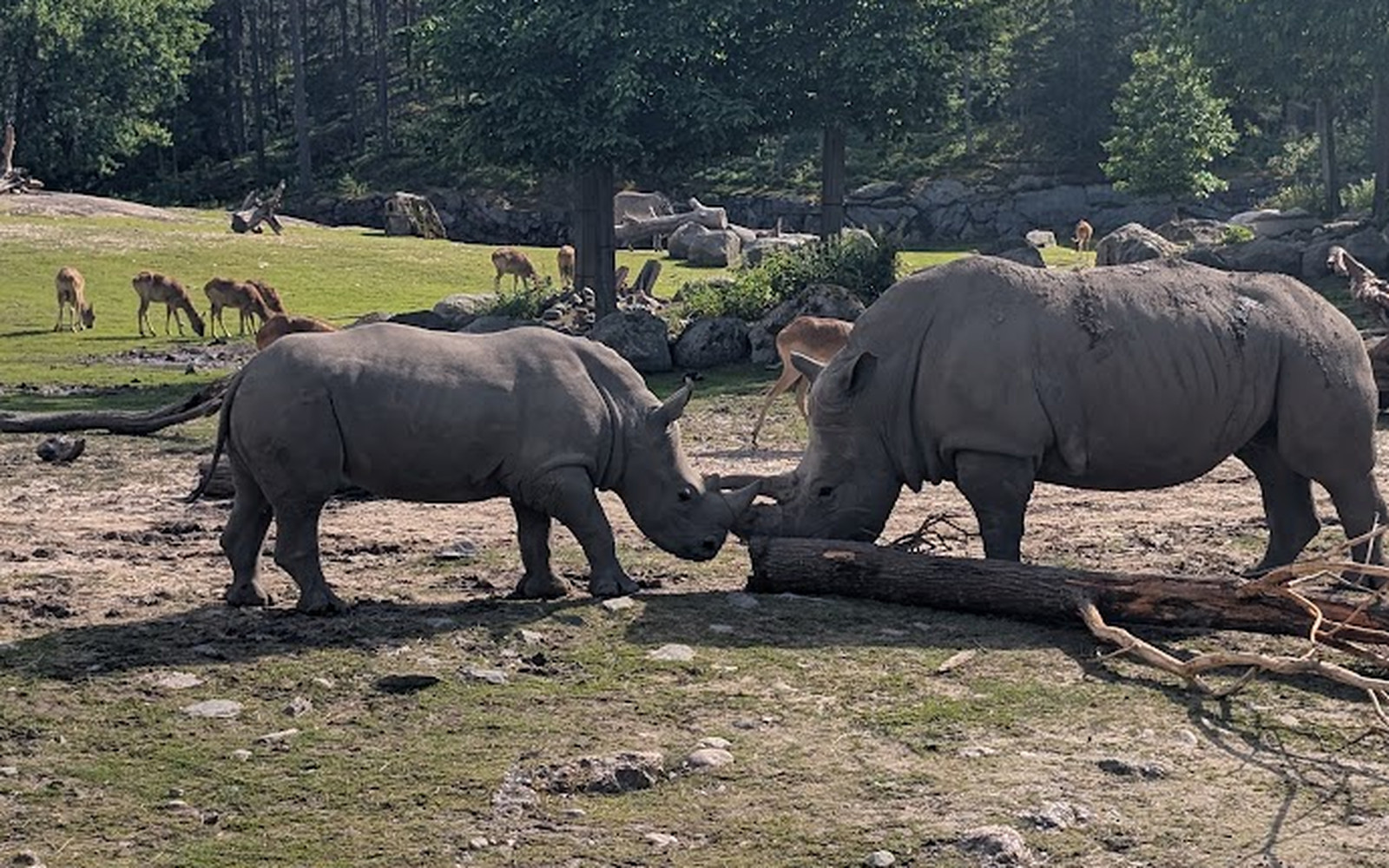
Photo: Julian Lundberg
Species deep dive · california condor, arabian oryx, przewalskis horse, golden lion tamarin, white rhinoceros, african bush elephant, orca, giraffe, african lion, black footed ferret, kihansi spray toad, guam kingfisher, partula snail, southern corroboree frog
Some zoos are bad, and the people criticising them are right. Roadside attractions that sell cub selfies, and zoos that keep elephants and orcas in spaces far too small for them, cause real harm. But "zoos" are not one thing. A small number of accredited zoos run breeding programmes and fund field work, and they have pulled several species back from extinction. The honest answer is that bad zoos deserve the anger, good zoos do work nobody else is doing, and you can learn to tell them apart.
In 1982 there were just 22 California condors left in the world (NPS). By 1987 every condor still alive lived in a zoo. At the end of 2025 there were 607, and 392 of them were flying free (US Fish & Wildlife Service, 2025 status report). Without two zoos in California, the species would be gone.
So, are zoos bad? Let's take the question seriously, starting with the case against.

The case against zoos, taken seriously
The strongest criticism of zoos isn't a slogan. It's a set of specific, documented problems, and any honest answer has to start there.
Roadside zoos and wildlife selfies
Most of the world's worst animal attractions aren't accredited zoos at all. They're roadside zoos, private menageries, "tiger temples" and tourist stops that make money from contact: cub petting, paid selfies with primates or big cats, elephant rides and trick shows. To keep a steady supply of babies for handling, these places breed animals for crowd appeal, not conservation, and young animals are often pulled from their mothers early. Accreditation bodies such as EAZA and AZA exist partly to separate their members from this world, but an unaccredited attraction can still call itself a "zoo" or a "sanctuary". If you remember one thing from this article, make it this: a zoo that lets you hold a lion cub is not a conservation zoo.
Elephants: the clearest evidence of harm
The best-known scientific case against zoos is about elephants. In 2008, a team led by Ros Clubb and Georgia Mason published a study in Science that compared data from more than 4,500 elephants (Clubb et al. 2008, Science). The results were stark:
- Female African elephants born in European zoos had a median lifespan of 16.9 years. Females in Kenya's Amboseli National Park that died of natural causes had a median of 56 years.
- Captive-born female Asian elephants in zoos had a median lifespan of 18.9 years, against 41.7 years in a Myanmar timber-camp population of working elephants.
- Infant mortality among Asian elephants in zoos was more than double that of the timber camps.
The study also found that moving Asian elephants between zoos hurt their survival for years afterwards, and that calves taken from their mothers young tended to do worse. The authors suggested stress and obesity as likely causes. Zoo survival for adult African females had improved in recent years, but in 2005, the last year of the data, their risk of dying was still 2.8 times higher than for the Amboseli females.
Elephants walk long distances, live in tight family groups led by older females, and stay with their mothers for life. That's very hard to provide in a zoo, and the numbers show it. (Our African bush elephant card and its Journal piece cover how they live in the wild.)
Orcas: the critics' strongest case at sea
Orcas are the other species where critics are on firm ground. Wild orcas range across huge areas of ocean and live in stable family groups for decades (see our orca piece). A tank can't give them anything close to that.
The science on captive orca lifespans is genuinely contested, so here are both sides. A 2015 study by John Jett and Jeffrey Ventre in Marine Mammal Science found that captive orca survival had improved over time but was still lower than in the wild (Jett & Ventre 2015; summarised by the Animal Welfare Institute). The same year, a study led by SeaWorld scientist Todd Robeck in the Journal of Mammalogy found recent survival at SeaWorld comparable to two wild populations (Robeck et al. 2015). Critics replied that one of those wild populations, the endangered southern residents, is itself in decline, which makes it a low bar. Even if you read the evidence generously, the welfare question remains: is a concrete tank a decent life for an animal built to swim across an ocean? We don't think it is, and many zoos now agree by not keeping wide-ranging marine mammals at all.
The money question
The last fair criticism is about money. The conservation figures zoos publish are mostly reported by the zoos themselves, and the sums are small next to what the industry earns from tickets, food and gift shops. "Conservation" can also be stretched to cover things that are really marketing. These are reasonable doubts, and the right response isn't to dismiss them. It's to look at which zoos can name their projects, say how much they spend, and show what changed in the wild because of it.
What a good zoo is actually for
Strip away the gift shop and a good zoo has four jobs that matter for wild animals:
- An insurance population. When a species crashes in the wild, a healthy, well-managed population in zoos means it isn't gone for good. Several species in this article survived only that way.
- A breeding network. No single zoo can keep a species genetically healthy. Regional programmes, the EEP (EAZA Ex situ Programme) in Europe and the SSP (Species Survival Plan) in North America, manage animals across many zoos like one big population, deciding which animals breed and where they live. EAZA runs EEPs for over 500 species (EAZA).
- Money and skilled people for the field. Keepers, vets and researchers who know how to breed, feed and treat a rare animal are exactly the people a reintroduction project needs.
- Research. Much of what we know about the reproduction, nutrition and disease of rare species was learned in zoos, then used in the wild.
Here's what that looks like in practice.
Saved by zoos: 11 stories from six continents
1. California condor (North America)
By 1982 there were just 22 California condors left. Lead poisoning from bullet fragments in carcasses, along with shooting and habitat loss, had pushed North America's largest land bird to the edge (NPS). In a decision that was fiercely debated at the time, the last wild condor was caught on 19 April 1987, leaving 27 birds, all in the care of the Los Angeles Zoo and San Diego Zoo's breeding centre. Keepers used clever tricks. They removed a pair's first egg so the female would lay another, and fed chicks with a hand puppet shaped like a condor's head so the birds wouldn't bond with humans. Releases began in 1992. At the end of 2025 there were 607 California condors: 392 in the wild and 215 in captivity (USFWS 2025). Lead is still a threat, so the job isn't finished. (Meet the bird on our California condor card.)
2. Black-footed ferret (North America)
By 1980 the black-footed ferret was thought to be extinct. Then, in September 1981, a ranch dog named Shep brought a dead one home to his owners, John and Lucille Hogg, near Meeteetse, Wyoming. A local taxidermist recognised it, and biologists searching the surrounding prairie dog colonies found a surviving population (Smithsonian's National Zoo; USFWS). When canine distemper and plague swept through it, only 18 ferrets were left, and all were captured between 1985 and 1987 (USFWS). Zoos including Omaha's Henry Doorly, the Smithsonian, Louisville, Cheyenne Mountain, Phoenix and Toronto joined the breeding effort, and releases began in 1991 (EBSCO Research Starters; AZA). Today every black-footed ferret descends from that rescue.
3. Arabian oryx (Middle East)
The last wild Arabian oryx is believed to have been shot in 1972 (IUCN). A few years earlier, in 1963, Phoenix Zoo had started a "World Herd" from a handful of captive animals, and that herd became the seed of the species' return. Reintroductions to Oman began in 1982, followed by other countries on the Arabian Peninsula. In 2011 the IUCN moved the Arabian oryx from Endangered to Vulnerable, the first time a species once listed as Extinct in the Wild had improved by three full Red List categories. The wild population was then about 1,000 (IUCN). Read more on our Arabian oryx card.
4. Przewalski's horse (Asia)
The last wild Przewalski's horse was seen in Mongolia in 1969. Every one alive today descends from 12 wild-caught founders, plus possibly a few domestic horses that slipped into early bloodlines (IUCN; review, Animals 2022). Zoos, mostly in Europe, kept the line going for decades. In 1992, the first zoo-bred horses were flown back to Hustai in Mongolia. The species was later moved off Extinct in the Wild and is now listed as Endangered. About 800 now roam wild in Mongolia across Hustai National Park, Great Gobi B and Khomyn Tal, and the world total is roughly 2,000 to 2,500 (IUCN; San Diego Zoo Wildlife Alliance). See the Przewalski's horse card.
5. Golden lion tamarin (South America)
In the early 1970s, perhaps as few as 200 golden lion tamarins were left in Brazil's shrinking Atlantic Forest (Smithsonian's National Zoo). Between 1984 and 2000, 146 zoo-born tamarins from 43 institutions were reintroduced, including animals from Skansen-Akvariet in Stockholm (Save the Golden Lion Tamarin). Their descendants did well, and the species was downlisted from Critically Endangered to Endangered in 2003. Then yellow fever hit: the wild population fell from about 3,700 in 2014 to about 2,500 in 2018. Brazilian scientists responded by vaccinating wild tamarins. The 2023 census counted about 4,800 in the wild (SGLT census; Dietz et al. 2024). The zoo releases were only part of this story; protecting and reconnecting forest did much of the work. See our golden lion tamarin card.
6. Kihansi spray toad (Africa)
This tiny toad lived in just five acres of waterfall spray in Tanzania's Kihansi Gorge. When a hydroelectric dam cut the waterfall's flow by 90%, the mist zone shrank, and chytrid fungus likely finished the job. Bronx Zoo scientists and Tanzanian officials collected an assurance colony of 499 toads, which the Bronx and Toledo zoos learned to breed. The species was declared extinct in the wild in 2009. In 2012, 2,000 toads were returned to the gorge, now kept damp by an artificial misting system. It was the first time an amphibian declared extinct in the wild had been reintroduced to its native habitat (WCS).
7. Sihek, the Guam kingfisher (Oceania)
The brown treesnake, accidentally brought to Guam, ate its way through the island's forest birds. The sihek has been extinct in the wild since 1988. Before that, Guam's wildlife agency and AZA zoos rescued 29 birds, and the captive programme has grown to 127 adults across 25 institutions. In September 2024, six sihek were released on Palmyra Atoll, a snake-free Pacific refuge, the first wild sihek since the 1980s (Smithsonian's National Zoo; USFWS). The long-term goal is to bring them home to Guam once the snakes are under control.
8. Partula snails (Oceania)
Partula snails are small tree snails from French Polynesia, sometimes called "the Darwin's finches of the snail world". In the 1970s and 80s, a predatory snail, the rosy wolf snail, was introduced to control another invasive snail. It ate the native Partula instead, wiping out many species. In the early 1990s, London and Edinburgh zoos rescued the last survivors, and a London Zoo keeper saved the last nine individuals of one species in 1991 (ZSL). After decades of breeding across an international zoo network, more than 21,000 snails had been returned to the islands by 2023, including 11 species and subspecies that were extinct in the wild (ZSL, April 2023).
9. Southern corroboree frog (Australia)
The black-and-yellow southern corroboree frog has been devastated by chytrid fungus in the high country of New South Wales. The state's own conservation plan says it would likely go extinct in the wild in the near future without insurance colonies kept at Taronga Zoo, Melbourne Zoo and Healesville Sanctuary (NSW Saving our Species). Captive-bred frogs and eggs are released into chytrid-free field enclosures in Kosciuszko National Park. It isn't a finished success story, but without the zoos it would already be over.
10. Mauritius kestrel (Indian Ocean): an honest caveat
By 1974, only four Mauritius kestrels were known in the wild. Captive breeding and release, plus nest boxes, extra food and predator control, brought the population to an estimated 350 to 400 by 2000, and the bird was downlisted to Vulnerable. But it declined again and was moved back up to Endangered in 2014 (ZSL). One population disappeared completely by 2007. The scientist who started the programme said they should have kept caring for the released birds for longer. The lesson matters for every story here: releasing animals is not the finish line.
11. Mhorr gazelle (Africa, via Europe)
In the 1970s, hunting and war in Western Sahara pushed the Mhorr gazelle, a subspecies of the dama gazelle, to the brink. Biologist José Antonio Valverde led a rescue that took 19 animals to Almería in Spain (only 11 of them left descendants), where Spain's research council (CSIC) started a breeding programme. As the herd grew, it was shared with EAZA zoos, including Kolmården. Gazelles have since been released into protected reserves in Morocco, including Safia and M'Cissi, though dogs and poachers have killed some and a third release site is being prepared (Kolmården). Fewer than about 100 to 200 adult dama gazelles of any kind are left in the wild.
Follow the money
Zoos say they fund conservation. How much, and how far can you trust it?
North America. The Association of Zoos and Aquariums (AZA) says that in 2025, 235 AZA-accredited and certified facilities reported spending about $372.4 million on conservation efforts affecting nearly 1,200 species and subspecies in 139 countries (AZA).
Europe. EAZA reports that in 2024 its members contributed €32.1 million, donated more than 210,000 hours of staff time, and supported more than 800 species, with 235 member institutions recording partnerships with over 500 organisations (EAZA). The organisation supported by the most EAZA members in 2024 was the Red Panda Network. EAZA also requires every member to keep a field conservation plan with measurable targets, money and staff behind it (EAZA).
Are those big numbers? Yes and no. They're real money, and some of these projects would not exist without them. But they're self-reported, they mix direct field spending with wider "conservation" work, and they're small next to what zoos earn. The fair conclusion is that the system works best where a zoo is specific: it names the projects, gives the sums, and links them to results in the wild. That's the test we'll use for our local example.
The hard trade-offs even good zoos face
Even accredited zoos make choices that are hard to stomach, and it's worth being honest about them.
Surplus animals. Breeding programmes manage genes, not individuals. In February 2014, Copenhagen Zoo put down Marius, a healthy 18-month-old giraffe, because the European breeding programme judged his genes already well represented and no suitable home was found. The zoo then dissected him in front of visitors and fed him to its lions (BBC News). EAZA backed the decision. Many people, including plenty who support zoos, were horrified. Others, including the zoo itself, saw it differently. Scientific director Bengt Holst argued that feeding Marius to the lions was “not cruel, it’s natural”, since carnivores live on meat from other animals. Supporters added that lions hunt giraffes in the wild, so if Marius had to die, feeding him to them was closer to nature than cremating him (Bengt Holst interview; NPR). The case shows a real tension: a breeding network that keeps a species healthy over generations will sometimes treat an individual animal as a number.
Display versus need. Zoos keep some animals mainly because visitors love them, not because the species needs a zoo population. Giraffes, lions and big cats draw crowds and pay the bills. That isn't automatically wrong, since popular animals fund the work on unpopular frogs and snails, but it's fair to ask whether each species earns its place.
Captivity itself. Some critics argue that no amount of conservation justifies keeping an individual animal confined for life. That's an ethical position, not a factual one, and the evidence in this article can't settle it. What the evidence can do is show what would have been lost without zoos, and which animals pay the highest price for being kept. Elephants and orcas sit at one end of that scale. Small frogs, toads and snails, which can thrive in a well-built tank, sit at the other.
How Kolmården contributes
Kolmården Wildlife Park, near Norrköping in Sweden, is the zoo the Wilder team knows best. Here's what it does, taken from its own published information. We shared this piece with Kolmården ahead of publication.
EAZA breeding programmes. Kolmården takes part in 34 EAZA conservation programmes for endangered species, keeping animals that act as a reserve if wild populations collapse (Kolmården).
The Kolmården Foundation. The zoo's fundraising foundation supports 16 field conservation projects, funded by guests and donations. In 2023 it handed out a record 2,007,387 SEK, more than half of it the zoo's own donation (Kolmården). Projects it has funded include gorilla protection in Nigeria, education about reticulated giraffes for schoolchildren in Kenya, artificial nests for ground hornbills in South Africa, and monitoring equipment for lions in Senegal.
Project Ngulia, Kenya. This is the zoo's best-known project. In the Ngulia rhino sanctuary in Kenya's Tsavo West National Park, rangers protect white rhinos whose horns are worth a fortune to poachers. Since 2017, the Kolmården Foundation has co-financed Project Ngulia with Kenya Wildlife Service and Linköping University. Linköping researchers develop low-cost technology, and Kolmården's own rhinos test it first. The kit tested at the zoo includes GPS transmitters, thermal cameras, radar, microphones paired with cameras, drones, AI cameras that can tell species apart, and Bluetooth horn tags with pedometers. Kolmården says the reserve had 64 rhinos when the project started and around 140 today (Kolmården). (More on the species in our white rhino piece.)
 White rhinos at Kolmården, where the Project Ngulia kit gets tested first. Photo: Julian Lundberg
European bison to Azerbaijan. European bison, also called wisent, were hunted out of the wild by the 1920s, and the last wild one in the Caucasus was shot in 1927. In 2021, Kolmården sent its young bull Knock, born at the park in 2018, to join a herd that WWF and European zoos moved to Shahdag National Park in Azerbaijan. According to Kolmården, Knock now lives in the wild there (Kolmården; WWF Switzerland). This is the European species, not the American bison.
 A European bison (wisent) at Kolmården. Photo: Julian Lundberg
Wild camels in Mongolia. The wild Bactrian camel is Endangered (IUCN moved it down from Critically Endangered in 2025) and genetically distinct from domestic camels. In 2023, Kolmården Foundation money helped finish a new breeding centre for wild camels in Mongolia and train newly hired local staff. Young camels bred there are released into the nearby protected area with GPS transmitters (Kolmården foundation; Kolmården wild camel).
Kulan in Kazakhstan and Mhorr gazelles in Morocco. The foundation supports the return of the kulan, an Asian wild ass, to the steppes of Kazakhstan, where its money helped six kulans be released from a reintroduction centre in 2023. It also supports work studying the Mhorr gazelle reintroduction in Morocco (Kolmården).
Why we care about Kolmården
I've been going to Kolmården almost every year since my oldest son was born in 2016. I usually make a bingo card for my kids so they can cross off the animals they spot, and the sheer variety still amazes me. The animals seem genuinely well cared for and respected, and almost everything there, the dolphin show included, comes back to conservation: the Kolmården Foundation helping return wild kulans to the steppes of Kazakhstan, European bison (wisent) being returned to the wild. It hasn't all been easy, and the wolf tragedy back in 2012 was heartbreaking. When I was in my early twenties, I firmly believed no animal should ever be caged. I've since learned the reality is far more nuanced. Some animals can't survive in the wild, and some species only still exist because zoos kept them going. There are bad zoos, and the criticism of them is fair. But between the breeding programmes, the field work they fund and the care for animals that wouldn't make it out there, I think good zoos are clearly a net positive, and a cultural heritage worth protecting.
>
— Julian Lundberg, creator of Wilder
The tragedy Julian mentions happened on 17 June 2012, when a keeper who had worked with Kolmården's wolf pack for several years went into an enclosure alone and was killed by the wolves (SVT). Kolmården ended its "Närkontakt varg" (close to wolves) visitor programme straight away, and since then neither keepers nor visitors go in with the wolves; all contact happens through a barrier (Aftonbladet; SvD). The Swedish Work Environment Authority required the park to investigate the accident, risk-assess its work with wolves and take measures so it could not happen again (Sveriges Radio). In December 2016 Norrköping District Court found serious shortcomings in the park's safety work, above all that keepers worked alone with the wolves without an alarm. The park was fined SEK 3.5 million and its former zoological manager was convicted (SVT; Sveriges Radio). Neither the park, the former manager nor the prosecutors appealed (SVT). It is a sober reminder that close contact with large predators carries real risk, even in a well-run zoo, and that the honest response is to learn from it. In November 2018 Kolmården announced that its last four wolves, which were old and in poor health, would be put to sleep that autumn and not replaced, because the enclosures built for the post-2012 safety rules were not suited to introducing young wolves (Aftonbladet/TT, 1 Nov 2018).
Dolphins: the hardest case
Dolphins are the hardest question in this whole piece, and Kolmården keeps them. Watching dolphins work with their handlers is genuinely magical, and you can see the trust between them. The criticism is real too: dolphins are smart, social animals that travel far in the wild, and many of the arguments in our orca section apply to them as well. But there is a practical problem that the debate often skips. Most dolphins in zoos today were born there, and a dolphin that has never hunted live fish or lived in a wild pod can't simply be set free. When the National Aquarium in Baltimore decided to retire its eight dolphins, six of them born at the aquarium, it planned a protected seaside sanctuary rather than a release, because the animals would have trouble making it in the wild (National Geographic). So for the dolphins alive now, the honest question isn't "cage or ocean". It's about the future: should zoos keep breeding dolphins, or should this be the last generation? Kolmården has already answered it for itself: in 2021 it decided to close its dolphinarium in time, and it has since been working with EAZA to find the dolphins new homes (Kolmården).
Whatever you think about the dolphins, hold Kolmården to the same checklist as any other zoo. On the conservation side, it passes the specificity test: it names its projects, says what it spent and shows what changed.
How to spot a good zoo: a practical checklist
You don't have to take any zoo's word for it, including the ones in this article. Before you buy a ticket, check these:
- Is it accredited? Look for membership of EAZA (Europe), AZA (North America) or a national association that belongs to WAZA (the World Association of Zoos and Aquariums). Check the association's own member list, not just a logo on the zoo's website.
- Is it in real breeding programmes? A good zoo says which of its species are in an EEP or SSP, and why it keeps them.
- Can it name its field projects? Look for specific projects in specific places, with partner organisations and amounts of money, like "Project Ngulia, Kenya, since 2017". Vague lines like "we support conservation" don't count.
- No contact selling. Walk away from cub petting, paid selfies with wild animals and elephant rides.
- Space and company for the animals that need it. Wide-ranging and highly social species, like elephants, great apes and big marine mammals, need big, complex spaces and stable social groups. A zoo that can't provide that shouldn't keep them, and the best zoos have stopped. Some have also found clever ways to give animals room. At Kolmården, the Safari cable car carries visitors in quiet gondolas over large enclosures with African, Nordic and Asian animals, including lions, giraffes, Grevy’s zebras, bison and moose. As Kolmården puts it, on this ride “you are the guests visiting the wild animals on their own terms” (Kolmården).
- Animals behave normally. Watch for repetitive pacing, swaying or bar-biting, which can signal stress. Good enclosures give animals places to hide, things to do and the choice to stay out of sight.
- Babies aren't the business model. Be wary of constant baby animals with no breeding programme behind them, and of zoos that can't say where their surplus animals go. Animals sold on to roadside attractions are a red flag.
- Honest education. Good signs explain threats in the wild and what the zoo is doing about them, not just fun facts.
 A Grevy’s zebra at Kolmården. Photo: Julian Lundberg
If a zoo passes most of these, your ticket probably helps wild animals. If it fails the first four, it's the kind of zoo the critics are right about.
The verdict
Are zoos bad? Bad zoos are, and they deserve the anger. Roadside attractions that sell contact with wild animals, and zoos that keep elephants and orcas in conditions that shorten or narrow their lives, are hard to defend.
But the evidence also shows something the anti-zoo slogans leave out. California condors, Arabian oryx, Przewalski's horses, black-footed ferrets, Kihansi spray toads, sihek and Partula snails are alive in the wild today because zoos kept them going when nothing else could. Good zoos are wildlife's insurance policy, a training ground for the people who do reintroductions, and a steady source of money for field projects.
So the useful question isn't "zoos, yes or no?". It's "which zoo, and what does it actually do?" Choose accredited zoos that name their projects, skip anything that sells selfies, and keep asking questions. That pressure is how bad zoos get better.
Many of the animals in this article are cards in Wilder, a free browser collectible card game about real animals. You can play Wilder free in your browser with no signup, starting with the California condor, the Arabian oryx and the Przewalski's horse.
Photo credit
Hero photograph: white rhinos at Kolmården Wildlife Park, Sweden. Photo: Julian Lundberg. Cropped to fit the Field Journal hero.
Inline photographs of white rhinos, a European bison (wisent) and a Grevy’s zebra at Kolmården Wildlife Park, Sweden. Photo: Julian Lundberg.
Questions people ask
Do zoo animals live longer than wild animals?
It depends on the species. Many smaller animals do live longer in good zoos, but elephants are a clear exception: a 2008 Science study found female African elephants in European zoos had a median lifespan of 16.9 years, against 56 years in Kenya's Amboseli National Park (Clubb et al. 2008). See our African bush elephant card.
Are zoos legally required to do conservation?
Not everywhere, but accreditation bodies set rules. EAZA requires every member to keep a field conservation plan with measurable targets, staff and money behind it (EAZA). Unaccredited roadside attractions have no such requirement, which is why accreditation is the first thing to check.
What is an EEP in zoos?
An EEP (EAZA Ex situ Programme) is a managed breeding programme run across European zoos to keep a healthy, genetically diverse population of a species. EAZA runs EEPs for over 500 species, including Przewalski's horse, the white rhino and the European bison (EAZA). See our Przewalski's horse card.
Has any animal gone extinct in the wild and been brought back by zoos?
Yes, several. The Arabian oryx was extinct in the wild by 1972, and in 2011 it became the first species once listed Extinct in the Wild to improve three categories, to Vulnerable (IUCN). The Kihansi spray toad and Przewalski's horse were also returned to the wild from zoo populations. See our Arabian oryx card.
Is Kolmården Wildlife Park a good zoo?
Kolmården is an EAZA member that takes part in 34 EAZA conservation programmes, and its Kolmården Foundation supports 16 field projects, including rhino protection in Kenya's Ngulia reserve (Kolmården). Judge any zoo, Kolmården included, against the checklist in this article.
Sources
- Clubb, R. et al. (2008). Compromised survivorship in zoo elephants. Science 322: 1649.
- Jett, J. & Ventre, J. (2015). Captive killer whale (Orcinus orca) survival. Marine Mammal Science.
- Animal Welfare Institute (2015). Study shows captivity curtails orca lifespan.
- Robeck, T. et al. (2015). Comparisons of life-history parameters between free-ranging and captive killer whale populations. Journal of Mammalogy 96(5).
- California condor: NPS
- California condor: USFWS 2025 California Condor Population Status (as of 31 Dec 2025)
- Black-footed ferret: Smithsonian's National Zoo, "Black-Footed Ferrets: Top Milestones"
- Black-footed ferret: USFWS
- Black-footed ferret: USFWS National Black-footed Ferret Conservation Center
- Black-footed ferret: EBSCO Research Starters
- Black-footed ferret: AZA
- Arabian oryx: IUCN press release, 16 June 2011
- Arabian oryx: IUCN fact sheet
- Przewalski's horse: IUCN
- Przewalski's horse: review
- Przewalski's horse: San Diego Zoo Wildlife Alliance fact sheet
- Golden lion tamarin: Smithsonian's National Zoo
- Golden lion tamarin: Save the Golden Lion Tamarin, 40 years after the first reintroductions
- Golden lion tamarin: Save the Golden Lion Tamarin, population census
- Golden lion tamarin: Dietz et al. 2024
- Kihansi spray toad: WCS, 11 Dec 2012
- Sihek: Smithsonian's National Zoo, 23 Sep 2024
- Sihek: USFWS
- Partula snails: ZSL project page
- Partula snails: ZSL news, 27 Apr 2023
- Southern corroboree frog: NSW Saving our Species
- Mauritius kestrel: ZSL, 9 Jul 2021
- Mhorr gazelle: Kolmården
- AZA field conservation snapshot (2025 data)
- EAZA August 2025 Conservation Snapshot (2024 data)
- EAZA EEP pages
- EAZA field conservation requirements
- Copenhagen Zoo giraffe: BBC News (2014)
- Kolmården Foundation
- Kolmården: Project Ngulia
- Kolmården: European bison
- WWF Switzerland and Bern Animal Park, 25 Nov 2021
- Kolmården: Wild camel
- Parks and Resorts annual report 2025
- SVT Nyheter Öst, "Chef döms efter dödlig vargattack", 21 Dec 2016
- Sveriges Radio P4, "Krav på Kolmården efter vargattack", 26 Jun 2012
- Sveriges Radio, "Vargmålet: Idag kom domen", Dec 2016
- SVT Nyheter Öst, "Vargdomar överklagas inte", 10 Jan 2017
- Aftonbladet, "Hon ropade inte på hjälp" (Kolmården press conference), Jun 2012
- Aftonbladet (TT), "Kolmården slutar med vargar – fyra avlivas", 1 Nov 2018
- National Geographic, "For Dolphins, a Bold Decision by the National Aquarium", 15 Jun 2016
- Svenska Dagbladet, "Ett vargexperiment med tragiskt slut" (incl. Kolmården statement)