Orca: Matrilineal Pods, Hunting Culture, and Menopause at Sea
Species deep dive · orca
Orca: Matrilineal Pods, Hunting Culture, and Menopause at Sea
Call them killer whales or orcas — Orcinus orca is the largest living dolphin and one of the ocean's clearest examples of culture in a nonhuman predator. Different communities specialize in different prey, speak different dialects, and pass hunting recipes down matrilines for decades.
In Wilder TCG the Orca is a Rare Mammalia creature with Ambush. The card is shorthand for a cosmopolitan apex hunter whose real edge is teamwork and memory, not just size.
Taxonomy and a species that may be many
Orcinus orca sits in Delphinidae. It is cosmopolitan: Arctic to Antarctic, coastal and offshore, with higher densities in cooler productive waters but records in the tropics too. Males are larger — often cited around 6–8+ m and several tonnes; females smaller — with tall triangular dorsal fins on adult males and a suite of white eye patches and saddle marks that help researchers ID individuals.
Genetic, acoustic, and ecological evidence suggest the currently named species may hide multiple subspecies or even species. That taxonomic fog is a big reason IUCN lists the global taxon as Data Deficient (2017 assessment) even though some regional populations are clearly in trouble.
Ecotypes: culture with teeth
In the eastern North Pacific, three well-studied forms illustrate the pattern. Resident-type groups specialize on fish (often salmon, with Southern Residents famously favoring Chinook). Transient / Bigg's groups hunt marine mammals and squid. Offshore groups range farther out and include fish such as sharks in the diet. These communities can overlap in geography yet stay socially and reproductively separate, with learned foraging tactics that outsiders rarely adopt.
Elsewhere the menus change again — herring specialists off Norway, mammal hunters in Patagonia that intentionally beach to grab seals, Antarctic groups with their own ice-edge strategies. Globally the species looks like a generalist; locally it is usually a specialist.
Cooperative tactics are the trademark: carousel herding of fish, wave-washing seals off ice floes, coordinated ramming and flipping of sharks to access nutrient-rich organs. The "wolf pack of the sea" metaphor is tired but directionally fair.
Matrilines, dialects, and rare menopause
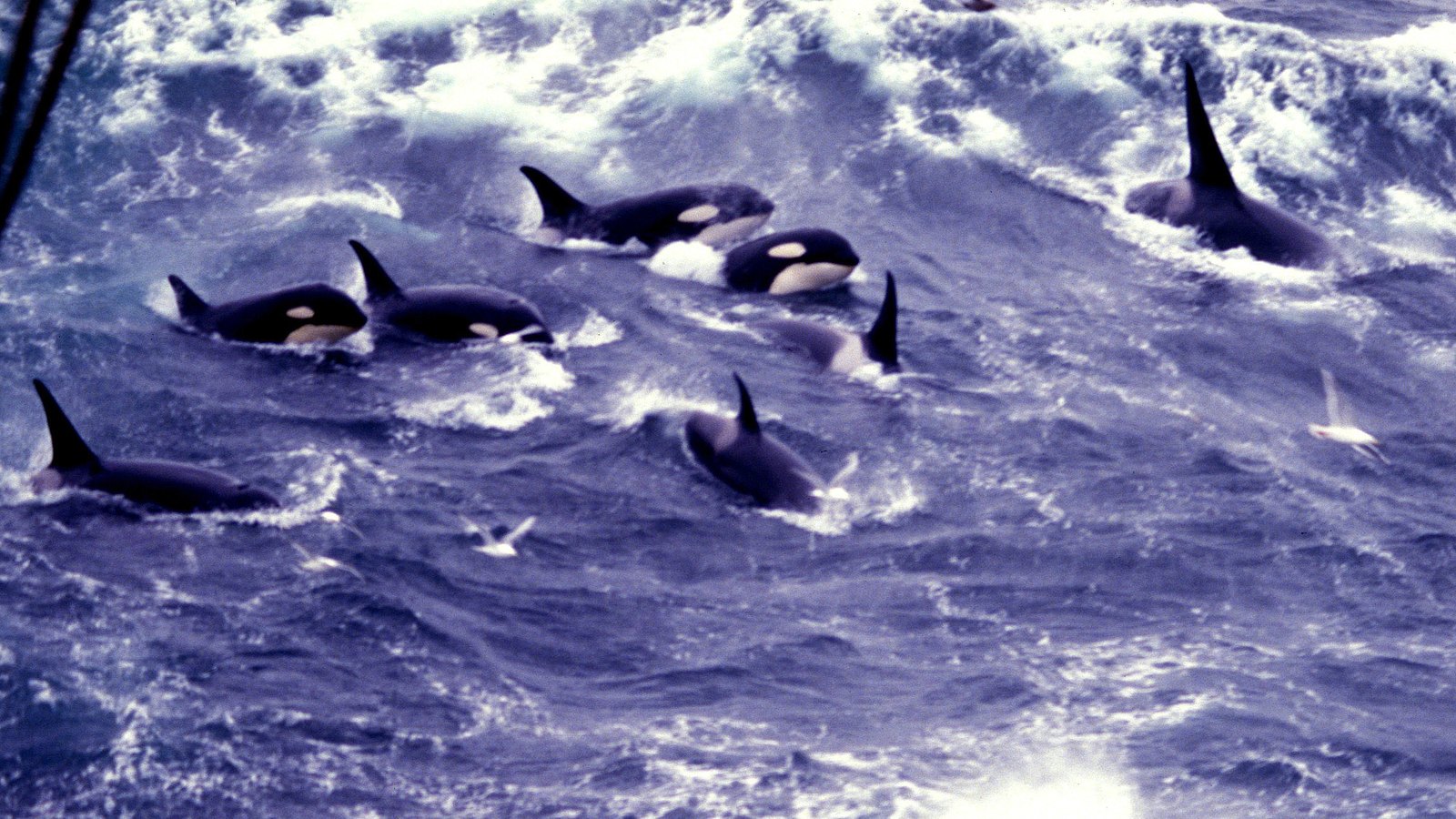
Most orcas live in matrilineal social units — a mother and her descendants — that combine into pods. Individuals often stay affiliated with those natal groups for life. Pods communicate with clicks, whistles, and pulsed calls; Pacific Northwest pods, for example, carry distinctive call repertoires that function like family badges.
Females typically begin reproducing in their early teens, gestate about 15–18 months, and may calve every several years across a few decades. Then something unusual happens: in well-studied resident populations, females often stop reproducing by their forties yet can live into their seventies or nineties. Humans, killer whales, and a short list of other toothed whales share this kind of menopause.
Long-term work on resident killer whales links post-reproductive females to leadership during travel on foraging grounds — especially in years when salmon are scarce — consistent with the idea that elder females store ecological knowledge that helps kin. Sons appear particularly likely to follow those leaders in some analyses. This is inclusive-fitness biology, not Disney narration.
Conservation: global DD, local emergencies
All killer whales in U.S. waters are protected under the Marine Mammal Protection Act. The Southern Resident distinct population segment is listed as Endangered under the U.S. Endangered Species Act; recent censuses have hovered near the mid-70s of animals, far below historical estimates. Primary pressures include scarce preferred salmon, vessel noise and disturbance, and legacy contaminants that accumulate in blubber. The AT1 transient stock in Alaska was designated depleted after declines linked to the Exxon Valdez oil spill era.
Globally, IUCN's Data Deficient label reflects unresolved taxonomy more than a claim that every population is fine. Local declines from prey collapse, pollutants, entanglement, and disturbance are real where measured. Keeping prey runs healthy and coastal soundscapes quieter is the practical conservation agenda.
From open ocean to Wilder card
In the Orca field guide you will find taxonomy, habitat, and in-game stats. On the board, Ambush echoes a predator that closes from depth with timing and cooperation rather than a fair chase.
Play it in Wilder — then remember the living animal is a family culture first and a poster apex predator second.
Quick facts
- Scientific name: Orcinus orca
- Hook: culturally specialized hunting + matrilineal pods + post-reproductive leadership
- Size: males often ~6–8+ m / multi-tonne; females smaller; largest dolphin
- Range: worldwide oceans; denser in cooler coastal seas
- Social: matrilines and pods; learned dialects; limited or no dispersal in some residents
- IUCN: Data Deficient globally (taxonomy); Southern Residents Endangered under U.S. ESA
- Wilder family: Mammalia · Rare · Ambush
Photo credit
Hero photograph: Allen Shimada, NOAA/NMFS/OST/AMD (NOAA Photo Library), "Pod killer whales" (Wikimedia Commons), public domain (US federal government work). Cropped for the Field Journal hero.
