European Badger: Do Badgers Really Hibernate in Winter?
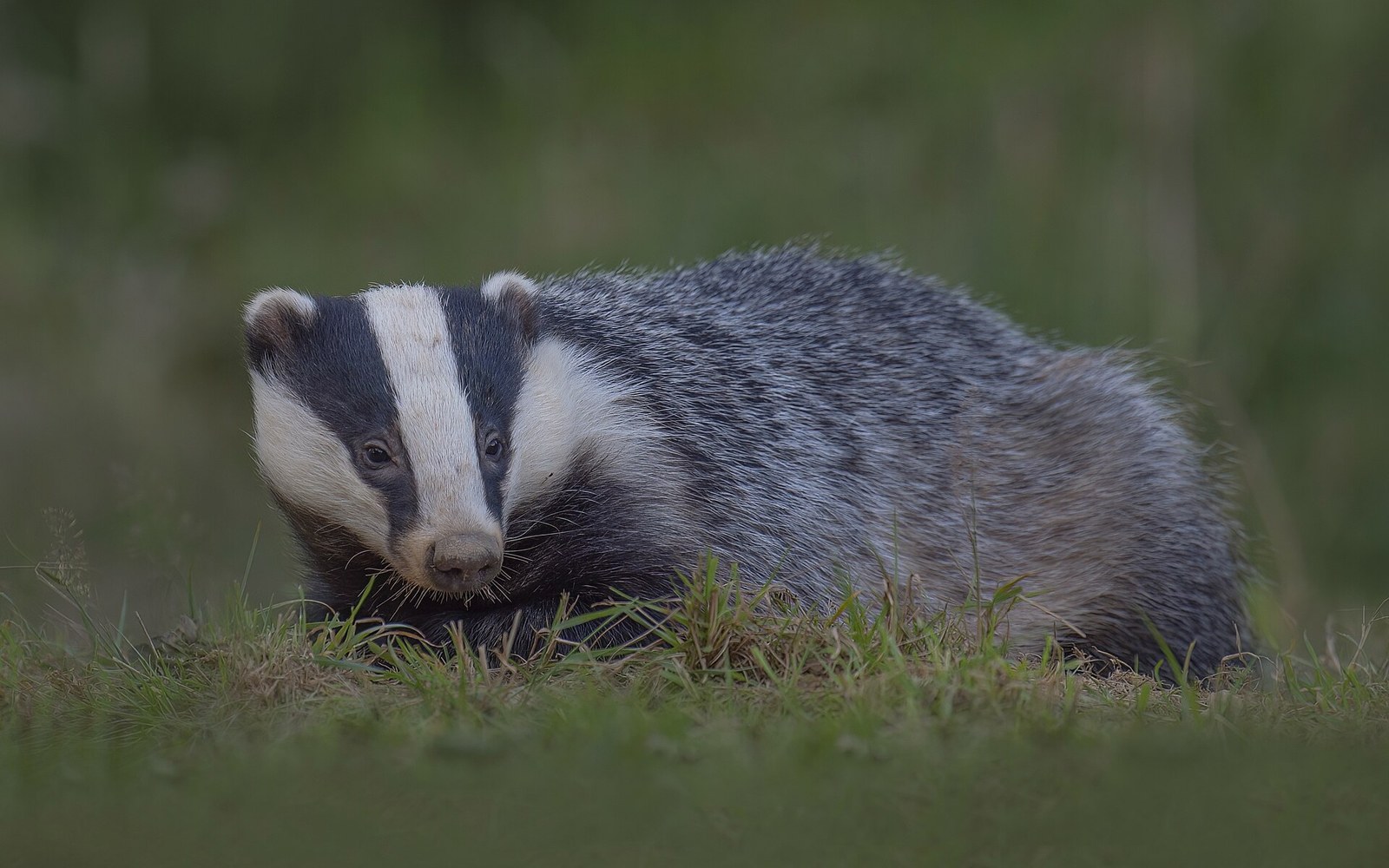
Species deep dive · european badger
No. European badgers don't truly hibernate, but they come close. Through the coldest months they spend most of their time underground, live off the fat they built up in autumn and slip into a lighter state called torpor, or winter lethargy, for days or weeks at a time. Their body temperature drops a few degrees instead of crashing, and they can wake up and go out foraging whenever the weather turns mild (ZSL; RSPCA).
How deep that winter rest goes depends on where the badger lives and what the weather does. In Britain badgers keep foraging on mild winter nights. In central Norway, one radio-tracked female was last seen outside her sett on the day of the first snowfall in November.
Autumn is the fattening season
Right now, in late October, badgers are eating as much as they can. They are at their heaviest at the end of autumn, when an adult that averages 8–12 kg has packed on its winter fat (RSPCA). Earthworms are the core of the diet. ZSL says they can make up to 80% of what a typical badger eats, and one badger can eat as many as 200 worms in a night (ZSL). In Sweden badgers also eat a lot of grain and berries in summer and autumn, building up fat reserves for winter much like a bear (Svenska Jägareförbundet).
The weather in early autumn matters. A long-term study of badgers in Wytham Woods near Oxford found that their autumn activity varied from year to year with the weather. The authors linked this to a trade-off between foraging to fatten up and saving energy in the sett, because frost makes earthworms harder to reach (Noonan et al. 2014, PLoS ONE).
What winter lethargy looks like inside a badger
Two classic tracking studies show what "not quite hibernating" means in numbers.
- Scotland, 57°N. Badgers living in a large outdoor enclosure carried temperature-sensitive radio transmitters through two winters. From October or November to March their body temperatures ran at 28–34 °C, well below normal. In midwinter they cut the time they spent outside the sett by up to 90%. Day length tracked these seasonal changes most closely, and cold snaps and snow cover pushed them further (Fowler & Racey 1988, Journal of Zoology).
- Central Norway, 63°N. Two wild badgers near Trondheim were tracked with implanted transmitters. Their body temperatures fell by about 2–3 °C from early November to the second half of December, then rose again until early March. Day length explained much more of the change than outside temperature did. The female was last seen active outside the sett on 21 November, the day of the first snowfall (Bevanger & Brøseth 1998, Wildlife Biology).
A true hibernator lets its body cool far more and stays down for months. A badger in torpor still runs warm, which is why it can wake up and leave the sett when the weather allows.
The sett is the winter coat
A badger's winter strategy only works because of the sett. These tunnel systems can be 20–100 m long, with as many as 50 entrances in big, old setts, and some have been used by the same family line for over a century (RSPCA). In one Norwegian sett dug in clay, the inside stayed at a fairly steady +2 to +5 °C through the winter, barely affected by the weather outside (Bevanger & Brøseth 1998).
A study that logged temperatures in 11 English setts found the same buffering effect. From November to December the setts were warmer than the air outside, and they warmed up while badgers slept in them during the day. Cubs born in setts that had been warmer through the autumn and winter were heavier the following spring (Tsunoda et al. 2018, Journal of Thermal Biology). On cold mornings you can sometimes see steam rising from sett entrances, from the badgers' breath and body heat (DAERA).
Cubs are born in the middle of the "sleep"
Winter isn't downtime for female badgers. Badgers can mate at almost any time of year, but thanks to delayed implantation most embryos don't start developing until December or January. The cubs are born underground between late January and March and stay below ground until about April (ZSL). In the Scottish study, one female's body temperature dropped to its lowest point, 28 °C, just before the embryos implanted. It then rose steadily through pregnancy but had only reached 34.6 °C when she gave birth (Fowler & Racey 1988).
North vs south: Sweden and Britain
- Britain and Ireland. Badgers spend more time below ground in December and January and cut back their activity in cold spells, but they don't hibernate (RSPCA; DAERA). If the ground freezes, earthworms are hard to reach and the badgers live off their fat. The RSPCA says small amounts of extra food can help during long cold spells, as long as they don't become a nightly handout (WalesOnline, reporting RSPCA guidance).
- Sweden. The Swedish Hunters' Association describes the badger as sleeping through winter, with the length of its winter rest depending on climate and weather. In mild spells it can be out and about even in midwinter, and it can lose up to half its body weight over the winter (Svenska Jägareförbundet). Badgers live all over Sweden except Gotland (Svenska Jägareförbundet).
So the honest answer to "do badgers hibernate?" is no, but the further north they live, the more their winter looks like it.
How the European Badger plays in Wilder
In Wilder the European Badger (Meles meles) is a Common Mammalia card in the Forest element. It costs 3 Energy, with Attack 3 and Health 4, and has Herd and Resilient. That fits a family animal that shares its sett with its clan and gets through a hard winter on stored fat. Its flavour text reads: "A sett-sharing digger whose tenacity outlasts most forest nights." Don't mix it up with its fiercer African and Asian relative, the Honey Badger, which has its own Field Journal deep dive.
Wilder is a free browser collectible card game about real animals, and you can play it free in your browser with no signup.
Photo credit
Hero photograph: caroline legg, "European Badger - Meles meles" (a badger in Dumfries & Galloway, Scotland), Wikimedia Commons, CC BY 2.0. Cropped for the Field Journal hero.

Questions people ask
Are European badgers dangerous to people?
Rarely, if you leave them alone. A badger is much more likely to run away than to fight, but it can attack if it feels threatened or cornered, and it has a nasty bite. The RSPCA advises watching badgers quietly from a distance and giving them room to move (RSPCA).
How long do European badgers live?
About 5 to 8 years on average, according to the RSPCA. Females usually don't have their first cubs until they are two or three years old, and they have at most one litter a year (RSPCA).
Why do badgers have black and white stripes on their faces?
Nobody knows for sure. One leading idea is that the bold stripes work as a warning, telling predators that a badger is powerful and not worth the fight (ZSL).
What sounds does a badger make?
Lots of them. One study identified as many as 16 badger calls, including warning barks, defensive growls, snorts of surprise and a throaty churr that may be a mating call. Females purr softly to their cubs, and cubs cluck, wail and coo (ZSL).
Can badgers climb trees and swim?
Yes, both. Badgers are built for digging, with short, muscular legs and strong claws that don't retract, but the RSPCA notes that they can also climb fairly well, up tree trunks and netting, and they can swim (RSPCA).
Sources
- ZSL: Badger (11 badger facts)
- RSPCA: Badgers in the UK
- Fowler & Racey (1988) Overwintering strategies of the badger, Meles meles, at 57°N. Journal of Zoology
- Bevanger & Brøseth (1998) Body temperature changes in wild-living badgers Meles meles through the winter. Wildlife Biology
- Noonan et al. (2014) Climate and the individual: inter-annual variation in the autumnal activity of the European badger. PLoS ONE
- Tsunoda et al. (2018) Badger setts provide thermal refugia, buffering changeable surface weather conditions. Journal of Thermal Biology
- DAERA (Northern Ireland): Advice on badgers
- Svenska Jägareförbundet: Grävling
- Svenska Jägareförbundet: Grävling finns över hela landet – förutom Gotland (2025)
- WalesOnline: RSPCA badgers winter alert (5 Oct 2026)