Do Barracudas Attack Humans? What the Bite Record Shows
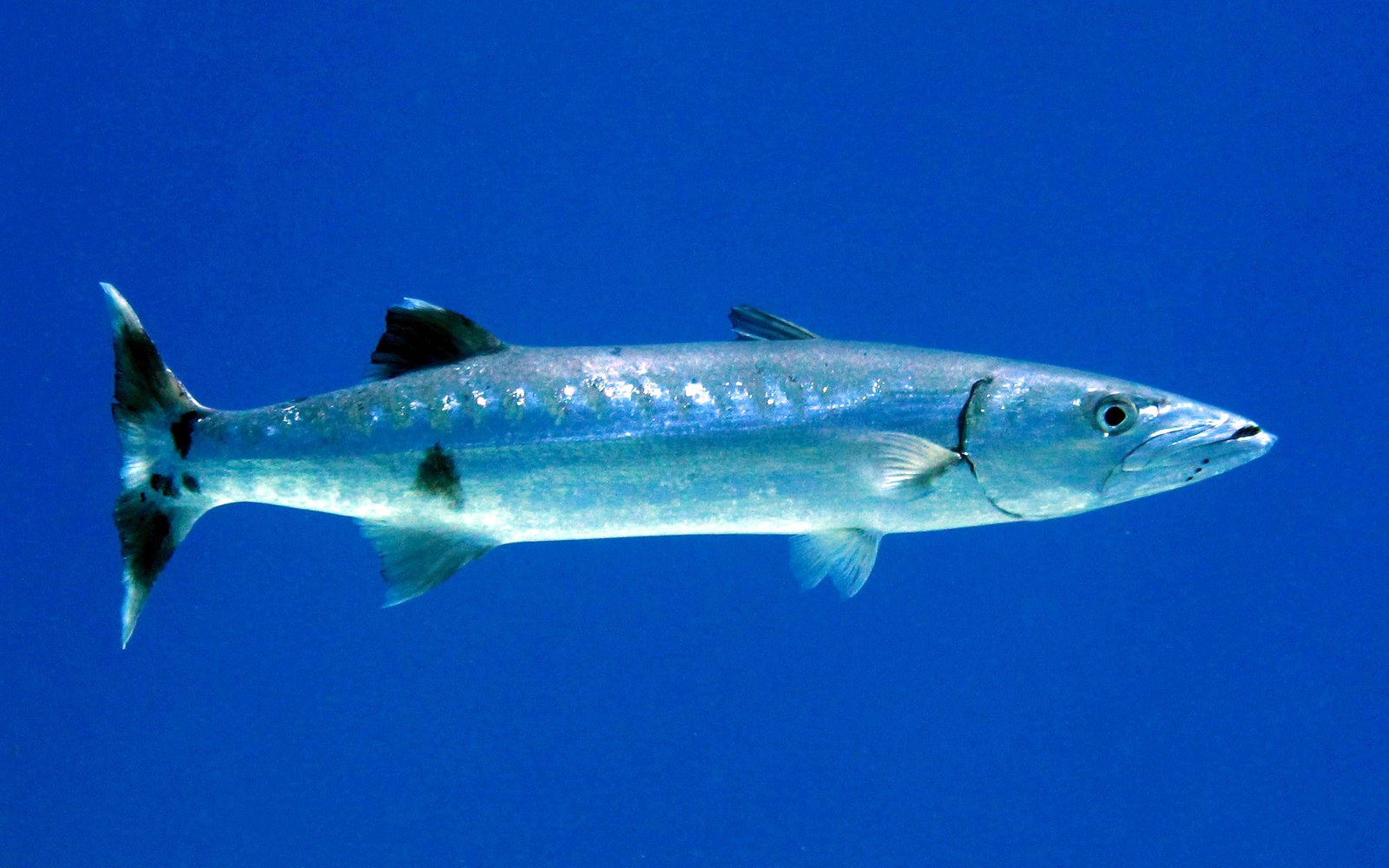
Species deep dive · great barracuda
Rarely. Attacks on people by great barracuda are uncommon, and deaths are rare. When a barracuda does bite, it is usually because it is trying to steal a fish from a spearfisher or has mistaken something shiny, like a diving knife, for the flash of a fish. These incidents are usually a single, very quick strike, which can leave a cut and some lost tissue (Florida Museum).
The question is in the news because of a run of bites in the Cayman Islands. On 16 October 2026, two people were treated in hospital for fish bites to their hands near Governors Beach on Grand Cayman, after two earlier bites in the same area in August (Cayman Compass).
Why barracudas follow snorkelers
Great barracuda (Sphyraena barracuda) are curious fish that hunt by sight, and they have the unnerving habit of trailing snorkelers and divers (Florida Museum). Being followed is a normal barracuda habit. They are mostly daytime hunters that find prey largely by eye, which is also why a glint of metal can fool them (Florida Museum).
The bite record
Serious cases are few enough to list. A death off Key West in 1947 was attributed to a barracuda, followed by another case off North Carolina in 1957. A well-documented attack on a free diver off Pompano Beach, Florida, in 1960 left him needing 31 stitches after he was bitten twice. The Florida Museum stresses that such attacks are uncommon and more often than not easy to prevent with a few simple precautions (Florida Museum).
What happened in the Cayman Islands
In August 2026, two swimmers were injured within less than two weeks near Governors Beach on Seven Mile Beach. The Cayman Islands Department of Environment watched one large barracuda for several days, saw it repeatedly behaving assertively around people, and removed it on 25 August. A necropsy found the remains of an octopus or squid in its stomach but no conclusive evidence linking that fish to either bite. Officers pointed out that floating mats and platforms along the beach attract small fish, which in turn draw predators such as jacks and barracudas. Senior research officer Timothy Austin called such incidents "very, very, very few and far between" (Cayman Compass).
The species behind the 16 October hand bites has not been confirmed. The government noted that barracudas follow schools of small fish into the shallows, which brings them close to people, and that they can mistake shiny objects such as jewellery for the flash of a fish (Cayman Compass).
How to swim safely around barracudas
The advice from the people who deal with these incidents is short:
- Take off jewellery and anything shiny before swimming, since barracudas can mistake it for a fish (Cayman Compass).
- Never feed fish from the beach. Cayman's government says feeding attracts predatory fish and teaches them to link people with food (Cayman Compass).
- Move away if barracudas are acting unusually, or if schools of bait fish are gathering around swimmers while predators feed (Cayman Compass).
- Spearfishers should take extra care, because many bites happen when a barracuda tries to steal a speared fish (Florida Museum).
Teeth built for slicing
The reason a single bite matters is the barracuda's mouth. It has two sets of teeth: a row of small, razor-sharp teeth along the outside of the jaw, and a set of larger, dagger-like teeth inside them. The teeth are flattened, triangular and sharp-edged for tearing flesh, and long needle-like teeth fit into their own holes in the opposite jaw so the mouth can close. Small prey is swallowed whole, while large fish are chopped in half and swallowed in pieces. The menu includes jacks, grunts, groupers, snappers, small tunas, mullets, killifishes, herrings and anchovies (Florida Museum).
Young barracuda start life very differently. Larvae settle in shallow, vegetated parts of estuaries, juveniles spend their first year among mangroves and seagrass, and in their second year they move out to deeper reefs. Juveniles can even shift their colour pattern to match their surroundings (Florida Museum).
The bigger risk is on the plate
For most people, eating a barracuda is more dangerous than meeting one. Large reef predators can carry ciguatera toxins, which start in tiny dinoflagellates (Gambierdiscus) living on coral reefs and become concentrated as they pass up the food chain. The CDC lists barracuda among the fish most likely to cause ciguatera poisoning and advises travellers never to eat high-risk fish such as barracuda and moray eel (CDC Yellow Book).
The toxins don't change the fish's taste, smell or texture, and they aren't destroyed by cooking, freezing, smoking or salting. Symptoms start with stomach upset and can move on to tingling, weakness and a strange reversal where cold things feel hot. Nerve symptoms usually last days to weeks but can persist for months or even years. About 50,000 cases are reported worldwide each year, and the CDC says the real number is likely far higher (CDC Yellow Book). Barracuda has been implicated in ciguatera within certain areas of its range (Florida Museum).
On the Wilder card
The Great Barracuda is an Uncommon Pisces card from the Water element: Cost 2, Attack 3, Health 2, with Ambush and ColdBlooded. Its ability, Lightning Lunge, costs 2 Energy and deals 1 damage to an enemy creature, a nod to a daytime ambush hunter that strikes in a single fast burst. The flavour text: "A silver streak that strikes before the ripple fades." For a reef fish that really is dangerous to touch, read about the reef stonefish, then try both in the free browser collectible card game.
The short version: barracudas rarely attack people. Most bites happen when one grabs at a speared fish or a flash of jewellery, usually as a single quick strike, and deaths are rare. The bigger danger is eating a large one, because of ciguatera.
Photo credit
Hero photograph: Hectonichus, Sphyraenidae - Sphyraena barracuda (Great barracuda), French Polynesia, Wikimedia Commons, CC BY-SA 4.0. Cropped for the Field Journal hero.

Questions people ask
How fast can a barracuda swim?
In short bursts, very fast. The Florida Museum says great barracuda can burst at up to about 35 mph, and estimates their top speed at as much as 36 mph (58 km/h). Their slender, streamlined body is built for speed (Florida Museum).
How big do great barracuda get?
The hook-and-line record is 1.7 m (5.5 ft) and 44 kg (103 lb), and the species is reported to reach 2 m and 50 kg. Any barracuda over about 1.5 m (4.8 ft) counts as very large (Florida Museum).
How long do barracuda live?
At least 14 years, based on growth rings in the scales of large fish. They mature at about 60 cm long, when males are typically about two years old and females close to four (Florida Museum).
What eats a barracuda?
Not much, once it is grown. Few predators are big and fast enough to catch an adult, but sharks, tuna and goliath grouper are known to eat small adults, and juveniles likely fall prey to many inshore predators (Florida Museum).
Are great barracuda endangered?
No. Sphyraena barracuda is listed as Least Concern on the IUCN Red List (IUCN). It lives in tropical and subtropical seas worldwide, from Massachusetts to Brazil in the western Atlantic and across the Indo-Pacific and Red Sea (Florida Museum). See the Wilder card.
Sources
- Florida Museum of Natural History — Great Barracuda (Discover Fishes)
- Cayman Compass (17 Oct 2026) — Government responds to fish bite incident
- Cayman Compass (3 Sep 2026) — Necropsy finds no evidence that killed barracuda bit tourists
- CDC Yellow Book 2026 — Food Poisoning from Marine Toxins
- IUCN Red List — Sphyraena barracuda (Aiken et al.)