Are Leopard Sharks Dangerous? California's Spotted Mudflat Hunter
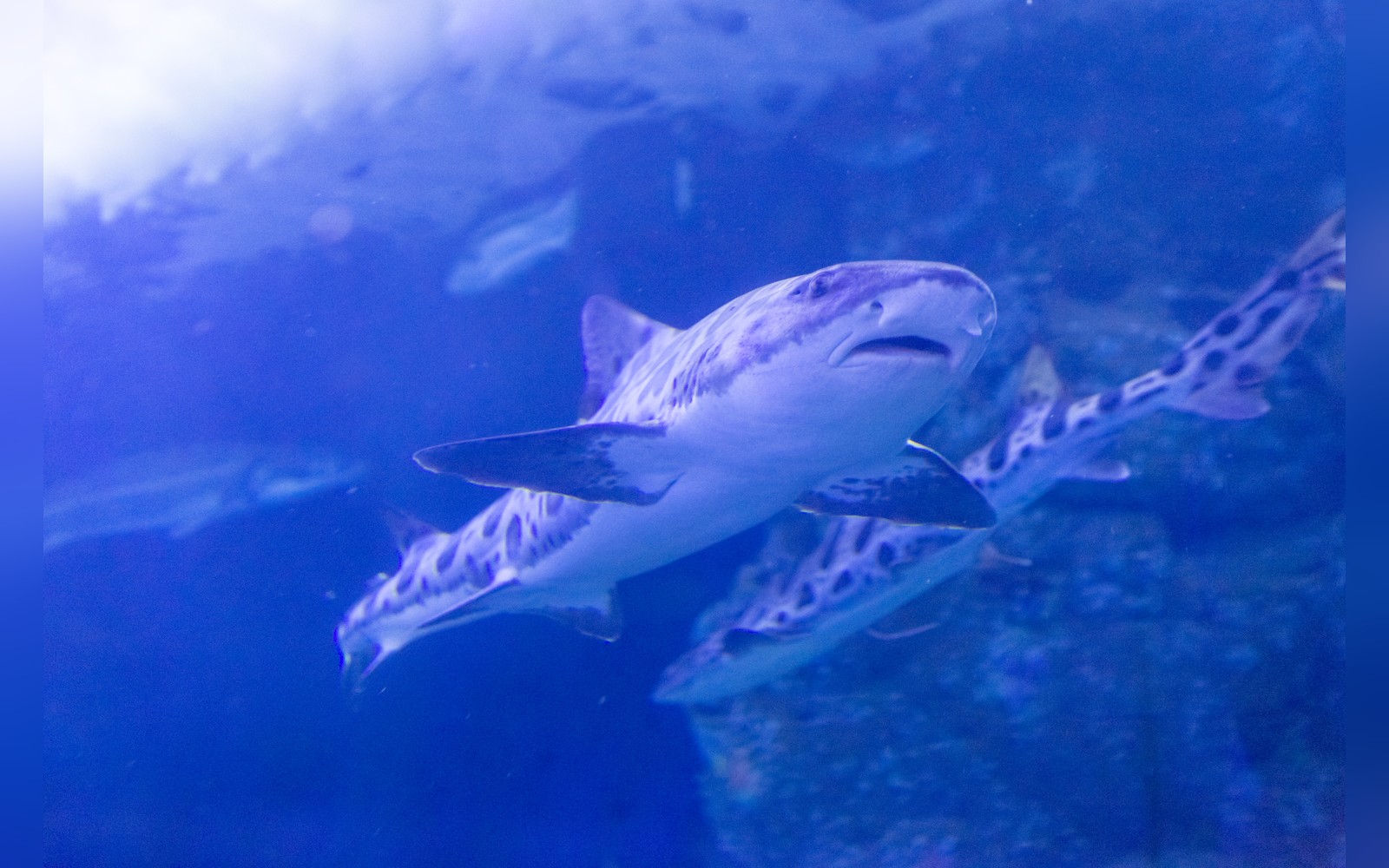
Species deep dive · leopard shark
*No — leopard sharks (Triakis semifasciata) are essentially not dangerous to people. The International Shark Attack File records a single human incident involving the species with no bite and no significant injury*, and guides such as the Florida Museum and San Diego Zoo treat them as a near-zero risk to swimmers (Florida Museum species profile; ISAF species table; San Diego Zoo).
Spotted hunters of shallow mudflats
These silver-to-bronze hounds with dark saddle blotches range the eastern Pacific from Oregon to the Gulf of California. They favour sandy or muddy bays, estuaries and tidal flats, often in water only a few metres deep, swimming a foot or so above the bottom (Florida Museum; San Diego Zoo).
Pavement-like teeth smash rather than slice. Diet is mostly benthic invertebrates and small fish — crabs, shrimp, fat innkeeper worms, clam siphons (often without the rest of the clam), fish eggs, and various small fish (Florida Museum). Large summer aggregations of mostly pregnant females show up in warm shallow reserves such as La Jolla's Matlahuayl State Marine Reserve (San Diego Zoo).
Least Concern — still not "infinite sharks"
IUCN lists the leopard shark as Least Concern (2014 assessment by Carlisle and colleagues, via San Diego Zoo Wildlife Alliance's IELC). Fishing rules appear to protect the core U.S. stock, but slow growth, late maturity and low reproductive output mean local overfishing or habitat loss can still bite hard; a precise global headcount is not available (IELC Triakis population; Florida Museum).
If you eat one: California advisories warn that leopard-shark flesh can carry high mercury, so it should not be a regular meal (Florida Museum; San Diego Zoo).
On the Wilder card
The leopard shark plays as an Uncommon Pisces card: Cost 3, Attack 3, Health 4, with Herd. Herd nods to the nomadic schools that cruise California mudflats. In the free browser collectible card game, that is flavour for a spotted bottom-hunter — not a movie villain.
Short answer for the search box: not dangerous to people, mudflat crab-and-clam specialist from Oregon to the Gulf of California, IUCN Least Concern, watch the mercury if you fish one.
Photo credit
Hero photograph: Huntercoughlin — Leopard Shark — Wikimedia Commons, CC BY-SA 4.0. Padded to fit the Field Journal hero.

Questions people ask
Are leopard sharks dangerous to humans?
Essentially no. The International Shark Attack File lists a single leopard-shark incident with no bite and no significant injury; Florida Museum and San Diego Zoo call the species a near-zero risk to people (Florida Museum; ISAF).
Where do leopard sharks live?
Eastern Pacific from Oregon to the Gulf of California, mostly in shallow sandy or muddy bays, estuaries and mudflats, often only a few metres deep (Florida Museum; San Diego Zoo).
What do leopard sharks eat?
Mostly benthic prey: crabs, shrimp, worms, clam siphons, fish eggs and small fish — pavement teeth smash soft bottoms rather than cut large prey (Florida Museum).
Are leopard sharks endangered?
No. IUCN lists Triakis semifasciata as Least Concern (2014 assessment by Carlisle et al.). Slow growth still makes local stocks sensitive to overfishing (IELC; Florida Museum).
What does the Wilder leopard shark card do?
On Wilder it is an Uncommon Pisces card: Cost 3, Attack 3, Health 4, with Herd — flavour for the schools that cruise California mudflats together.