Horseshoe Crab Blood: Is Medicine Still Using It? The 2026 Switch
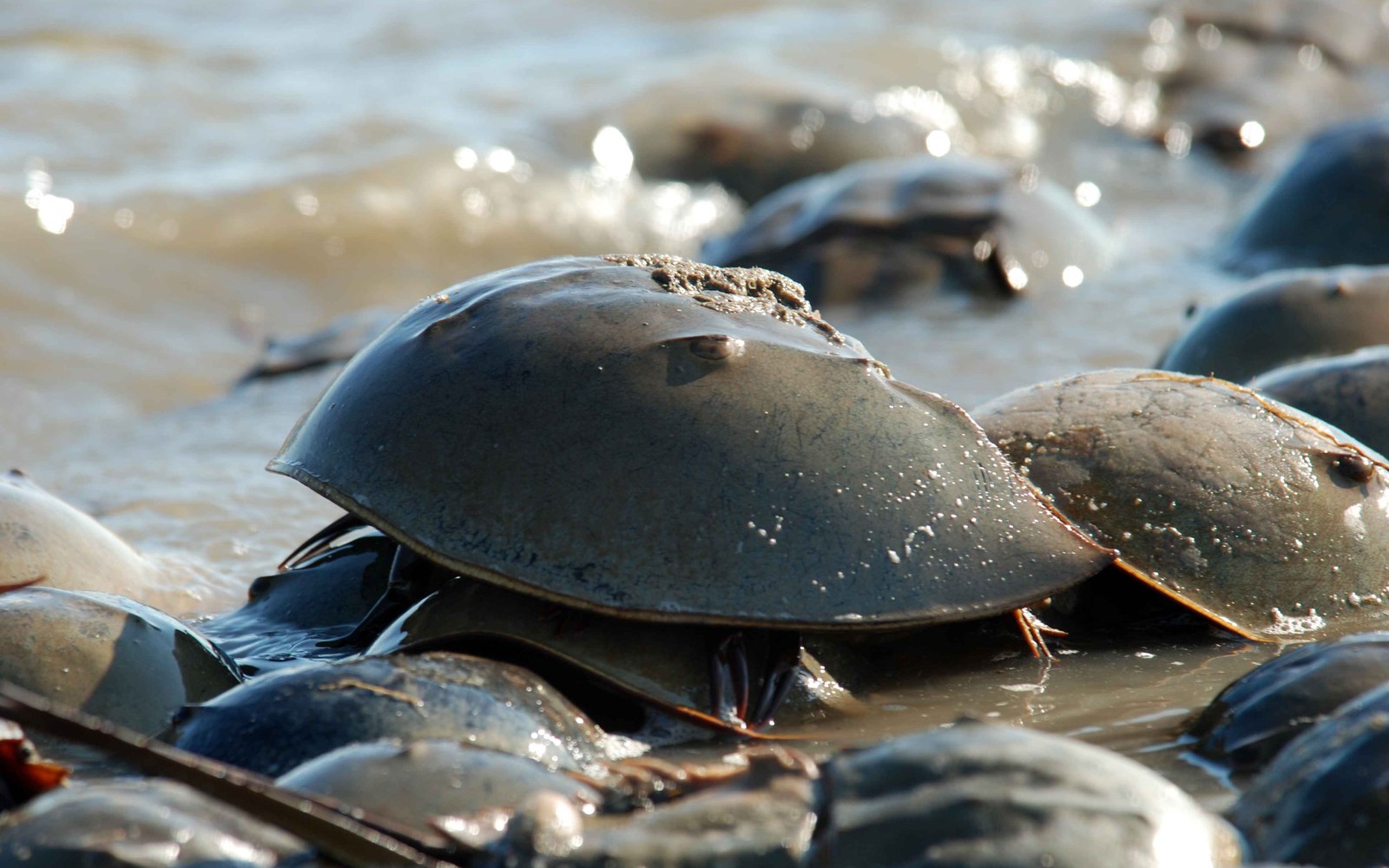
Species deep dive · atlantic horseshoe crab
Is horseshoe crab blood still used in medicine? Yes. In 2024 the biomedical industry bled 1,008,943 wild Atlantic horseshoe crabs along the US Atlantic coast to make Limulus amebocyte lysate (LAL), the standard test for checking vaccines, IV fluids, injectable drugs and implants for bacterial toxins (ASMFC). But 2026 has been the biggest year yet for the animal-free alternatives: drug makers announced switches, regulators on three continents backed them, and New York is phasing out the harvest altogether.
Why medicine wants this blood
The Atlantic Horseshoe Crab (Limulus polyphemus) has blue, copper-based blood, but the colour isn't the useful part. Its blood cells, called amebocytes, clot fast around bacterial endotoxin, a molecule from the outer wall of certain bacteria that can cause fever and severe reactions if it gets into a patient's bloodstream. In 1956 Frederik Bang, a Johns Hopkins scientist working at the Marine Biological Laboratory in Woods Hole, found that bacterial infection threw horseshoe crab blood clotting into disarray. In the 1960s the haematologist Jack Levin showed that endotoxin was the trigger and turned the crab's blood into a test. The LAL test now screens roughly 17 million samples a year (Marine Biological Laboratory; Johns Hopkins Bloomberg School of Public Health).
Regulators require endotoxin testing for anything that touches human blood or spinal fluid. That covers vaccines, IV bags, dialysis solutions, insulin and GLP-1 drugs, as well as hip replacements, stents and pacemakers (ASMFC).
How crabs are bled, and how many die
Collectors take live crabs to a lab, draw a portion of their blood and, under the interstate management plan, release them alive where they were caught. In 2024, 1,073,329 crabs were collected purely for biomedical use, 3% fewer than in 2023. About 3% died before they were released. Managers assume another 15% die after bleeding, an estimate drawn from a review of published studies, which puts total biomedical deaths at about 184,693 crabs for 2024 (ASMFC FMP Review 2024). Conservation groups argue the real post-bleeding death rate may be 15–30% (Maloney et al. 2018, PLOS Biology). Bait harvest for the eel and conch fisheries kills more crabs still: biomedical deaths made up about a quarter of all deaths from human use in 2024.
That matters beyond the crab. Spawning horseshoe crabs lay their eggs on Delaware Bay beaches each May and June, and those eggs refuel migrating shorebirds such as the threatened red knot (NOAA Fisheries; ASMFC).
The crab-free tests
The alternatives copy the crab's own chemistry. In the 1990s, scientists at the National University of Singapore cloned Factor C, the protein that acts as the blood's endotoxin sensor, and grew it in lab cells. Recombinant Factor C (rFC) has been on sale since 2003 (Maloney et al. 2018, PLOS Biology). A second type, recombinant cascade reagent (rCR), rebuilds a longer chain of the crab's clotting enzymes. Both are made by cloning horseshoe crab genes, not by chemical synthesis, and all four FDA-licensed LAL makers in the US now sell one (ASMFC).
For years drug makers held back because the old test was written into the rulebooks. That has been changing step by step:
| When | What changed |
|---|---|
| Jan 2021 | European Pharmacopoeia chapter 2.6.32 on rFC testing takes effect (EDQM) |
| May 2025 | US Pharmacopeia chapter 86, covering both rFC and rCR, becomes official (USP) |
| Feb 2026 | Amgen and Abbott announce they are moving away from horseshoe crab blood testing (Mongabay) |
| Jun–Aug 2026 | The EMA, FDA and regulators in Australia, Canada, Japan and Switzerland approve one protocol that lets a manufacturer switch several biologic medicines from LAL to a recombinant test (FDA) |
| 2026 | Brazil makes rFC its official endotoxin method, with a five-year transition (Humane World for Animals) |
| By 2029 | New York law phases out commercial and biomedical horseshoe crab harvest in state waters (ASMFC) |
Not a full replacement yet
The switch is real but not finished. The US chapter still counts the recombinant tests as alternatives to the classic LAL method, so each product has to show the new test works for it (USP–NF). Neither Amgen nor Abbott has a fixed end date (Mongabay). LAL is also used to help diagnose invasive fungal infections, and nothing synthetic replaces it there yet (ASMFC).
Four species, one very old design
Only four horseshoe crab species are alive today. The Atlantic horseshoe crab is listed as Vulnerable on the IUCN Red List, the Asian tri-spine horseshoe crab (Tachypleus tridentatus) is Endangered, and the other two Asian species are Data Deficient (IUCN SSC Horseshoe Crab Specialist Group). Their ancestors go back about 445 million years, some 200 million years before the dinosaurs, and despite the name they are closer to spiders and scorpions than to true crabs (NOAA Fisheries). Among living chelicerates, only scorpions and horseshoe crabs have a shell that glows under UV light (Rubin et al. 2017, Journal of Zoology), which we cover in our emperor scorpion piece.
How the horseshoe crab plays in Wilder
In Wilder the Atlantic Horseshoe Crab is a Cost 3 Merostomata Water Rare with ATK 2 / HP 5 and the keywords Resilient and Camouflage. It's the only Merostomata card in the game. Its flavor text reads "Blue blood under a horseshoe shield—xiphosurans stalked shores before the dinosaurs." A low attack and a deep health pool fit an animal whose survival plan for 445 million years has been armour, not offence.
Play Wilder free in your browser. It's a free browser collectible card game, and no signup is needed.
Photo credit
Hero photograph: Greg Breese, U.S. Fish and Wildlife Service, "Limulus polyphemus horseshoe crab on coast" (Wikimedia Commons), public domain. Cropped for the Field Journal hero.

Questions people ask
Do horseshoe crabs sting or bite?
No. The long, spiky-looking tail (the telson) is not a stinger: horseshoe crabs use it to steer and to flip themselves back over (NOAA Fisheries). They don't bite, and their claws are gentle (ERDG).
Should you flip over a horseshoe crab stuck upside down on the beach?
Yes, gently, by the edge of the shell. Stranded crabs can die on their backs, and conservation groups encourage beachgoers to turn them over. Never lift or flip one by the tail: it is delicate and easily damaged (ERDG Just flip 'em!).
How many eggs does a horseshoe crab lay?
100,000 or more in a season. A female lays clusters of about 4,000 tiny green or pink eggs in the sand, several clusters a night, over several nights. The eggs hatch in two to four weeks (NOAA Fisheries). See the Atlantic Horseshoe Crab card.
What is the difference between rFC and rCR endotoxin tests?
rFC copies one crab protein; rCR copies a chain of them. Recombinant Factor C (rFC) is a lab-made clone of Factor C, the horseshoe crab's endotoxin sensor. Recombinant cascade reagent (rCR) rebuilds a longer enzyme cascade that starts with rFC. US Pharmacopeia chapter 86 covers both as alternatives to the classic LAL test (USP–NF; USP).
Sources
- Horseshoe Crab Frequently Asked Questions, August 2026 (Atlantic States Marine Fisheries Commission)
- Review of the ASMFC Fishery Management Plan for Horseshoe Crab, 2024 fishing year
- Jack Levin, Frederik Bang receive Golden Goose Award (Marine Biological Laboratory)
- Frederik Bang, MD (Johns Hopkins Bloomberg School of Public Health)
- Saving the horseshoe crab: a synthetic alternative to horseshoe crab blood for endotoxin detection (Maloney, Phelan & Simmons 2018, PLOS Biology)
- Horseshoe crabs: managing a resource for birds, bait, and blood (NOAA Fisheries)
- Recombinant factor C: new Ph. Eur. chapter (EDQM)
- Chapter for endotoxin testing using non-animal derived reagents published for early adoption (USP, 2024)
- FAQ: Bacterial Endotoxins Test Using Recombinant Reagents (USP–NF)
- International collaboration to advance new testing methods that reduce reliance on horseshoe crab blood (FDA, 31 Aug 2026)
- Pharmaceutical companies move away from horseshoe crab biomedical testing (Mongabay, March 2026)
- Brazil recognizes animal-free replacement for horseshoe crab blood-derived test (Humane World for Animals)
- IUCN SSC Horseshoe Crab Specialist Group
- Exocuticular hyaline layer of sea scorpions and horseshoe crabs (Rubin et al. 2017, Journal of Zoology)
- Just flip 'em! program (Ecological Research & Development Group)
- Limulus polyphemus horseshoe crab on coast (Wikimedia Commons)