Indian Pangolin: Keratin Scales, Sticky Tongue, Most Trafficked Mammal
Species deep dive · indian pangolin
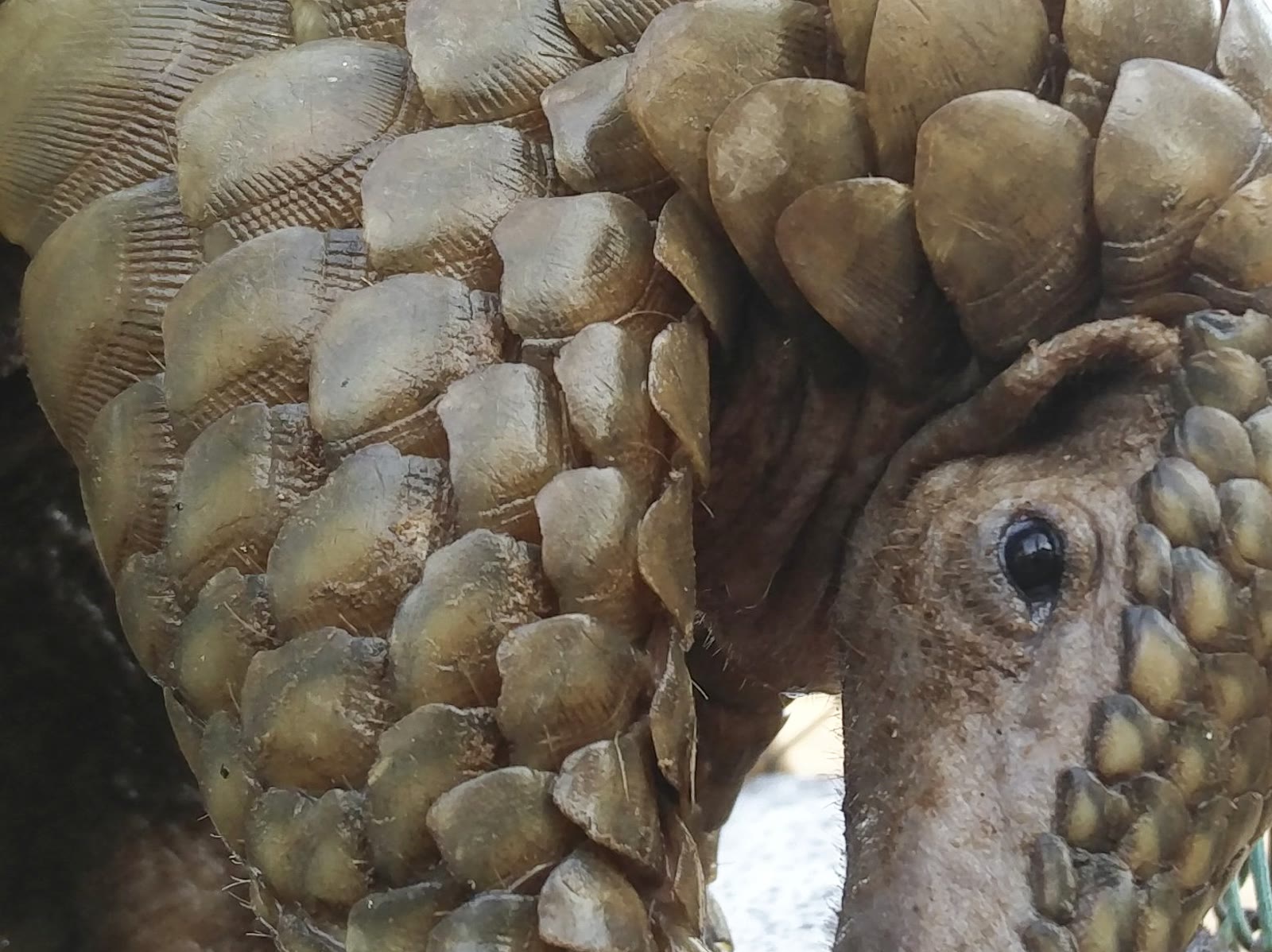
Search “most trafficked mammal,” “pangolin scales,” or “Indian pangolin,” and you land on Manis crassicaudata — South Asia’s thick-tailed pangolin, a toothless nocturnal anteater wrapped in overlapping keratin scales. Those scales look like armor forged for a fantasy game, but they are the same protein as your fingernails. That armor is also why wildlife traffickers have pushed all eight living pangolin species toward crisis, and why the Indian pangolin is listed Endangered on the IUCN Red List.
In Wilder TCG the Indian Pangolin is a Cost 2 Mammalia Forest Common with Resilient and Thorns (ATK 2 / HP 5) — a small, stubborn tank that matches a real animal built to endure claws and curiosity by curling into a ball.
Scales that are not fish scales
Adult Indian pangolins typically measure about 45–147 cm in total length and weigh roughly 8–17 kg (records toward 20 kg). About 11–13 rows of yellowish-brown scales cover the back, limbs, and tail; scales can make up roughly one-quarter to one-third of body mass. The underside stays soft and furred — the vulnerability the ball-roll protects. A diagnostic detail for this species is a terminal scale on the underside of the tip of the tail, which helps separate it from the Chinese pangolin (M. pentadactyla) in the field.
When threatened, an Indian pangolin tucks its head and limbs and rolls into a nearly impenetrable sphere. Predators that try to pry the ball open face cutting scale edges; the animal may also hiss, spin on its tail if grabbed, or release a foul anal-gland scent. Against humans with tools and trade networks, that defense fails.
A sticky tongue and a gizzard, no teeth
Indian pangolins are myrmecophagous: ants and termites dominate the diet, with occasional beetles and other invertebrates. They locate nests by smell, rip mounds open with oversized foreclaws, then deploy a long sticky tongue. Animal Diversity Web reports the tongue averaging about 25 cm extended from the mouth and about 42.5 cm in total length — roughly 37% of body length for an average adult. Prey sticks to saliva; without teeth, grinding happens in a muscular stomach that uses swallowed sand, clay, and grit as gastroliths.
They dig daytime burrows in soft or semi-sandy soils and forage mostly after dark, from thorn forest and grassland to rainforest and village edges across Pakistan, India, Nepal, Bangladesh, Sri Lanka, and parts of the wider historical range toward Myanmar/China. Fresh water and insect nests matter more than a single habitat label.
Why “most trafficked mammal” is not a meme
Pangolins as a group are repeatedly described by IUCN, TRAFFIC, and CITES analyses as the most heavily trafficked wild mammals on Earth — hunted for meat and for scales used in traditional medicines and curios. For M. crassicaudata, IUCN’s Endangered assessment rests on hunting plus rising international trade pressure as other Asian pangolin populations collapsed, with a projected decline on the order of at least 50% over roughly three generations (~21 years) in the assessment rationale summarized in CITES documents. All pangolins are now on CITES Appendix I (international commercial trade banned). In India they also sit on Schedule I of the Wild Life (Protection) Act — the strongest domestic class.
Slow life history makes recovery hard: typically one young (sometimes more), gestation often cited around 65–80 days, and young riding the mother’s tail for months. Captive breeding remains difficult because the diet and stress biology are specialized. Protecting wild ants, termites, and burrow landscapes is still the core conservation path — not demand for scales.
On the Wilder card
The Indian Pangolin field guide tags Forest on a Cost 2 Mammalia Common with Resilient + Thorns: armor that punishes attackers, stamina that outlasts a fight. That is the game shorthand for a species whose real-world strategy is to disappear into a keratin ball and wait for danger to get bored — until the danger learned to sell the armor.
If you have never tried Wilder, guest play is free in the browser:
Quick facts
- Scientific name: Manis crassicaudata (Indian / thick-tailed pangolin)
- Order / family: Pholidota · Manidae
- Hook: Keratin-scaled anteater; among the world’s most trafficked mammals
- Size: ~45–147 cm total length; ~8–17 kg typical
- Look: overlapping pale-brown scales, soft underside, long digging claws, sticky tongue
- Range: South Asia (core: India, Pakistan, Nepal, Bangladesh, Sri Lanka; historically wider)
- Diet: ants, termites, occasional other invertebrates — ground and sometimes arboreal nests
- Defense: roll into armored ball; hiss / scent / spin if handled
- IUCN: Endangered · CITES: Appendix I
- Wilder family: Mammalia · Forest · Cost 2 · ATK 2 / HP 5 · Resilient + Thorns · Common
Photo credit
Hero photograph: Vickey Chauhan — A Rescued Indian Pangolin — Wikimedia Commons, CC BY-SA 4.0.

Questions people ask
Why are pangolin scales valuable to traffickers?
Scales are keratin (like fingernails), but they are sold for traditional medicines and curios. That demand — plus meat — fuels illegal trade. IUCN and TRAFFIC analyses treat pangolins as the world's most heavily trafficked wild mammals; M. crassicaudata is Endangered and on CITES Appendix I.
Do Indian pangolins have teeth?
No. They are toothless myrmecophages that lap ants and termites with a long sticky tongue (about 25 cm extended from the mouth per Animal Diversity Web) and grind prey in a muscular stomach using swallowed grit.
How does an Indian pangolin defend itself?
It rolls into a tight ball so only hard keratin scales show. It may also hiss, spin if grabbed by the tail, or release a foul anal-gland scent. That armor works against many predators but not against people with tools and trade networks.
How many babies do Indian pangolins have?
Usually one young per year (occasionally more). Gestation is often reported around 65–80 days; pups may ride the mother's tail while she forages. Slow breeding makes populations slow to recover from poaching.
Is the Indian pangolin the same as the Chinese pangolin?
No. Both occur in parts of Asia, but Manis crassicaudata (Indian) and M. pentadactyla (Chinese) are separate species. One field clue: Indian pangolins have a terminal scale under the tip of the tail that Chinese pangolins lack. See Wilder's Indian Pangolin.
Sources
- Animal Diversity Web — Manis crassicaudata
- CITES CoP17 Prop. (India) — Manis crassicaudata
- TRAFFIC — The global trafficking of pangolins (seizures 2010–2015)
- IUCN news — pangolin scale seizure & trafficking routes
- European Journal of Wildlife Research — Illegal trade of pangolins in India (1991–2022)
- Wilder TCG — Indian Pangolin field guide