Can Sharks Smell Blood a Mile Away? 7 Animal Myths Busted
Species deep dive · great white shark, hippopotamus, western honey bee, german yellowjacket, western diamondback rattlesnake, red bellied piranha, gray wolf, greater flamingo
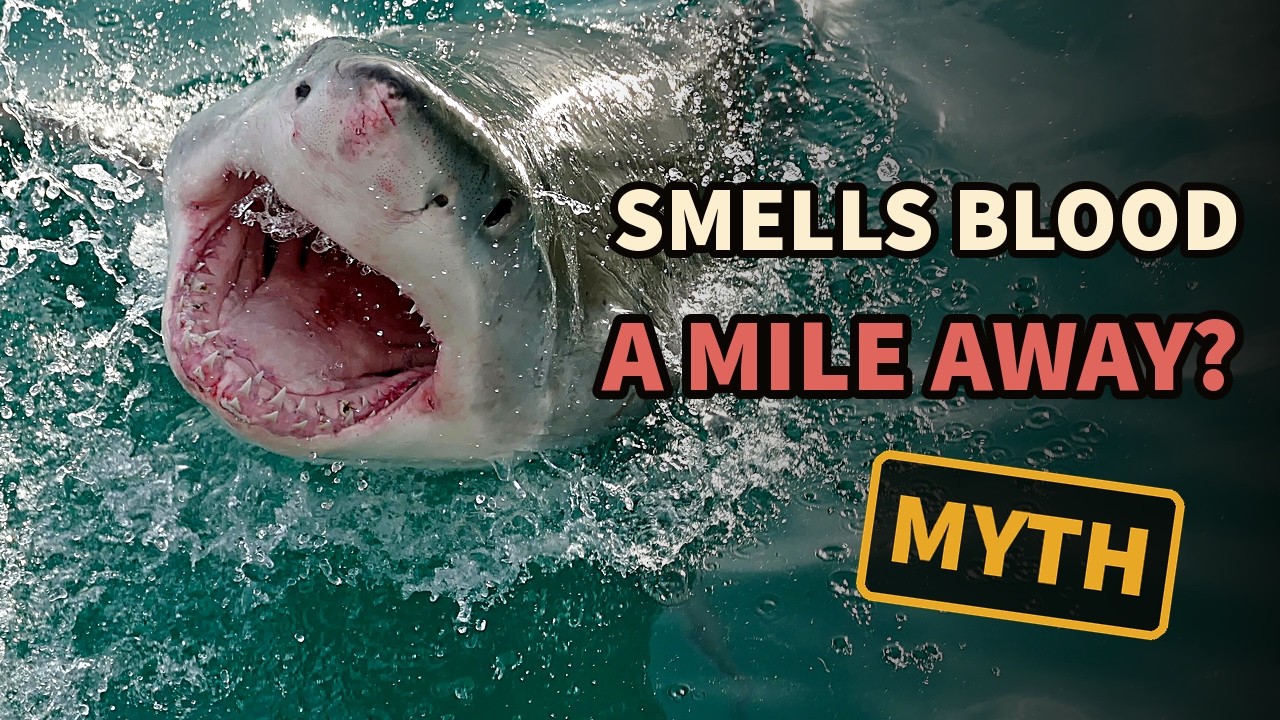
No: the sharks scientists have actually tested can't smell a drop of blood from a mile away. A 2010 study of five shark and ray species found their sense of smell was about as sensitive as an ordinary bony fish's, and one drop spread through a mile of ocean would be far too diluted for them to notice (Meredith & Kajiura 2010, Journal of Experimental Biology; Live Science). That's one of seven animal myths we checked against the research. Here's what's really going on with hippos, bees, rattlesnakes, sharks, piranhas, wolves and flamingos.
- 0:00 Intro: 7 animal myths
- 0:26 Myth 1: Hippos sweat blood
- 1:11 Myth 2: Bees die after they sting
- 1:53 Myth 3: A rattle tells a snake's age
- 2:31 Myth 4: Sharks smell blood a mile away
- 3:02 Myth 5: Piranhas hunt in packs
- 3:36 Myth 6: Wolves howl at the moon
- 3:53 Myth 7: Flamingos are born pink
- 4:17 Seven myths, busted
Myth 1: Hippos sweat blood
A hippopotamus out of the water can look like it's bleeding, but it isn't. Its skin gives off a thick, colourless fluid that turns red within minutes and later brown. It isn't strictly sweat either, because it comes from glands under the skin, though it helps keep the hippo cool the way sweat does (Saikawa et al. 2004, Nature).
People have been puzzling over it for a long time. In 1850 the Zoological Society of London published a plate titled "Exudation from the skin of the Hippopotamus", drawn under the microscope from Obaysch, the hippo at London Zoo (Proceedings of the Zoological Society of London, 1850, via Wikimedia Commons).

In 2004, chemists at Keio University in Japan identified two pigments in it: a red one (hipposudoric acid) and an orange one (norhipposudoric acid). Both absorb ultraviolet light, which suggests they may act as a natural sunscreen, and in lab tests the red pigment stopped the growth of harmful bacteria (Saikawa et al. 2004). So it's less "blood sweat" and more a homemade sunscreen and germ fighter.
Myth 2: Bees die after they sting
That's only true for one kind of bee in one situation: a worker honey bee stinging a thick-skinned animal like us. Her sting has backward-facing barbs, like a fish hook, that lodge in tough skin. When she pulls away, the sting, the venom sac and part of her abdomen tear off and stay behind, and that injury eventually kills her. The venom sac can keep pumping venom into the wound for up to a minute (Encyclopedia of Social Insects, 2021; FAO).
When a honey bee stings another insect, she can usually pull her sting back out and survive. Most other stinging insects, like the German yellowjacket, can pull their sting out of human skin too, so they can sting again and again (Encyclopedia of Social Insects; StatPearls, NCBI Bookshelf).
Myth 3: You can tell a rattlesnake's age by its rattle
The rattle of a western diamondback rattlesnake is made of keratin, the same protein as your fingernails, and a new segment is added every time the snake sheds its skin. But rattlesnakes shed about two to four times a year, and old segments break off, so counting them doesn't tell you the snake's age (National Park Service, Tuzigoot; National Park Service, Saguaro; Davidson College Herpetology Lab).
There's nothing inside the rattle, either. The buzz is the hollow segments shaking against each other (National Park Service).
Myth 4: Sharks can smell a drop of blood a mile away
The legend says a shark can smell a single drop of blood in an Olympic swimming pool, or from a mile away (Live Science). A shark's nostrils do lead into chambers lined with folds of smell-sensing tissue. But when researchers measured five species of sharks and rays in 2010, their sensitivity was comparable to ordinary bony fish. At their best, the sharks detected about one drop of scent in a billion drops of water (Meredith & Kajiura 2010; Live Science). The tested species were lemon and bonnethead sharks plus rays and skates; great white sharks weren't among them.
Now do the maths. One drop spread evenly through a half-sphere of sea a mile in radius ends up well over 100 million times more diluted than one part in a billion. That's a rough estimate, but it's far beyond what the tested sharks could pick up.
Myth 5: Piranhas hunt in packs
In 1914 Theodore Roosevelt called piranhas "the most ferocious fish in the world" (Roosevelt, Through the Brazilian Wilderness, ch. 2). But a study of red-bellied piranhas found no support for cooperative hunting (Queiroz & Magurran 2005, Biology Letters).
Their shoals look more like a defence. Piranhas are regularly eaten by river dolphins, caimans, water birds and bigger fish. In experiments, piranhas in bigger groups breathed more calmly, and after a simulated attack by a model cormorant, groups of eight recovered faster than pairs (Queiroz & Magurran 2005).
Myth 6: Wolves howl at the moon
Gray wolves howl to communicate: to find members of their pack, to rally before a hunt and to warn neighbouring wolves to stay away (International Wolf Center). They aren't howling at the moon. You hear them more at night because it's quieter, so a howl carries further (International Wolf Center, Fact or Scat; Smithsonian's National Zoo).
Myth 7: Flamingos are born pink
Greater flamingo chicks hatch with white-grey down and straight bills. The pink comes from their food: carotenoid pigments, the same kind found in carrots, in the algae and brine shrimp they eat. Their bodies process those pigments and turn their feathers pink (Smithsonian's National Zoo; San Diego Zoo Wildlife Alliance).
Play the myth-busters
Every animal in this piece is a card in Wilder, a free browser collectible card game. Build a deck with the Great White Shark, Hippopotamus, Gray Wolf and the rest, no signup needed.
Photo credit
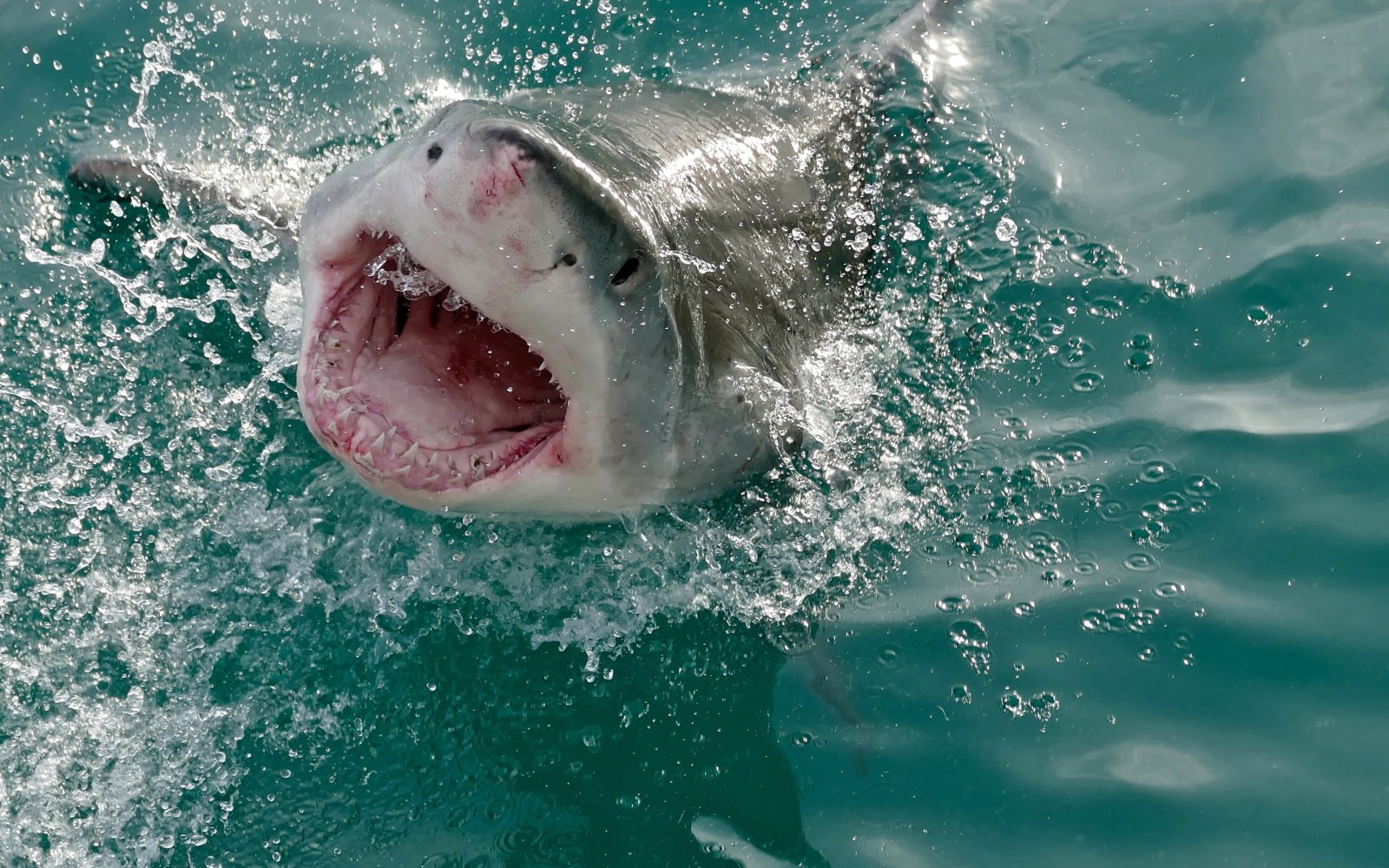
Hero photograph: Bernard Dupont, Great White Shark (Carcharodon carcharias), Wikimedia Commons_(32749142772).jpg), CC BY-SA 2.0. Cropped for the Field Journal hero.
Questions people ask
How long does a honey bee live after it stings you?
Not long, but not instantly either: a 2023 study found stung-out workers may live roughly 18 to 114 hours. Losing the sting and part of the abdomen is almost always fatal in the end (Functional anatomy of the worker honeybee stinger, 2023; FAO). Meet her on the Western Honey Bee card.
Should you scrape or pinch out a bee sting?
Either is fine; speed is what matters. A 1996 study in The Lancet found that scraping versus pinching made no difference to the reaction, but how quickly the sting came out did, since the venom sac keeps pumping for up to a minute (Visscher, Vetter & Camazine 199601367-0); Encyclopedia of Social Insects).
Does a rattlesnake always rattle before it strikes?
No. The National Park Service warns not to count on a warning every time: a rattlesnake may not rattle before it strikes (National Park Service, Saguaro). See the Western Diamondback Rattlesnake card.
How far away can you hear a wolf howl?
About 10 km (6 to 7 miles). The International Wolf Center says a howl can travel 6 to 7 miles, and it's easier to hear at night when human noise drops (International Wolf Center, Fact or Scat). Howl along with the Gray Wolf card.
How long does it take a flamingo to turn pink?
Several years. Chicks hatch with white-grey down and only gradually take on pink colour from the carotenoid pigments in their food (Smithsonian's National Zoo). See the Greater Flamingo card.
Sources
- Saikawa et al. 2004, Nature 429:363 — The red sweat of the hippopotamus
- Proceedings of the Zoological Society of London 1850, Mammalia Plate XXI (Wikimedia Commons)
- Sting autotomy, Encyclopedia of Social Insects (Springer, 2021)
- Krell 1996, FAO Agricultural Services Bulletin 124, ch. 7
- Functional anatomy of the worker honeybee stinger (2023)
- Hymenoptera stings, StatPearls (NCBI Bookshelf NBK518972)
- Visscher, Vetter & Camazine 1996, The Lancet 348:301
- NPS Tuzigoot National Monument — Snakes
- NPS Saguaro National Park — Snakes
- NPS — Prairie rattlesnakes
- Davidson College Herpetology Lab — Modern myths about snakes
- Meredith & Kajiura 2010, Journal of Experimental Biology 213:3449
- Live Science 2010 — Shark smell myth found fishy
- Roosevelt 1914, Through the Brazilian Wilderness (Project Gutenberg #11746)
- Queiroz & Magurran 2005, Biology Letters 1:155
- International Wolf Center — Wolf FAQs
- International Wolf Center — Fact or Scat
- Smithsonian's National Zoo — Why do wolves howl?
- Smithsonian's National Zoo — Why are flamingos pink?
- San Diego Zoo Wildlife Alliance — Flamingo
- Wilder TCG on YouTube — Sharks Can't Smell Blood a Mile Away + 6 More Animal Myths Busted