Star-Nosed Mole: 22 Tentacles, Eimer's Organs, and Underwater Smell
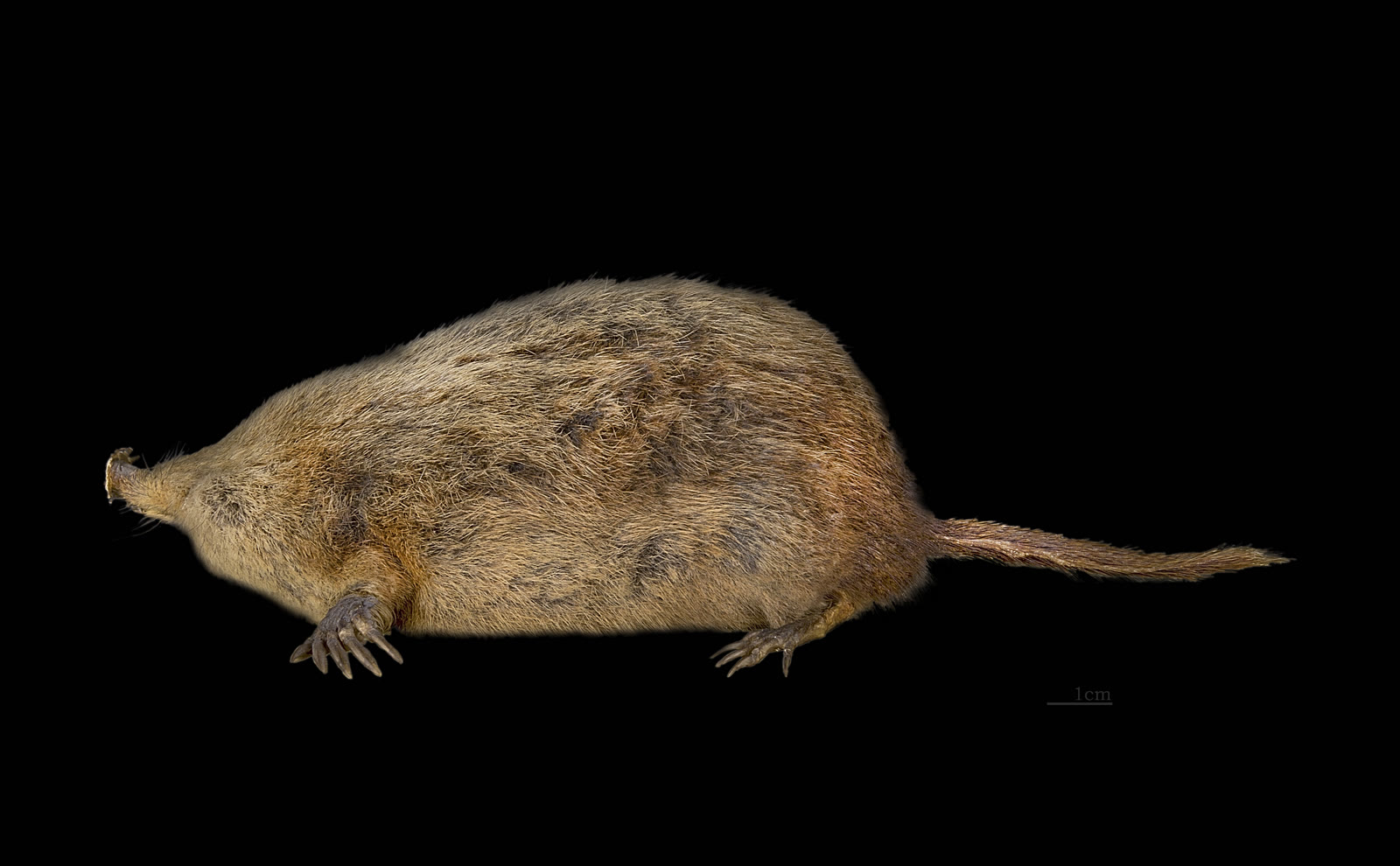
Species deep dive · star nosed mole
Search “can star-nosed moles smell underwater,” “what are Eimer’s organs,” or “fastest eating mammal,” and the answer keeps pointing at the same pink asterisk on a black velvet face. Condylura cristata — the star-nosed mole — wears 22 fleshy nasal rays packed with roughly 25,000 touch sensors called Eimer’s organs, and it can identify and swallow tiny prey in a few hundred milliseconds. It is eastern North America’s wetland mole that treats mud like braille and water like a scent trail.
Condylura cristata is a semiaquatic talpid of marshes, peatlands, and stream banks — IUCN Least Concern, common where wet soils persist. In Wilder TCG it is a Cost 1 Mammalia Water Ambush with Camouflage: a Common early-board specialist that echoes a real animal whose nose is less “weird decoration” and more high-speed foraging hardware.
Twenty-two rays that taste the mud
The star is bilaterally symmetrical — 11 rays per side, each a few millimeters long — and it is almost pure touch. Every ray is carpeted in microscopic papillae (Eimer’s organs); ADW and Catania’s lab summarize on the order of ~25,000 of them in less than a square centimeter. As the mole forages, the star blurs across surfaces at up to about 12 contacts per second. The shortest, bottom-most rays are especially dense and act as a “fovea” for confirming edible texture once something interesting is found.
Eyes are tiny and mainly good for light versus dark; hearing is strong; the star is the headline sense. Laboratory work has even floated weak electroreception as a possible bonus underwater — intriguing, not yet a settled textbook fact — so the careful claim stays with touch first.
Yes — they can smell underwater
Mammals usually cannot sniff while submerged: water floods the nose. Vanderbilt’s Kenneth Catania showed in a 2006 Nature brief that star-nosed moles (and American water shrews) cheat the rule with bubble sniffing. The mole exhales air onto objects or scent trails underwater, then rapidly re-inhales the same bubble, carrying water-soluble odorants back into the nose. The star’s geometry helps stabilize those bubbles. So the live search answer is yes: star-nosed moles can use olfaction underwater — not by breathing water, but by recycling air bubbles as portable scent chambers.
Fastest-eating mammal
That tactile bandwidth turns into speed. High-speed video work (Catania & Remple and related papers) clocked average prey-handling times around ~227–230 milliseconds, with some eats as fast as about ~120 ms — from touch to swallow before a human blink finishes. Guinness World Records recognizes the star-nosed mole as the fastest-eating mammal. The evolutionary logic is tidy: tiny wetland prey items are individually cheap, so profitability comes from minimizing handling time, not from big bites.
Wetland specialist, not a lawn mole
Unlike drier-soil eastern moles, C. cristata prefers poor drainage — marshes, wet meadows, peatlands, lake and stream banks — across eastern North America from the Canadian Maritimes and Québec west toward Manitoba/North Dakota and south through the Appalachians to Georgia. Tunnels often open underwater; the mole swims with zigzag strokes of front and hind feet, stays active under ice and snow, and takes roughly half its diet as worms (many aquatic) plus aquatic insect larvae, crustaceans, mollusks, and occasional small fish.
Size is modest: about 175–205 mm total length and 35–75 g. One litter per year (typically ~5 young after ~45 days’ gestation) keeps the life history closer to other small insectivores than to megafauna drama. Conservation status is Least Concern, but the species still tracks wetland health — drain the marsh, and the star loses its stage.
No medical claims belong here: Eimer’s organs are sensory biology, not a human therapy pitch.
On the Wilder card
In the star-nosed mole field guide entry you will find Water habitat tagging, Least Concern status, and Ambush + Camouflage flavor for a Cost 1 Mammalia Common — the game echo of a wetland specialist that tastes mud faster than you blink and sniffs through bubbles when the tunnel opens under a pond.
If you have never tried Wilder, guest play is free in the browser — open packs, build a deck, and put twenty-two tentacles on the table:
Quick facts
- Scientific name: Condylura cristata
- Family: Talpidae (moles)
- Hook: 22 nasal rays; ~25,000 Eimer’s organs; underwater bubble-sniffing; fastest-eating mammal
- Size: ~175–205 mm; 35–75 g
- Range: eastern North America wetlands and wet soils
- Diet: aquatic/terrestrial worms, aquatic insect larvae, crustaceans, mollusks; occasional small fish
- Foraging speed: ~227 ms average handling; ~120 ms fastest recorded eats
- Status: IUCN Least Concern
- Wilder family: Mammalia · Water · Cost 1 · ATK 1 / HP 2 · Ambush + Camouflage · Common
Photo credit
Hero photograph: Archaeodontosaurus (Didier Descouens), "Condylura cristata MHNT.INS.6" (Wikimedia Commons), CC BY-SA 3.0. Cropped for the Field Journal hero.

Sources
- Animal Diversity Web — Condylura cristata
- Catania 2006 — Underwater 'sniffing' by semi-aquatic mammals
- Catania Lab — Star-Nosed Mole research overview
- Catania & Remple 2005 — Asymptotic prey profitability… foraging speed limit
- Guinness World Records — Fastest-eating mammal
- Natural History Museum — Why star-nosed moles have a 'hand' on their face
- Wilder TCG — Star-nosed mole field guide