Western Honey Bee: What Do Honey Bees Do in Winter?
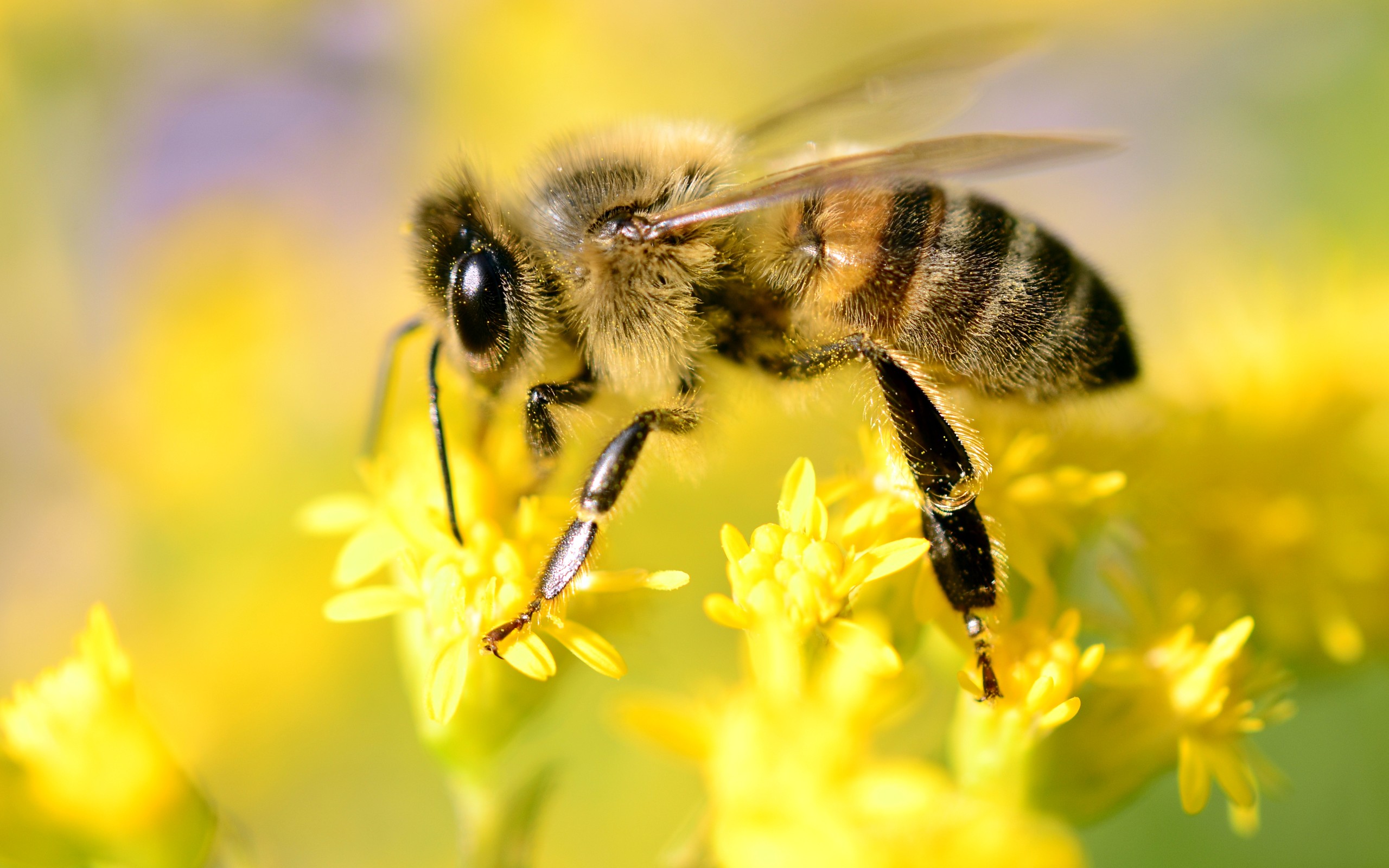
Species deep dive · western honey bee
Honey bees don't hibernate. When it gets cold, the whole colony packs into a tight ball called the winter cluster, and the bees vibrate their flight muscles to make heat (Döke, Frazier & Grozinger 2015). They live on the honey they stored in summer, the queen stops laying, and the colony gets through the winter on a special generation of long-lived "winter bees" that can survive up to eight months, compared with about a month for a summer worker.
The western honey bee (Apis mellifera) is one of the few insects that stays active all winter instead of going dormant (Döke et al. 2015). Right now, in November, colonies across the Northern Hemisphere are settling into their clusters. Here's what goes on inside the hive until spring.
When does the winter cluster form?
The bees start to huddle when the air gets cool. The Mid-Atlantic Apiculture Research and Extension Consortium (MAAREC) says they begin to form a tight cluster at about 14 °C (57 °F) (MAAREC), and a review of overwintering research puts it at below 10 °C (Döke et al. 2015). The cluster only works inside a cavity, such as a hollow tree or a hive. A colony hanging in the open can't keep its heat (Döke et al. 2015).
The cluster isn't fixed in place. It changes shape and slowly moves across the combs during the winter, which lets the bees reach new honey and react to the weather (Minaud et al. 2024, Ecological Indicators).
How do honey bees keep warm?
They make their own heat. Part of it is simply the resting metabolism of thousands of bees packed together. On top of that, bees in the middle actively produce heat by vibrating their flight muscles, a bit like shivering (Minaud et al. 2024; Döke et al. 2015).
The middle of a winter cluster averages about 27–35 °C, and the temperature drops towards the surface, to about 18–29 °C (Minaud et al. 2024). When the colony starts raising young again, the cluster wraps around the brood and keeps it at about 33–34 °C, which is the temperature honey bee brood needs (Döke et al. 2015; MAAREC). The bees on the outside act as a living blanket.
Winter bees: the generation that lasts eight months
The bees in a winter cluster are not ordinary workers. In late spring, summer and early autumn, a worker lives for only about 30 days. In autumn, as the colony raises less brood, it produces long-lived winter bees that can live for up to eight months (Döke et al. 2015).
In their body chemistry, winter bees are a lot like young nurse bees, with large stores of protein, including the storage protein vitellogenin, which acts as a food reserve. The change seems to be triggered mainly by the lack of brood. In experiments, summer workers in colonies that were made broodless started to look like winter bees too (Döke et al. 2015). In late winter and spring, the survivors switch back and become foragers again.
No room for the drones
The male bees, called drones, don't get to stay. When nectar runs short in autumn, the workers drag the drones out of the hive and don't let them back in, so they starve. That saves the colony's winter honey for the workers and the queen (MAAREC).
What do honey bees eat in winter?
Honey. That's what all the summer foraging was for. Nectar is turned into honey and stored as the colony's energy supply for the winter (Döke et al. 2015). Colorado State University Extension tells beekeepers to leave about 36–45 kg (80–100 lb) of honey in the hive for winter (Colorado State University Extension). A heavy hive in autumn is a good sign. In one study, 90% of colonies that weighed at least 22.5 kg in autumn survived the winter, compared with only 27% of colonies weighing 18 kg or less (weights not counting the wooden hive) (Döke et al. 2015).
The queen's egg laying tapers off and may stop completely in October or November (MAAREC). Then, in December and January, the coldest part of the year, the colony starts raising brood again, so it has young bees ready for spring (Döke et al. 2015).
Why so many colonies die over winter
Before the Varroa mite and tracheal mites spread, winter losses were about 10% of colonies. Since 2006, US beekeepers have reported average winter losses of about 30% (Döke et al. 2015). Varroa feeds on developing bees and shortens the lives of both summer and winter bees (Döke et al. 2015), and the viruses it spreads are among the biggest threats to honey bee health (Wageningen University & Research).
The latest numbers are in line with that. The US Beekeeping Survey estimated that 30.3% of managed colonies were lost in winter 2025–2026 (1 October to 1 April). That's close to the 18-year average of 29.9%, and 10 percentage points lower than the winter before, which had the highest losses since the survey began (Apiary Inspectors of America). In the Netherlands, 24% of colonies were lost that winter, the fourth year in a row above 20%. Wageningen University names queen loss, food shortages, disease and Varroa among the causes (Wageningen University & Research).
How the honey bee plays in Wilder
The Western Honey Bee (Apis mellifera) is a Common Insecta card in the Air element. It costs 2 Energy, with Attack 1, Health 2 and Flock. Its ability Waggle Dance costs 2 Energy and draws you a card, after the dance that foragers use to tell their hive-mates where the flowers are. It won't win fights by itself, but it keeps your hand full. Flavour text: "Busy as, obviously."
Its Asian cousin, the Japanese Honey Bee, is a tougher Uncommon card. Its Heat Ball ability deals 2 damage to an enemy creature, after the way these bees cook giant hornets to death inside a ball of bees. Read that story in Northern giant hornet: how bees beat the "murder hornet". For what the honey bee's sting is worth on the pain scale, see the most painful stings and bites, ranked. For two other insects getting through the cold, read why wasps get aggressive in autumn and where stag beetles go in winter.
Wilder is a free browser collectible card game about real animals, and you can play it free in your browser with no signup.
Photo credit
Hero photograph: williami5, "Worker bee" (a western honey bee worker on yellow flowers in Kent, England, 9 August 2016), Wikimedia Commons, CC BY 2.0. Cropped for the Field Journal hero.

Questions people ask
Do bumblebees survive the winter the same way honey bees do?
No. A bumblebee nest doesn't overwinter as a colony. In autumn the old queen, the workers and the males die, and only the new queens survive, each hibernating alone, usually underground. In spring each queen starts a brand-new nest by herself (Bumblebee Conservation Trust).
Do honey bees poop inside the hive in winter?
They try not to. Honey bees hold their waste through cold spells and wait for a warmer day. Whenever it gets above about 13 °C (55 °F), they may leave the hive for a quick "cleansing flight" to relieve themselves, which is why you can see honey bees flying on mild winter days (Colorado State University Extension).
How cold is too cold for a single honey bee?
Below about 10 °C a lone honey bee goes into "chill coma" and can't move, which is why bees in winter only survive packed together in a cluster that keeps its temperature above that threshold (Minaud et al. 2024, Ecological Indicators, citing Free & Spencer-Booth 1960).
What do beekeepers feed honey bees before winter?
Sugar syrup, if the honey stores are too small. A review of overwintering research recommends a thick syrup of two parts sugar to one part water in early autumn, to bring the colony up to a safe weight without making the bees spend energy drying out a thinner syrup. How much a colony needs depends on the local climate (Döke, Frazier & Grozinger 2015).
Sources
- Döke, Frazier & Grozinger (2015) Overwintering honey bees: biology and management, Current Opinion in Insect Science 10:185-193
- Minaud et al. (2024) Temperature in overwintering honey bee colonies reveals brood status and predicts colony mortality, Ecological Indicators
- MAAREC (University of Delaware): Honey bee biology
- Colorado State University Extension: Meant to Bee - Overwintering strategies for bees
- Apiary Inspectors of America: US Beekeeping Survey 2025-2026 results
- Auburn University: Honey bee colony losses stabilize following record highs (June 2026)
- Wageningen University & Research: Almost a quarter of Dutch bee colonies did not survive last winter
- Bumblebee Conservation Trust: The bumblebee lifecycle