Wild Camel: The Desert Camel That Drinks Salt Water
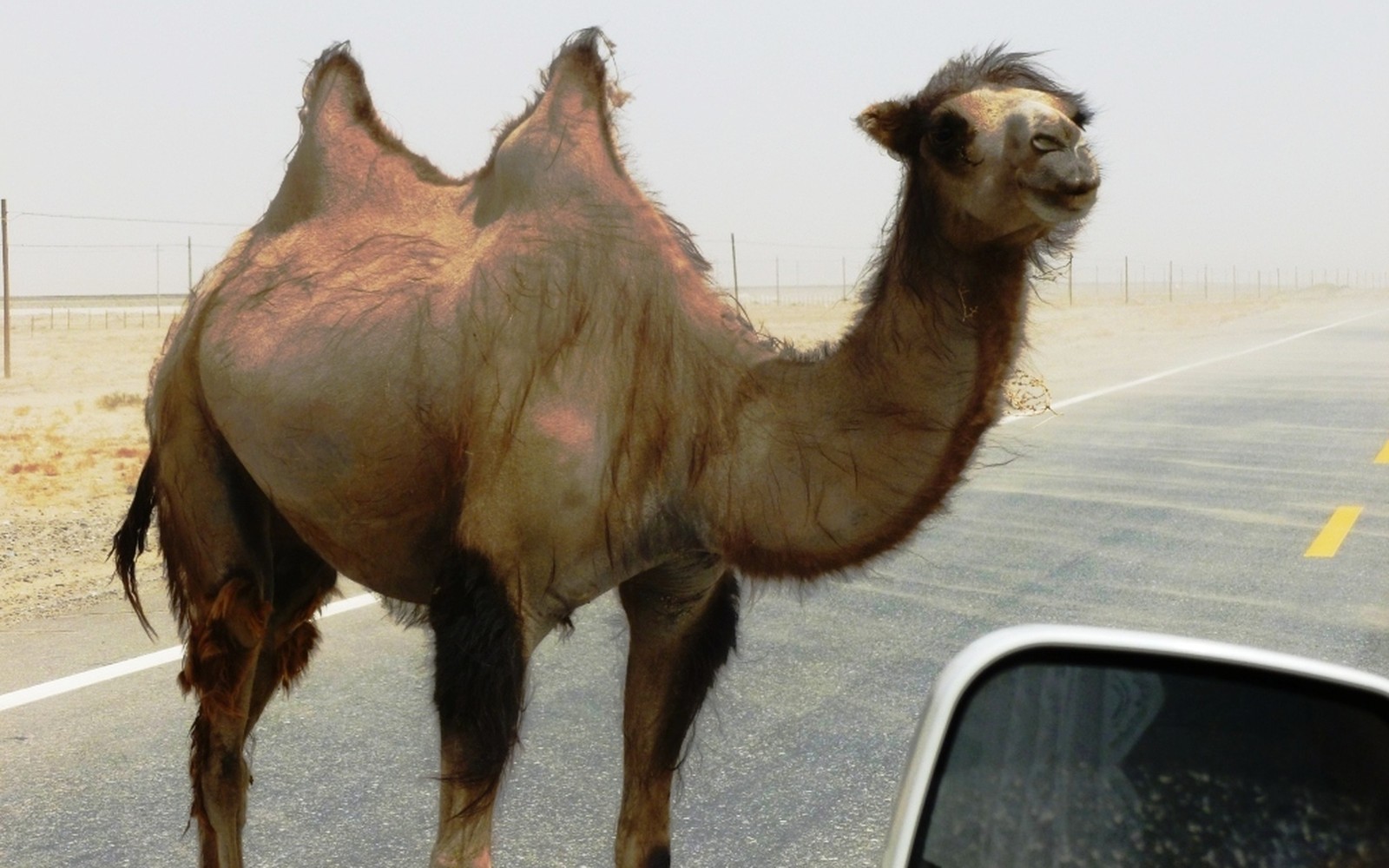
Species deep dive · wild camel
*Yes — the wild camel (Camelus ferus) is a separate species from the domestic Bactrian camel, and it can drink salt water that domestic camels refuse. The wild camel survives only in a handful of hyper-arid pockets of the Gobi and Taklimakan region. In 2025 the IUCN Red List reassessed it as Endangered (criterion C1), down from the long-standing Critically Endangered listing, with an estimated 780–1,380 mature individuals in three* fragmented locations and a decreasing trend (IUCN Red List; Wild Camel Protection Foundation).
Not just a “wild Bactrian”
Domestic two-humped camels are Camelus bactrianus. Genetic work treated C. ferus as its own species — the last truly wild camel — rather than a feral offshoot of the livestock herds people still keep across Central Asia. In Mongolian the animal is often called havtgai / khavtgai (“flat head”), a nod to its distinctive skull profile (ZSL; WCPF; EDGE of Existence).
That taxonomic split matters for conservation: hybridisation with domestic Bactrians can dilute the wild genome, and treating the wild animal as “just another Bactrian” underplays how few pure C. ferus remain (IUCN Red List; WCPF; ZSL).
Salt water other camels will not touch
In the driest Chinese Gobi — including the Gashun Gobi / Lop Nur region — fresh water can fail for long stretches. Wild camels have adapted to drink brackish and highly saline water, including water with a higher salt content than seawater. Domestic Bactrian camels cannot tolerate that same salinity. How C. ferus absorbs and excretes the load is still not fully resolved (ZSL; WCPF; EDGE of Existence; BBC News, 2001).
That adaptation, plus fat stores in the humps, lets them move long distances between scarce water and sparse grazing. WCPF notes they endure temperature swings from roughly −40 °C to +55 °C in that desert system (WCPF).
Why the 2025 listing moved from CR to EN
The previous IUCN assessment (2008) listed wild camels as Critically Endangered on a predicted population reduction of at least 80% within three generations. Newer fieldwork and conservation work showed that predicted crash had not materialised at that scale, so the 2025 assessment — led with the IUCN SSC Antelope Specialist Group — places the species in Endangered under criterion C1 (small population plus continuing decline). IUCN still records 780–1,380 mature individuals, a decreasing trend, severe fragmentation, and only three locations, with native range in China (Gansu, Xinjiang) and Mongolia (IUCN Red List; WCPF).
Threats remain serious: climate-driven drought and desertification, habitat loss and fragmentation (including mining and transport corridors), competition and hybridisation with domestic camels, and other human pressures. Most of the Mongolian population is tied to the Great Gobi Special Protected Area A (IUCN Red List; ZSL).
For another Central Asian survivor once written off in the wild, see How many Przewalski's horses are left?. For a different desert ungulate that shaped livestock history, see the African wild ass.
How the wild camel plays in Wilder
The Wild Camel (Camelus ferus) is a Rare Mammalia card in the Desert element. It costs 4 Energy, with Attack 3 and Health 6, and it has Herd and Resilient. Flavour text: "It drinks water saltier than the sea, and it outlasted a nuclear test site."
Wilder is a free browser collectible card game about real animals, and you can play it free in your browser with no signup.
Photo credit
Hero photograph: John Hill, "Wild Bactrian camel on road east of Yarkand" (Camelus ferus), Wikimedia Commons, CC BY-SA 3.0. Cropped for the Field Journal hero.

Questions people ask
Is the wild camel the same as a Bactrian camel?
No. The wild camel is Camelus ferus, a separate species from the domestic Bactrian (Camelus bactrianus). Mongolian speakers often call it havtgai / khavtgai (“flat head”) (ZSL; WCPF).
Can wild camels really drink salt water?
Yes. Camelus ferus can drink brackish and highly saline water — including water saltier than seawater — that domestic Bactrian camels cannot tolerate. The exact physiology is still not fully understood (ZSL; WCPF; EDGE).
How many wild camels are left?
IUCN’s 2025 assessment estimates 780–1,380 mature individuals in three fragmented locations, with a decreasing population trend (IUCN Red List).
Why did IUCN change wild camels from CR to EN?
The 2008 CR listing assumed an ≥80% decline within three generations that later research did not support at that scale. The 2025 assessment lists them Endangered (C1) for a small, declining, fragmented population — still a high extinction risk (IUCN Red List; WCPF).
Where do wild camels live today?
Only in arid Central Asia: IUCN maps them as extant in China (Gansu, Xinjiang) and Mongolia, in three fragmented areas of the Gobi / Taklimakan system (IUCN Red List; EDGE).