Largest Birds in the World, Ranked: The Ostrich Is No. 1
Showdown · southern cassowary, emperor penguin, andean condor
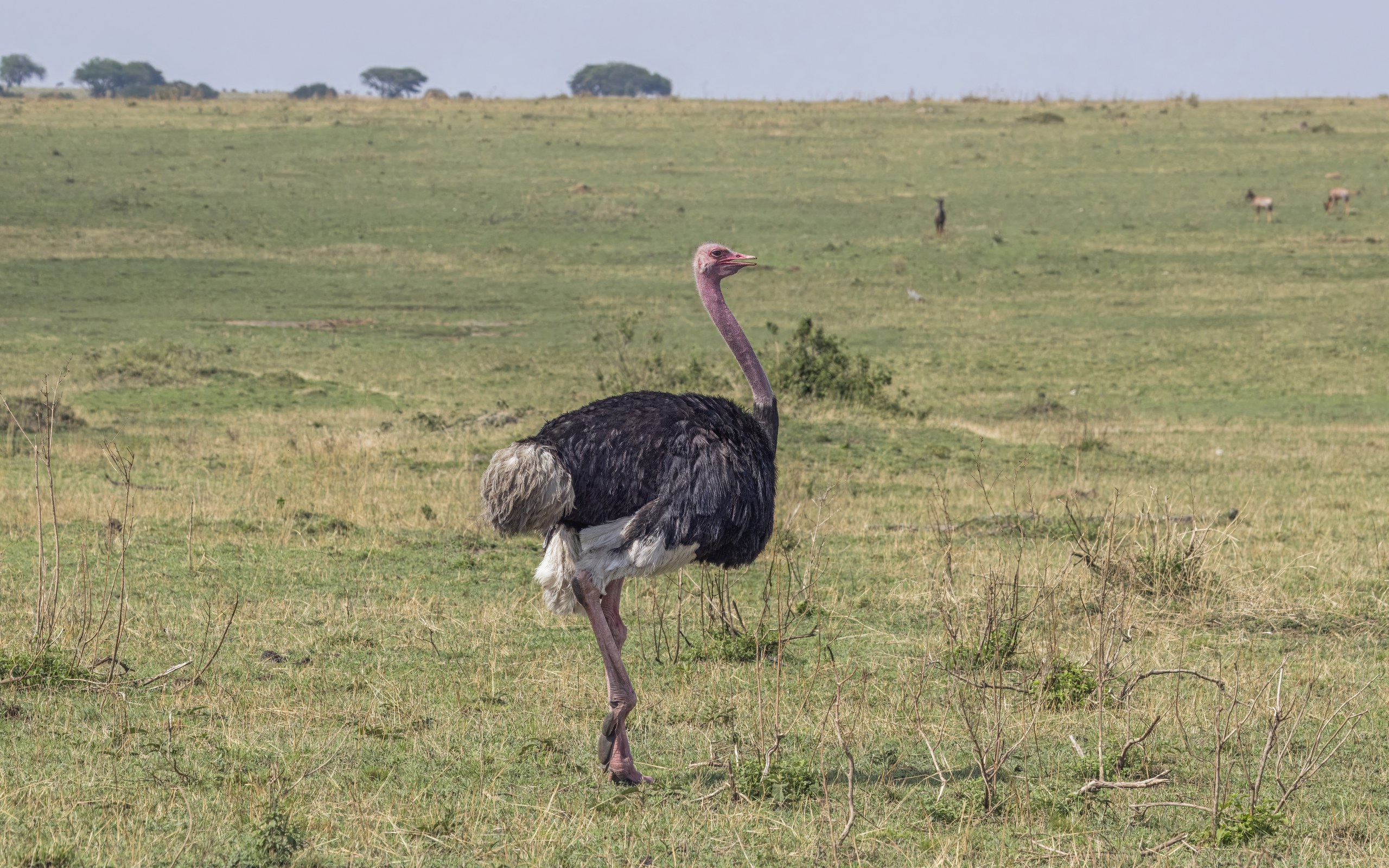
The ostrich is the largest bird alive today. Males stand up to 2.7 metres tall and weigh 100–130 kg (San Diego Zoo Wildlife Alliance). The southern cassowary comes second, then the emu, the emperor penguin and the greater rhea. None of these birds can fly. The heaviest bird that can still get off the ground, the great bustard, weighs less than a sixth of a big ostrich.
This is the Field Journal's weekly Thursday showdown, and this week it's the birds' turn.
How we ranked them
We ranked by weight, because it's the clearest measure of how big an animal really is. A heron or a crane can be tall without being heavy. For each bird we took the top of the adult weight range given by a zoo, museum, government agency or university source, and we compared typical adults where the top figures were close. We only count living birds, so Madagascar's extinct elephant birds aren't on the list (see the questions at the end).
Two things to keep in mind:
- Sources disagree. Different references give different weight ranges for the same bird. Where two good sources differ, we show both.
- Males and females differ. In ostriches the males are bigger. In cassowaries it's the other way round, and the females are the heavyweights.
The largest birds, ranked by weight
| Rank | Bird | Scientific name | Big-adult weight (source) | Can it fly? | Wilder card |
|---|---|---|---|---|---|
| 1 | Common ostrich | Struthio camelus | Males 100–130 kg, females 90–110 kg (San Diego Zoo) | No | Ostrich |
| 2 | Southern cassowary | Casuarius casuarius | Females up to 76 kg (San Diego Zoo); up to 59 kg (Animal Diversity Web) | No | Southern Cassowary |
| 3 | Emu | Dromaius novaehollandiae | Males 50–55 kg, females about 5 kg more (Smithsonian's National Zoo) | No | Not yet carded |
| 4 | Emperor penguin | Aptenodytes forsteri | Up to 40 kg before breeding (Australian Antarctic Division); 25–45 kg (Animal Diversity Web) | No | Emperor Penguin |
| 5 | Greater rhea | Rhea americana | 15–30 kg (Smithsonian's National Zoo); males 26–36 kg (Animal Diversity Web) | No | Not yet carded |
And the heaviest birds that can fly:
| Rank | Bird | Scientific name | Big-adult weight (source) | Wilder card |
|---|---|---|---|---|
| 1 | Great bustard | Otis tarda | Males 5.8–18 kg; heaviest verified bird about 21 kg (Great Bustard Group) | Great Bustard |
| 2 | Kori bustard | Ardeotis kori | Males 11–19 kg (Smithsonian's National Zoo) | Not yet carded |
| 3 | Andean condor | Vultur gryphus | Males up to 15 kg (San Diego Zoo); 7.7–15 kg (Animal Diversity Web) | Andean Condor |
Weights are rounded and come from the sources linked in each section below.
1. Ostrich: the biggest bird on Earth
The ostrich is the largest and heaviest living bird. Males are 2.1–2.7 metres tall and weigh 100–130 kg, and females are 1.7–1.9 metres tall and weigh 90–110 kg (San Diego Zoo Wildlife Alliance). Animal Diversity Web gives a similar range of 90–130 kg (Animal Diversity Web).
Everything about it is oversized. Its eye is almost 5 cm across, the largest of any land animal, and its egg weighs about 1.5 kg, the largest egg of any living animal (San Diego Zoo Wildlife Alliance). Wild ostriches now live only in Africa. They once also lived in southwestern Asia and on the Arabian Peninsula but were hunted out there (Animal Diversity Web). Some authorities treat the Somali ostrich (Struthio molybdophanes) as its own species. Here we rank the ostriches together. The bird in our hero photo is a Masai ostrich, one of the common ostrich's subspecies.
2. Southern cassowary: the heavyweight of the rainforest
The southern cassowary is a giant of the rainforests of New Guinea and northeastern Australia. San Diego Zoo Wildlife Alliance gives females up to 76 kg and males up to 55 kg, with a height of 1.2–1.7 metres (San Diego Zoo Wildlife Alliance). Animal Diversity Web gives lower figures, with females up to 59 kg and males 29–34 kg (Animal Diversity Web). Even on those numbers, a big female cassowary is about the same weight as a big emu and far heavier than any penguin, so it takes second place.
Female cassowaries are bigger than males, and only the males incubate the eggs, for 47–61 days, then look after the chicks for about nine months (Animal Diversity Web). For the cassowary's dangerous kick and its role as a rainforest gardener, read Southern cassowary: the dangerous bird with a helmet.
3. Emu: Australia's tallest bird
The emu is Australia's tallest native bird, standing 1.6–1.9 metres (Australian Museum). Smithsonian's National Zoo calls it the second-largest living bird by height, with males weighing 50–55 kg and females about 5 kg more (Smithsonian's National Zoo). That makes it taller than a cassowary, but a large female cassowary is heavier.
Emus are also great walkers. They can move hundreds of kilometres when food and water run short, sometimes 15–25 km a day (Australian Museum). As in cassowaries, the father does all the incubating. He sits on the eggs for about 55 days without eating, drinking or leaving the nest (Australian Museum).
4. Emperor penguin: the heaviest bird that swims
The emperor is the largest of the 18 penguin species. Adults can weigh up to 40 kg at the start of the breeding season (Australian Antarctic Division), and Animal Diversity Web gives a range of 25–45 kg (Animal Diversity Web). That top figure is for the start of the breeding season, before the long winter fast. For how emperors breed through the Antarctic winter, see Emperor penguin: winter breeding on the fast ice.
5. Greater rhea: South America's largest bird
The greater rhea is the largest bird in South America. Smithsonian's National Zoo gives 15–30 kg (Smithsonian's National Zoo), and Animal Diversity Web gives 26–36 kg for adult males (Animal Diversity Web). Rheas can't fly either. They use their wings like a rudder to dodge predators and keep their balance while running (Smithsonian's National Zoo). That puts a South American rhea below an Antarctic penguin on the scales.
The heaviest birds that can fly
Once a bird has to lift itself off the ground, the weight limit drops sharply.
- Great bustard. It is one of the heaviest flying birds on Earth, a title it shares with the kori bustard. Mature males weigh 5.8–18 kg, females are much smaller at 3.5–5 kg, and the heaviest verified bird, collected in Manchuria, weighed about 21 kg (Great Bustard Group).
- Kori bustard. This African bustard is almost as heavy. Males weigh 11–19 kg, and females are about half that size (Smithsonian's National Zoo).
- Andean condor. Males weigh up to 15 kg and females up to 11 kg, with a wingspan of up to about 3 metres (San Diego Zoo Wildlife Alliance). Animal Diversity Web gives 7.7–15 kg (Animal Diversity Web). It's lighter than the bustards, but it's one of the heaviest birds that spends its days soaring. Read how it does that in Andean condor: riding thermals over the Andes.
How the biggest birds play in Wilder
Three birds from these lists have Wilder cards, and each one plays differently.
- The Southern Cassowary (Casuarius casuarius) is an Uncommon Aves card in the Forest element. It costs 5 Energy, with Attack 6 and Health 5, plus Guardian and Thorns. It's a heavy hitter that also protects the rest of your board. Flavour text: "One well-aimed kick and the rainforest remembers who owns the trail."
- The Emperor Penguin (Aptenodytes forsteri) is an Uncommon Tundra card that costs 4 Energy, with Attack 3 and Health 5, plus Herd and Resilient. Flavour text: "Fathers trade tuxedos for egg cradles through the polar night."
- The Andean Condor (Vultur gryphus) is a Rare Air card that costs 5 Energy, with Attack 4, Health 6 and Flock. Its ability Keen Eye costs 2 Energy and exposes an enemy creature, even a Camouflaged one, so it loses Camouflage, Guardian and Resilient. Flavour text: "Rides invisible Andean elevators with barely a wingbeat."
The ostrich, emu, rhea and both bustards don't have cards yet. For last week's showdown, see the largest reptiles in the world, ranked, and for the mammals, see the heaviest land mammals, ranked.
Wilder is a free browser collectible card game about real animals, and you can play it free in your browser with no signup.
Photo credit
Hero photograph: Charles J. Sharp, "Masai ostrich (Struthio camelus massaicus) male Serengeti" (a male Masai ostrich in Serengeti National Park, Tanzania), Wikimedia Commons, CC BY-SA 4.0. Cropped for the Field Journal hero.

Questions people ask
What was the largest bird that ever lived?
An extinct elephant bird from Madagascar. In 2018, ZSL scientists named Vorombe titan the largest bird ever known, reaching up to about 800 kg and 3 metres tall (ZSL; Hansford & Turvey 2018). That is roughly six times the weight of a big male ostrich.
How fast can an ostrich run?
Up to about 70 km/h (43 mph) in short sprints, and it can keep up a steady 50 km/h (31 mph) for longer, according to San Diego Zoo Wildlife Alliance. Ostrich chicks can run at nearly 56 km/h (35 mph) when they are only a month old.
Which bird has the largest wingspan?
The wandering albatross. It is the largest albatross and has the greatest wingspan of any living bird, almost 3.5 metres (Australian Museum). The heavier birds on our list have shorter wings: an Andean condor's wingspan reaches about 3 metres (San Diego Zoo Wildlife Alliance).
Do ostriches really bury their heads in the sand?
No. To avoid being seen, an ostrich may lie flat on the ground with its neck stretched out, and that habit probably started the myth (Animal Diversity Web). When danger gets close, ostriches usually just run, and if cornered they can kick hard.
Sources
- San Diego Zoo Wildlife Alliance: Ostrich
- Animal Diversity Web: Struthio camelus
- San Diego Zoo Wildlife Alliance: Cassowary
- Animal Diversity Web: Casuarius casuarius
- Smithsonian's National Zoo: Emu
- Australian Museum: Emu
- Australian Antarctic Division: Emperor penguin
- Animal Diversity Web: Aptenodytes forsteri
- Smithsonian's National Zoo: Greater rhea
- Animal Diversity Web: Rhea americana
- Great Bustard Group: What is a Great Bustard?
- Smithsonian's National Zoo: Kori bustard
- San Diego Zoo Wildlife Alliance: Andean condor
- Animal Diversity Web: Vultur gryphus
- ZSL: ZSL names world's largest ever bird, Vorombe titan (2018)
- Hansford & Turvey (2018) Royal Society Open Science
- Australian Museum: Wandering Albatross