Tarantula Hawk Wasp: Schmidt Pain #2, Paralysis Hunt, and Why Humans Rarely Get Stung
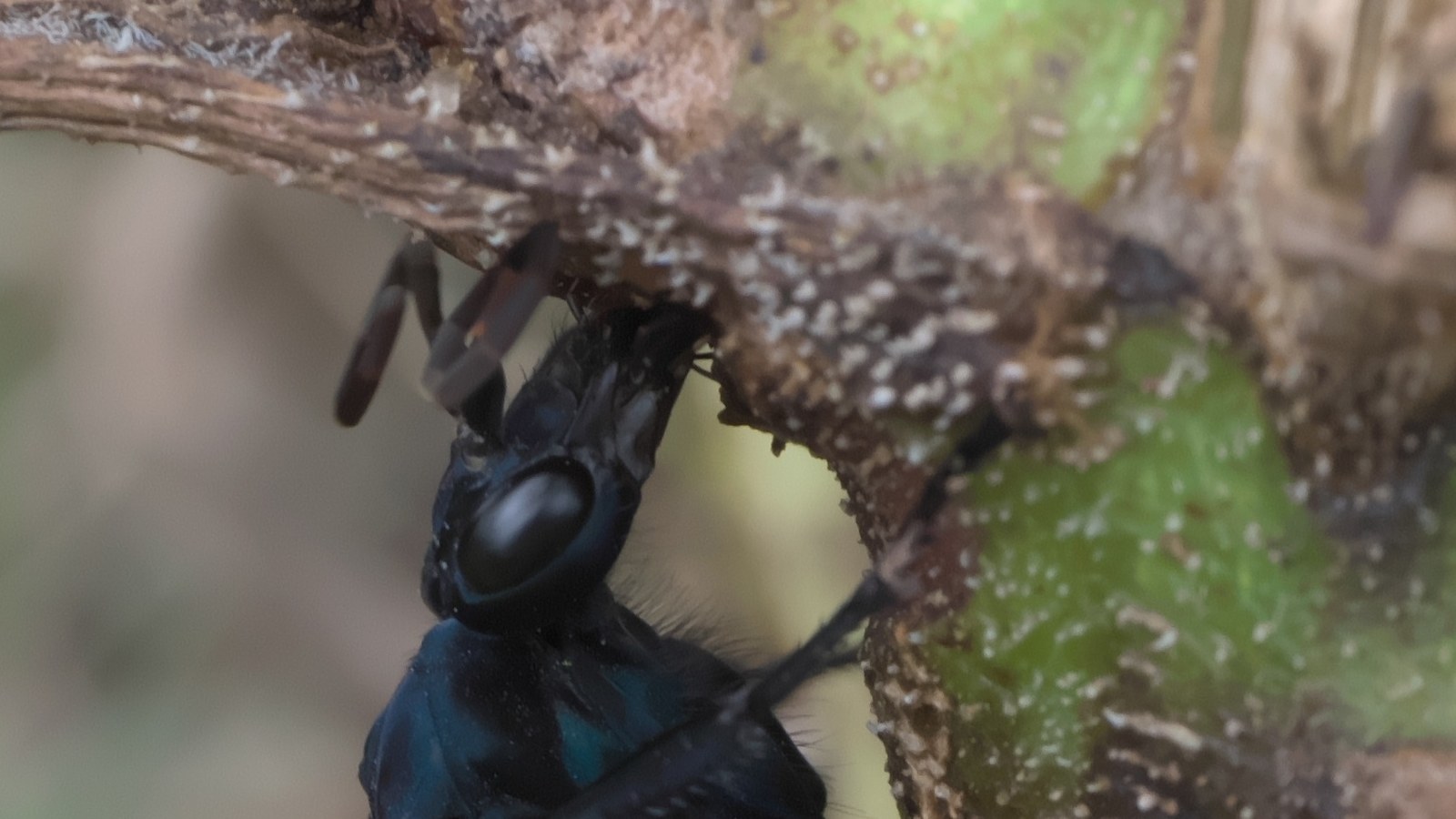
Species deep dive · tarantula hawk wasp
How painful is a tarantula hawk sting? Near the top of entomologist Justin Schmidt's sting pain index — classed a 4 out of 4, and commonly ranked second only to the bullet ant. Schmidt described it as "blinding, fierce, shockingly electric," like dropping a running hair dryer into a bubble bath. The saving grace: for most people the agony is intense but short, often about five minutes, while a bullet ant sting can churn for up to 24 hours.
And despite the reputation, these wasps are not out to sting you. Adult tarantula hawks are nectar feeders. Females reserve their extraordinary sting for tarantulas — and for self-defense if handled or swatted. Males that rocket out from hilltop perches to inspect moving objects cannot sting at all.
What a tarantula hawk actually is
"Tarantula hawk" is the English name for large spider wasps in the genera Pepsis and Hemipepsis (family Pompilidae). Wilder's card features *Tarantula Hawk Wasp (Pepsis grossa) — a metallic blue-black giant with orange or black wings, ranging from the southern United States into Central and northern South America. Females are typically about 30–51 mm long; males a bit smaller. New Mexico named the tarantula hawk its state insect in 1989 after an Edgewood elementary-school vote; statutes still list the older name Pepsis formosa, which taxonomists synonymized under P. grossa* in 2002.
Bright orange wings on many individuals are classic aposematism — a warning color that pairs with the legendary sting. Adults of both sexes visit flowers (milkweed is a favorite), and National Wildlife Federation writers still circulate the practical point: milkweed plantings that pull in tarantula hawks are doing their pollinator job.
The paralysis hunt
Only females hunt spiders. A female finds a tarantula, delivers a precision sting that permanently paralyzes but keeps the spider alive, then either uses the spider's own burrow or hauls the prey to a nest. She lays a single egg on the spider. The larva feeds first on haemolymph, then on tissue — keeping vital organs for last — until it pupates and emerges as an adult. Adults themselves are nectarivores; the carnivory is for the next generation.
Natural History Museum wasp specialist Gavin Broad puts the duel bluntly: the wasps almost always win, and spiders typically try to flee rather than fight. Roadrunners are among the few vertebrates bold enough to eat the wasps anyway.
Painful ≠ medically deadly
Schmidt's pain index measures pain, not lethality. Published venom work on Pepsis notes extreme pain with comparatively low vertebrate lethality — which is why the sting is memorable rather than routinely life-threatening for healthy people (severe allergy is the usual exception, as with other Hymenoptera). Colorado State Extension and U.S. National Park Service species pages both stress the same field rule: females are docile toward people and rarely sting unless provoked.
If you came from our bullet ant Journal piece, think of the pair as bookends of Schmidt's top tier: bullet ant for marathon pain, tarantula hawk for a brief electric shutdown. Wilder's card also sits next to prey like the Texas brown tarantula when that matchup is in the deck.
On the Wilder card
*Tarantula Hawk Wasp (Pepsis grossa)* plays the desert drama: a large Insecta wasp whose Venom keyword and spider-hunting lore match the biology — nectar by day, a living host for larvae by dusk. Use this piece when you want the Schmidt ranking, the paralysis life cycle, and the human-safety caveats behind the art.
Photo credit
Hero photograph: Robert Webster / xpda — Pepsis grossa female, Clark County, Kansas, Wikimedia Commons, CC BY-SA 4.0. Cropped for the Field Journal hero.

Questions people ask
Is a tarantula hawk sting dangerous to people?
Usually not medically dangerous for healthy people — the venom is famous for extreme pain with comparatively low vertebrate lethality — but severe allergic reactions to Hymenoptera stings are always a risk. Females typically sting only if handled or swatted; males cannot sting (NHM; Schmidt et al., PMC; NWF).
Where does the tarantula hawk rank on the Schmidt pain index?
It scores a 4 (top category) and is widely treated as #2 after the bullet ant (Paraponera clavata). Schmidt called the tarantula hawk sting "blinding, fierce, shockingly electric"; pain often fades in about five minutes, versus up to 24 hours for a bullet ant (NHM; NHM tarantula hawks).
Why is the tarantula hawk New Mexico's state insect?
Edgewood elementary students researched candidates and voted; the 39th Legislature named it in 1989. Official pages still list Pepsis formosa, the older name now synonymized under Pepsis grossa (NM Secretary of State; BugGuide). See Wilder's Pepsis grossa card.
Do male tarantula hawks sting?
No. Only females have stingers. Males that dart from hilltop perches to inspect humans are checking rivals or mates and are physically unable to sting (NWF; NPS).
What do tarantula hawk larvae eat?
A paralyzed tarantula (or occasionally another large spider). The female lays one egg on the living host; the larva feeds inside until it pupates. Adult wasps themselves drink nectar, especially from milkweed (NHM; CSU Extension).
Sources
- Natural History Museum — Tarantula hawks: the most painful wasp sting explained
- Natural History Museum — The Schmidt sting pain index
- NWF Blog — Why You Shouldn't Be Afraid of Tarantula Hawk Wasps
- New Mexico Secretary of State — State Insect
- BugGuide — Pepsis grossa
- U.S. National Park Service — Tarantula Hawk (Grand Canyon)
- Colorado State Extension — Tarantula Hawks of Colorado
- Schmidt et al. — Pain and Lethality Induced by Insect Stings (PMC)
- Wilder — Tarantula Hawk Wasp card
- Wilder — Bullet Ant Schmidt Pain Index