Do Bottlenose Dolphins Steal Food? Bubbles Makes Fish Vomit
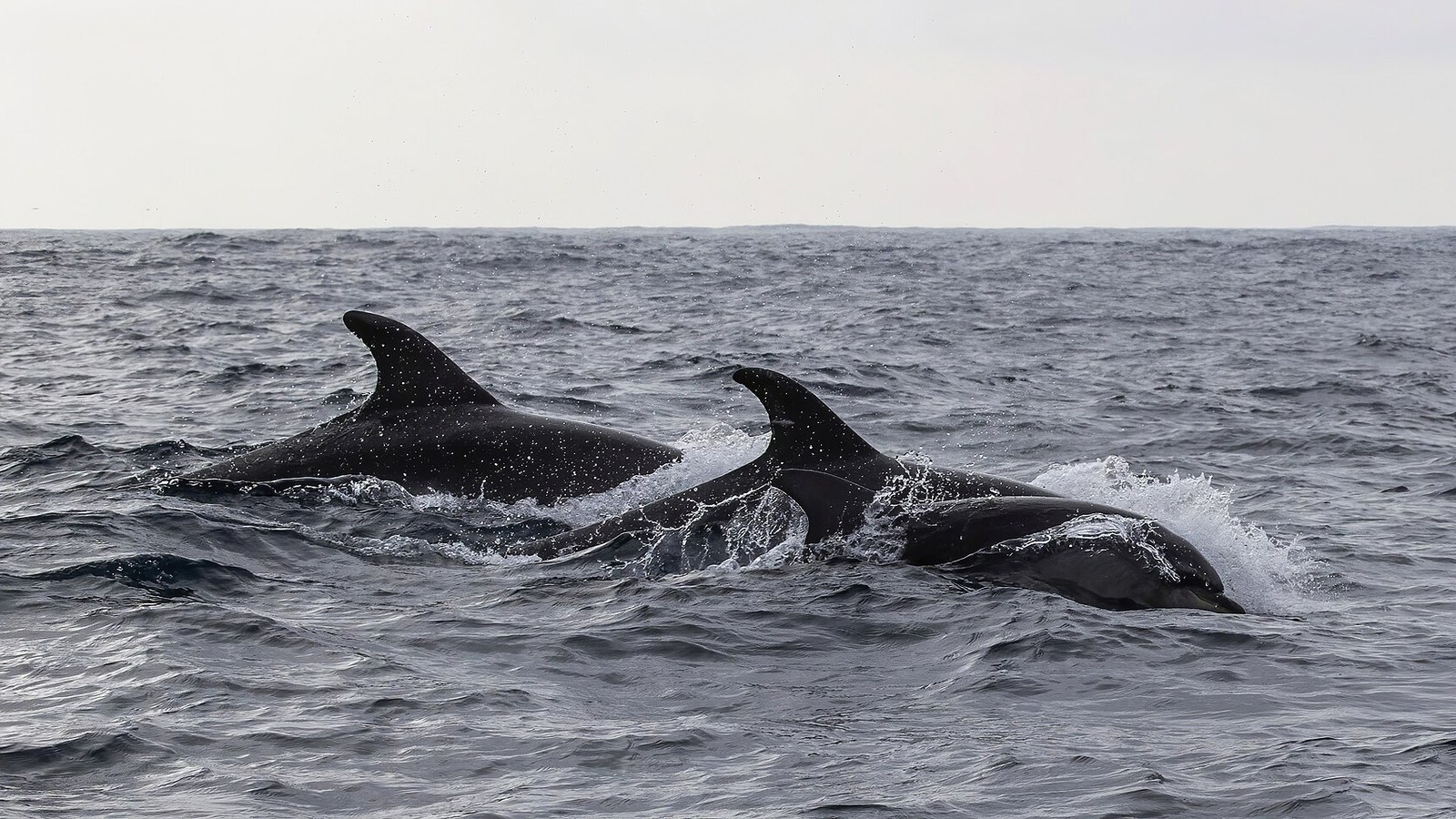
Species deep dive · bottlenose dolphin
Do bottlenose dolphins steal food this way? Yes — at least one does, and researchers have the underwater video to prove it. Off Lady Elliot Island on Australia's Great Barrier Reef, an adult male common bottlenose dolphin nicknamed Bubbles singles out bigeye trevally (Caranx sexfasciatus), chases them until they regurgitate, and eats the expelled meal. Between 2021 and 2025, a University of the Sunshine Coast team filmed 11 successful kleptoparasitic takes out of 20 foraging attempts. Photo-identification confirmed it was the same dolphin every time. The study, published 13 September 2026 in Ecology and Evolution, is the first detailed description of kleptoparasitism in a cetacean.
So the Bottlenose Dolphin (Tursiops truncatus) is not only a cooperative hunter. It can also invent a shortcut.
What Bubbles actually does
In the GoPro footage, Bubbles swims into a school of bigeye trevally in the shallow reef. He does not grab the fish. He picks one, pursues it, and keeps going until the trevally throws up. Then he eats the vomit while the fish swims off. He can repeat the sequence in a single session — up to ten chases in about 30 minutes, according to coverage of the paper.
Before he closes in, Bubbles often clicks and turns his head side to side. The authors suspect he is using echolocation to judge which fish have full stomachs. Once the chase starts, he produces intense click trains and low-frequency tonal sounds (mean duration about 0.88 seconds in the analysed samples). Those sounds may raise the fish's stress, or the regurgitation may be a decoy to escape. Either way, after the chase and the sounds, the trevally systematically regurgitated and Bubbles took the food.
Why steal vomit instead of eating the fish?
Kleptoparasitism — stealing food another animal has already caught — is common in birds such as frigatebirds, but it is rarely documented in marine mammals. Bubbles was always seen foraging alone, while common bottlenose dolphins often hunt in groups. Co-author Romney Edwards-Francis suggests the tactic may cost less energy than chasing fast prey yourself when you are solo. Bigeye trevally are large, powerful fish (up to about 33 inches / 84 cm), so taking their lunch may be easier than tackling the fish.
Outside researchers quoted by Smithsonian call the repeated takes compelling evidence that this is more than a one-off scavenger moment, while still cautioning against reading too much intention into the behaviour. The UniSC team notes that novel dolphin foraging tricks are probably underreported because long underwater watches are hard.
Everyday bottlenose hunting (the non-vomit kind)
Most of the time, bottlenose dolphins hunt the usual way. NOAA Fisheries lists fish, squid and crustaceans such as crabs and shrimp on the menu. They find prey with passive listening and high-frequency echolocation, grip fish in their teeth, and swallow them whole, head-first. Cooperative tactics include herding schools into bait balls or against sandbars and taking turns charging through. Some populations slap fish with their tails or drive them onto mudflats at low tide.
Adults are about 6 to 13 feet long and 300 to 1,400 pounds, with a lifespan of roughly 40 to 60 years. Calves swim in "baby position" next to mum for nursing and drafting. Globally the species is widespread and listed as Least Concern, though U.S. stocks are protected under the Marine Mammal Protection Act and some coastal stocks are depleted.
How the bottlenose plays in Wilder
In Wilder TCG the Bottlenose Dolphin is a Cost 5 Mammalia Water Rare (ATK 6 / HP 5) with Herd. Herd rewards playing more of the same pack — a nod to a social hunter that schools fish with whistles and leaps. Flavor text calls it "the sea's grinning tactician." For more reef and open-water cards, try the Orca, the Great White Shark (Journal), or the Yellowfin Tuna (Journal), which literally tags along with dolphin schools.
Play Wilder free in your browser. No signup needed.
Photo credit
Hero photograph: Charles J. Sharp, "Common bottlenose dolphins (Tursiops truncatus) Sagres", common bottlenose dolphins off Sagres, Portugal (Wikimedia Commons), CC BY-SA 4.0. Cropped for the Field Journal hero.

Questions people ask
What is kleptoparasitism?
Stealing food that another animal has caught or collected. Birds such as frigatebirds are famous for it. The Bubbles study in Ecology and Evolution (2026) is the first detailed description of the tactic in a cetacean (UniSC; Smithsonian).
Where does Bubbles live?
Around Lady Elliot Island, a coral cay at the southern tip of Australia's Great Barrier Reef. Researchers filmed him in shallow reefs there between 2021 and 2025 (UniSC).
Do all bottlenose dolphins steal food this way?
Not that we know. Photo-ID showed every filmed case was the same adult male, nicknamed Bubbles, foraging alone. Authors suspect similar tactics may be underreported because underwater watching is hard (Ecology and Evolution DOI 10.1002/ece3.74270; Smithsonian).
How big is a common bottlenose dolphin?
About 6 to 13 feet long and 300 to 1,400 pounds, with a typical lifespan of 40 to 60 years, according to NOAA Fisheries (NOAA). See the Bottlenose Dolphin field guide.
Are common bottlenose dolphins endangered?
Globally they are widespread and listed as Least Concern, though U.S. stocks are protected under the Marine Mammal Protection Act and some coastal stocks are depleted (NOAA).
Sources
- Edwards-Francis et al. (2026) Repeated Observations Suggesting Kleptoparasitism by a Common Bottlenose Dolphin (Tursiops truncatus) on the Great Barrier Reef. Ecology and Evolution. DOI 10.1002/ece3.74270
- University of the Sunshine Coast (16 Sep 2026) — Bubbles the food-stealing dolphin finds shortcut to easy meal
- Smithsonian Magazine (23 Sep 2026) — Meet Bubbles, a Dolphin in Australia Who Chases Fish Until They Barf
- NOAA Fisheries — Common Bottlenose Dolphin
- Wilder TCG — Bottlenose Dolphin field guide