Most Dangerous Sharks, Ranked: The Great White Is No. 1
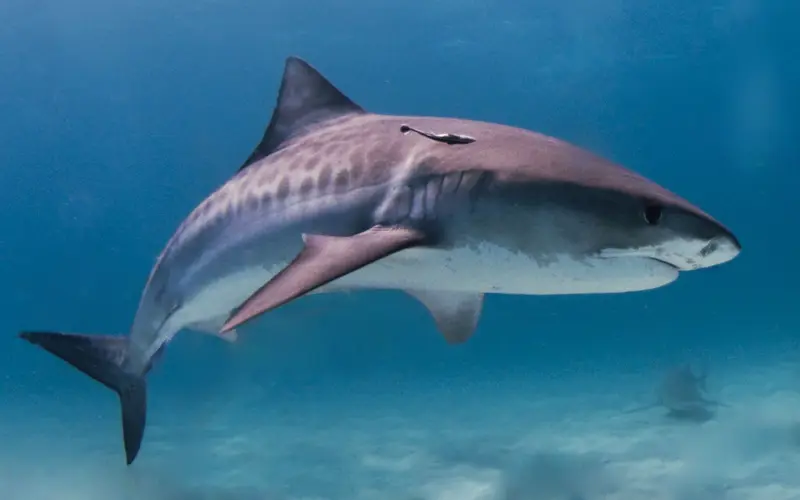
The great white tops the shark attack record: 351 unprovoked bites, 59 fatal. Tiger and bull sharks follow. All 9 most dangerous sharks, ranked.
Play Great White Shark in Wilder, free in your browser
Showdown · great white shark Play this card, tiger shark Play this card, bull shark Play this card, blue shark Play this card, oceanic whitetip shark Play this card, bronze whaler Play this card, shortfin mako Play this card, grey reef shark Play this card, blacktip shark Play this card
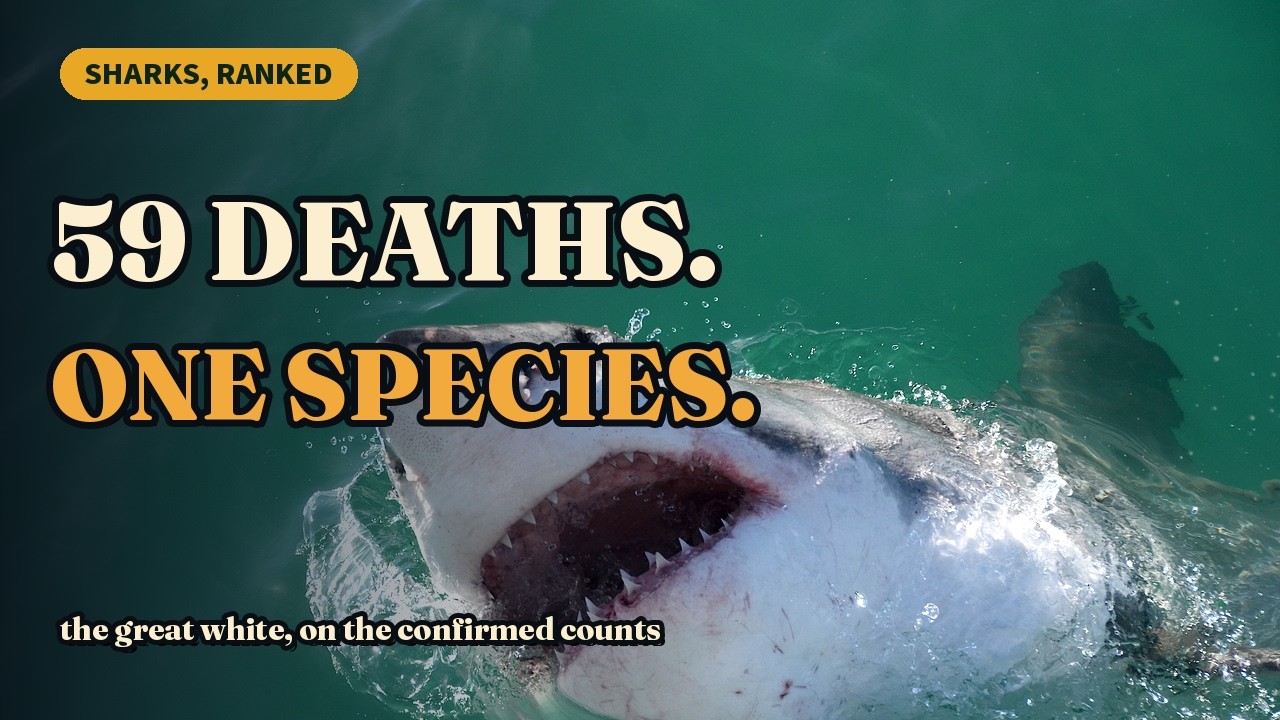
The great white shark is the most dangerous shark to people. It has been confirmed in 351 unprovoked bites, 59 of them fatal, more than any other species in the International Shark Attack File (ISAF). The tiger shark is second (142 bites, 39 fatal) and the bull shark third (119 bites, 26 fatal) (Florida Museum, ISAF). After those three, the numbers drop sharply: no other species has more than four confirmed deaths. Below are the nine sharks that matter most, ranked by confirmed unprovoked deaths and then by total bites, with the caveats that come with them.
Keep the scale in mind. In 2025, ISAF confirmed 65 unprovoked shark bites worldwide, 9 of them fatal. That's close to the 2020–2024 averages of 61 bites and 8 deaths a year, and ISAF calls the total "extremely low" (Florida Museum, ISAF 2025 report).
How we ranked them
ISAF, run by the Florida Museum of Natural History at the University of Florida, keeps the world's main scientific record of shark bites. Its species table only counts confirmed unprovoked bites. ISAF defines these as bites on a live person in the shark's natural habitat, with no human provocation of the shark. Bites on people who were spearfishing, feeding a shark or unhooking one from a line are counted as provoked, and bites in air and sea disasters are filed separately. None of these are in the table (Florida Museum, ISAF 2025 report).
We sorted the sharks by confirmed unprovoked deaths first, then by total confirmed unprovoked bites.
Data cut-off. The species table gives cumulative totals (titled "1580–Present") but doesn't say which date they run to. We retrieved it on 13 November 2026 and checked it again on 19 November 2026, and the figures hadn't changed. The page footer says it was last updated on 25 January 2022, so recent bites, such as 2025's, may not be in it yet. The yearly figures in this piece come from ISAF's latest annual summary, for 2025. ISAF hasn't published a 2026 summary yet.
The most dangerous sharks, ranked
| Rank | Shark | Scientific name | Unprovoked bites | Fatal | Non-fatal | Wilder card |
|---|---|---|---|---|---|---|
| 1 | Great white shark | Carcharodon carcharias | 351 | 59 | 292 | Great White Shark |
| 2 | Tiger shark | Galeocerdo cuvier | 142 | 39 | 103 | Tiger Shark |
| 3 | Bull shark | Carcharhinus leucas | 119 | 26 | 93 | Bull Shark |
| 4 | Blue shark | Prionace glauca | 13 | 4 | 9 | Blue Shark |
| 5 | Oceanic whitetip shark | Carcharhinus longimanus | 15 | 3 | 12 | Oceanic Whitetip Shark |
| 6 | Bronze whaler (copper shark) | Carcharhinus brachyurus | 16 | 1 | 15 | Bronze Whaler |
| 7 | Shortfin mako | Isurus oxyrinchus | 10 | 1 | 9 | Shortfin Mako |
| 8 | Grey reef shark | Carcharhinus amblyrhynchos | 9 | 1 | 8 | Grey Reef Shark |
| 9 | Blacktip shark | Carcharhinus limbatus | 35 | 0 | 35 | Blacktip Shark |
Source: ISAF species table, confirmed unprovoked bites only, retrieved 13 November 2026 and re-checked 19 November 2026 (Florida Museum, ISAF). All species together: 949 unprovoked bites, 142 fatal, from more than 35 species.
Read this before you trust the table
Some sharks are much easier to identify than others. A bite victim rarely gets a good look at the shark, and teeth are seldom left in the wound. ISAF warns that bites by easily recognised species, such as white, tiger, sand tiger, hammerhead and nurse sharks, are nearly always assigned to the right species. Bites by requiem sharks of the genus Carcharhinus seldom are. Those sharks are hard to tell apart even for trained professionals, so the list is skewed towards the obvious species. ISAF says that if the table could reflect reality, Carcharhinus bites would push the sand tiger, hammerhead and nurse sharks towards the bottom (Florida Museum, ISAF).
Some bites have no species at all. ISAF lists 51 unprovoked bites by unidentified requiem sharks (Carcharhinus spp.), 5 of them fatal. It suspects blacktip sharks account for most of those bites in Florida, but says the cases lack enough evidence to be conclusive (Florida Museum, ISAF).
Small numbers swing percentages. Four of the blue shark's 13 confirmed bites were fatal, which looks like a high fatality rate. With only 13 cases, that rate tells us very little, so we don't rank sharks by it.
Size matters more than species. ISAF says almost any shark of roughly 1.8 m (6 ft) or longer is a potential threat, because its jaws and teeth can cause injury even when the bite isn't a real attempt to feed (Florida Museum, ISAF).
1. Great white shark
The great white shark leads on both counts: 351 unprovoked bites and 59 deaths. The Florida Museum credits it with more fatal attacks on people than any other shark, mainly because of its size, power and feeding behaviour (Florida Museum). ISAF puts white, tiger and bull sharks in a "Big Three" because they are large, common where people enter the water, and have teeth designed to shear rather than hold (Florida Museum, ISAF). In 2025, ISAF linked four of the year's nine unprovoked deaths to white sharks: three surfers in Australia and one person in California (Florida Museum, ISAF 2025 report). For how it hunts, read about the great white shark as an ambush hunter, and for the one animal it runs from, see orca vs great white shark.
2. Tiger shark
The tiger shark has fewer recorded bites than the great white (142), but a bigger share of them were fatal (39, about 27%, against about 17% for the white and 22% for the bull). The Florida Museum says tiger sharks are often curious and unaggressive when encountered, yet they are one of the three species most often implicated in attacks and deaths and should be treated with "extreme caution" (Florida Museum). It lives in temperate and tropical seas worldwide, in the open ocean and in shallow coastal water, including estuaries, harbours and the lagoons of island chains, where people swim (Florida Museum).
3. Bull shark
The bull shark has 119 confirmed unprovoked bites and 26 deaths. It's the only one of the Big Three that regularly swims up rivers and into murky estuaries and harbours, so it meets people in places they don't expect a shark. It's also a requiem shark, so some of its bites probably sit in the unidentified pile. We looked at this in detail in Bull Shark: Are Bull Sharks the Most Dangerous Shark?
4. Blue shark
The blue shark is an open-ocean shark with only 13 confirmed unprovoked bites, but 4 were fatal. The Florida Museum describes it as relatively unaggressive but very curious, especially around divers and spearfishers when food is about, and notes accounts of blue sharks biting shipwrecked sailors in the open ocean (Florida Museum). Those shipwreck cases count as sea disasters and aren't in the table.
5. Oceanic whitetip shark
The oceanic whitetip shark has 15 confirmed unprovoked bites and 3 deaths, but that badly understates its history. Its worst encounters with people were shipwrecks and plane crashes, which ISAF files separately. The Florida Museum calls it "one of the more dangerous sharks to humans" and says it is the primary species implicated in the shark bites after the USS Indianapolis sank in 1945 (Florida Museum). The full story is in Oceanic Whitetip Shark: Did It Really Attack USS Indianapolis Survivors? Today the species is listed as Critically Endangered on the IUCN Red List (IUCN Red List).
6. Bronze whaler
The bronze whaler, also called the copper shark, has 16 confirmed unprovoked bites and 1 death. It's a large requiem shark of warm temperate and subtropical seas that uses shallow bays, estuaries and inshore water, and has been found from the surf line down to at least 100 m (Florida Museum). It looks like several other "whaler" sharks, so its count is especially open to identification errors.
7. Shortfin mako
The shortfin mako has 10 confirmed unprovoked bites and 1 death. ISAF lists another 8 unprovoked bites as "mako" without a species, none fatal, and we haven't added them here (Florida Museum, ISAF). Divers say makos often swim in a figure-of-eight and approach with their mouths open before an attack. Hooked makos also often damage boats and injure fishers, which counts as provoked (Florida Museum).
8. Grey reef shark
The grey reef shark has 9 confirmed unprovoked bites and 1 death. The Florida Museum calls it "one of the more aggressive sharks", but says it usually only shows aggression when it feels threatened. It also gives a clear warning first: it raises its snout, drops its pectoral fins, arches its back and swims with an exaggerated sway. If the threat continues, it may flee or deliver a quick bite before retreating (Florida Museum). Divers who know the display can back off in time.
9. Blacktip shark
The blacktip shark has 35 confirmed unprovoked bites and no confirmed deaths. It makes the list because it's probably the shark many people actually meet. It hunts small schooling fish in shallow water and is often encountered by people, and its bites are usually cases of mistaken identity that leave fairly minor wounds (Florida Museum). If ISAF's suspicion about Florida's unidentified requiem bites is right, the blacktip's real total is higher, but that's still a suspicion, not a confirmed count.
Sharks that didn't make the list
Some sharks have plenty of bites but no confirmed deaths, so they aren't ranked here: the sand tiger (36 unprovoked bites), the wobbegongs (38 across all species), the spinner (16) and the blacktip reef shark (14), which is a different species from the blacktip. The Galapagos and dusky sharks each have one confirmed death, but from only two bites each, which is too few to rank. The nurse shark (9 bites) and leopard shark (1 bite) have no confirmed deaths (Florida Museum, ISAF). And the biggest shark of all, the whale shark, is a filter feeder that isn't on the bite list at all. For a few shark myths, see Can Sharks Smell Blood a Mile Away? 7 Animal Myths Busted
How these sharks play in Wilder
All nine ranked sharks are Water cards in Wilder, and the two rarest line up with the real top two:
- Great White Shark: Rare, cost 6, Attack 6, Health 5, with Ambush and Relentless
- Tiger Shark: Rare, cost 5, Attack 5, Health 6, with Ambush and Feast
- Bull Shark: Uncommon, cost 4, Attack 5, Health 4, with Ambush and Resilient
- Oceanic Whitetip Shark: Uncommon, cost 4, Attack 4, Health 5, with Relentless and Feast
- Shortfin Mako: Uncommon, cost 4, Attack 5, Health 3, with Ambush
- Bronze Whaler: Uncommon, cost 4, Attack 4, Health 4, with Herd
- Blue Shark: Common, cost 3, Attack 4, Health 3, with Herd
- Grey Reef Shark: Common, cost 3, Attack 3, Health 4, with Guardian
- Blacktip Shark: Common, cost 3, Attack 3, Health 3, with Herd
Ambush lets a shark attack the turn it's played, which suits big ambush predators like the great white. Guardian means enemies must attack the grey reef shark first, a nod to a shark that defends its patch of reef. Each card page also has a fun "who would win" matchup.
Wilder is a free browser collectible card game about real animals, and you can play it free in your browser with no signup.
Photo credit
Hero photograph: Albert kok, "Tiger shark" (a tiger shark, Galeocerdo cuvier, in the Bahamas, 18 April 2009), Wikimedia Commons, CC BY-SA 3.0. Cropped for the Field Journal hero.

Play Great White Shark in Wilder, free in your browser
Questions people ask
Which country has the most shark bites?
The United States. In 2025 it had 25 of the world's 65 confirmed unprovoked bites (38%), but only one was fatal. Australia was second with 21 bites, 5 of them fatal, well above its recent average of 13 bites a year. Florida alone had 11, more than any other US state (Florida Museum, ISAF 2025 report).
Are surfers or swimmers more likely to be bitten by a shark?
Swimmers and waders, by number of bites. Of 2025's confirmed unprovoked bites, 46% involved people swimming or wading, 32% surfers and other board sports, and 15% snorkellers and free divers (Florida Museum, ISAF 2025 report). Far more people swim than surf, so this doesn't mean swimming is the riskier activity.
Why were there more white shark deaths in 2025?
Nobody knows for sure. ISAF says the rise may just be normal year-to-year variation, but it might also reflect more white sharks gathering near beaches popular with surfers, especially in Australia. Ocean conditions, weather and how many people go to the beach all change from year to year too (Florida Museum, ISAF 2025 report).
Are hammerhead sharks dangerous to humans?
Rarely. ISAF has 18 confirmed unprovoked bites by hammerheads (Sphyrna species) and no deaths (Florida Museum, ISAF). Hammerheads are easy to recognise, so ISAF says their bites are nearly always counted, and that their place on the list would fall if bites by look-alike requiem sharks could be identified.
Sources
- Florida Museum, International Shark Attack File: Species implicated in attacks, 1580-present (confirmed unprovoked; no through-date given; page footer last updated 25 Jan 2022; retrieved 13 Nov 2026, re-checked 19 Nov 2026)
- Florida Museum, International Shark Attack File: Yearly worldwide shark attack summary (2025 report)
- Florida Museum: White shark (Carcharodon carcharias) species profile
- Florida Museum: Tiger shark (Galeocerdo cuvier) species profile
- Florida Museum: Blue shark (Prionace glauca) species profile
- Florida Museum: Oceanic whitetip shark (Carcharhinus longimanus) species profile
- Florida Museum: Bronze whaler shark (Carcharhinus brachyurus) species profile
- Florida Museum: Shortfin mako (Isurus oxyrinchus) species profile
- Florida Museum: Grey reef shark (Carcharhinus amblyrhynchos) species profile
- Florida Museum: Blacktip shark (Carcharhinus limbatus) species profile
- IUCN Red List: Oceanic whitetip shark, Carcharhinus longimanus (Critically Endangered)